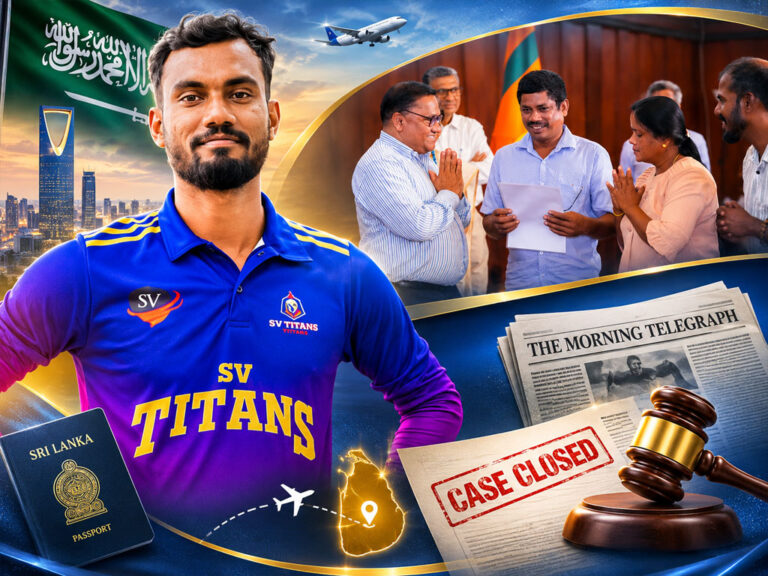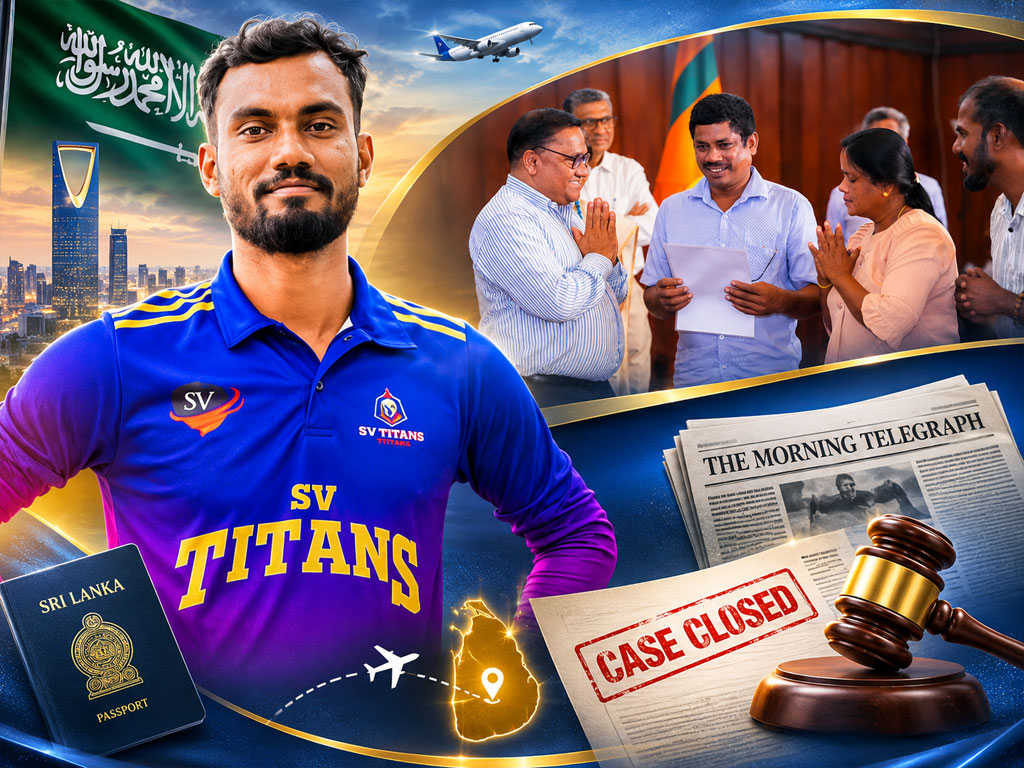
COLOMBO, November 12, 2026 – From a Facebook comment to a death sentence and now freedom from prosecution, Sri Lankan migrant worker Anojan Sivarasa’s ordeal has ended with a decision by Saudi authorities to close his case. Following months of legal proceedings, diplomatic intervention and international appeals, arrangements are underway to bring him home.
Saudi Arabian authorities have formally discontinued all legal proceedings against Sri Lankan migrant worker Anojan Sivarasa, who was previously sentenced to death over a Facebook comment considered offensive to Islam, clearing the way for his return to Sri Lanka.
The Saudi Public Prosecution decided on November 9 not to pursue the case further, bringing months of legal proceedings to an end. Sri Lanka’s Ministry of Foreign Affairs, Foreign Employment and Tourism officially announced the decision on November 11.
All sentences previously imposed on Sivarasa have been set aside and are no longer in force.
Minister of Foreign Affairs, Foreign Employment and Tourism Vijitha Herath said arrangements were underway to bring him back to Sri Lanka within the next one to two weeks.
The decision follows sustained diplomatic engagement by the Sri Lankan government, legal interventions involving representatives from both countries and international appeals concerning the severity of the punishment.

From Facebook Comment to Death Sentence
Sivarasa’s legal difficulties began following his arrest on July 1, 2026, over a Facebook comment that Saudi authorities considered insulting to the Prophet Muhammad.
On July 27, the Al-Ahsa Criminal Court sentenced him to five years’ imprisonment and imposed a fine of three million Saudi riyals.
The case subsequently took a more serious turn when the Court of Appeal in Saudi Arabia’s Eastern Province increased his punishment to the death penalty on September 17.
His sentence attracted international attention, with human rights organisations questioning the proportionality of the punishment and calling for his release.
Amnesty International and Human Rights Watch publicly opposed the death sentence, arguing that his prosecution raised serious concerns about freedom of expression.
The United States-based International Commission for Human Rights and Religious Freedom (ICHRRF) also campaigned for his release. On November 6, the organisation formally designated him a Prisoner of Conscience and renewed its call for international intervention.
Supreme Court Decision Opened the Way for Release
Following diplomatic and legal interventions, Saudi Arabia’s Supreme Court set aside the death sentence on October 13 and referred the case to the Al-Ahsa Criminal Court for further proceedings.
At a hearing on October 27, the court referred the matter to the Public Prosecution for additional investigation.
After completing its review, the prosecution decided on November 9 not to continue legal proceedings, resulting in the formal closure of the case.
The Sri Lankan government attributed the outcome to diplomatic engagement undertaken under the guidance of President Anura Kumara Dissanayake, alongside cooperation from Saudi Arabian authorities.
Herath expressed appreciation for the Saudi government and judicial system, the diplomatic representatives of both countries and the Sri Lankan legal experts who travelled to Saudi Arabia to assist with the proceedings.
The Ministry also acknowledged the sustained involvement of Sri Lanka’s Embassy in Riyadh, which coordinated with Saudi authorities throughout the legal process.
Family Thanks Government as Return Arrangements Begin
Members of Sivarasa’s family visited the Ministry of Foreign Affairs on November 11 and expressed their gratitude to President Dissanayake, the Ministry and the officials who contributed to resolving the case.
Herath briefed the family on the decision to close the proceedings and the arrangements being made for Sivarasa’s return.
Although the legal case has concluded, the Ministry continues to coordinate with Saudi authorities to complete the necessary administrative formalities.
Sivarasa’s experience has also brought renewed attention to the legal vulnerabilities of migrant workers, particularly in cases involving social media activity, religious sensitivities and differences between national legal systems.
For Sri Lanka, the outcome demonstrates the importance of sustained diplomatic and consular engagement when citizens encounter serious legal difficulties overseas.
The immediate priority is now to complete the remaining formalities and ensure Sivarasa’s safe return to his family after more than four months of detention.