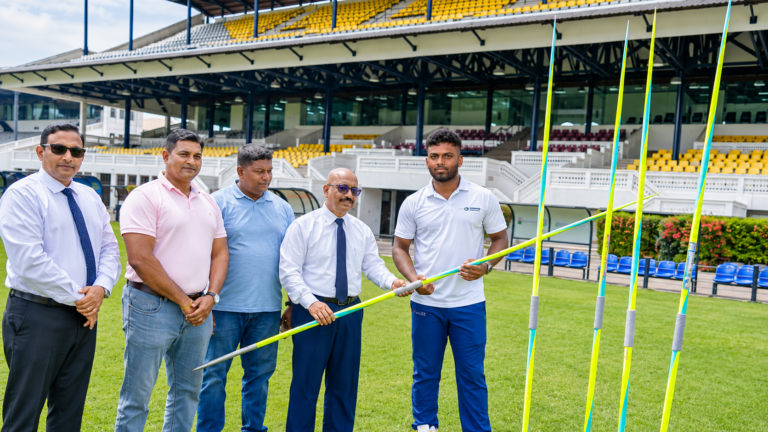
Rumesh Tharanga receives five custom-made javelins imported from Sweden to strengthen his training and preparations for upcoming international competitions.
COLOMBO, November 17, 2026 — Sri Lanka’s leading javelin thrower, Rumesh Tharanga, has received five specially manufactured javelins imported from Sweden, a development that highlights both the country’s growing ambitions in international athletics and the importance of providing elite athletes with appropriate equipment.
The Ministry of Youth Affairs and Sports arranged the purchase after Tharanga’s previously used javelin was damaged, raising practical concerns about his preparations for upcoming international competitions.
Sports Minister Sunil Kumara Gamage officially handed over the equipment on November 16, in the presence of Director General of Sports S. Achchuthan, Tharanga’s father and coach Tony Prasanna, and other officials.

The javelins were manufactured to meet Tharanga’s specific technical requirements and throwing style, rather than being ordinary competition equipment.
The Equipment Behind Elite Performance
At the highest levels of athletics, specialised equipment plays a significant role in an athlete’s performance and preparation.
A javelin’s characteristics, including its weight distribution, balance and aerodynamic behaviour, can influence how comfortably an athlete executes a throw.
Consistent access to suitable equipment is therefore essential, particularly for competitors preparing for major international championships.
For Tharanga, the arrival of the five javelins removes an immediate equipment concern as he looks towards competitions in 2027.
Speaking at the handover, the athlete expressed confidence that he was now better equipped to face his forthcoming international commitments.
More Support Promised for Sri Lankan Athletes
Minister Gamage said the Government intended to strengthen support for athletes capable of achieving international success.
The Ministry has also outlined plans to introduce financial incentives and establish clearer arrangements for rewarding major international sporting achievements.
Among the measures discussed are cash awards for medal-winning performances, additional opportunities for foreign coaching and a monthly allowance of Rs. 10,000 for approximately 1,900 school athletes.
The Minister indicated that the Government would pursue the necessary Cabinet approvals and budgetary arrangements for these programmes.
A Bigger Question for Sri Lankan Sport
The latest initiative provides much-needed support for one of Sri Lanka’s leading athletes. However, it also raises a wider issue about how consistently the country’s most promising sportsmen and women receive the resources needed to compete internationally.
Equipment, professional coaching, sports science, medical support and overseas competition exposure form the foundation of a successful elite sporting programme.
Providing equipment after a problem arises is important. Establishing a system that anticipates those requirements would be even more valuable.
Tharanga’s latest support package is a positive development, but its greater significance may lie in whether it becomes part of a sustained national approach to producing international champions.
For Sri Lanka, the ultimate ambition should be to ensure that talented athletes spend their time preparing to win medals rather than worrying about the equipment required to compete.