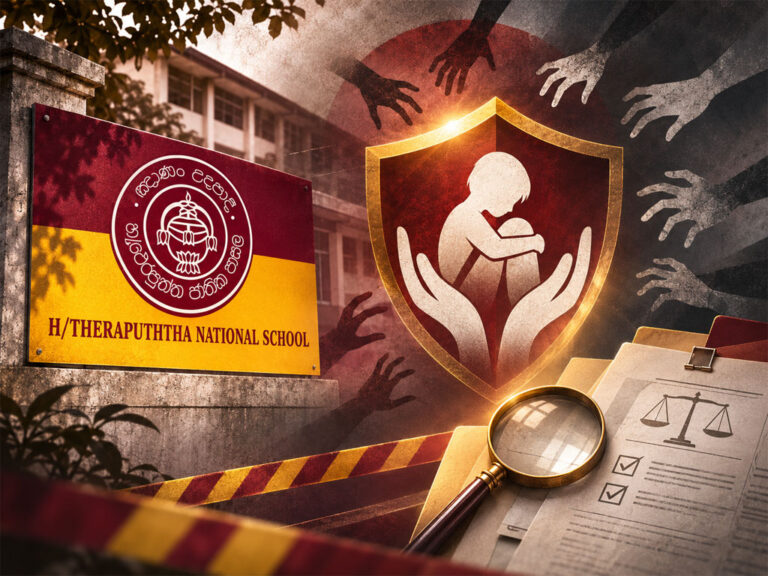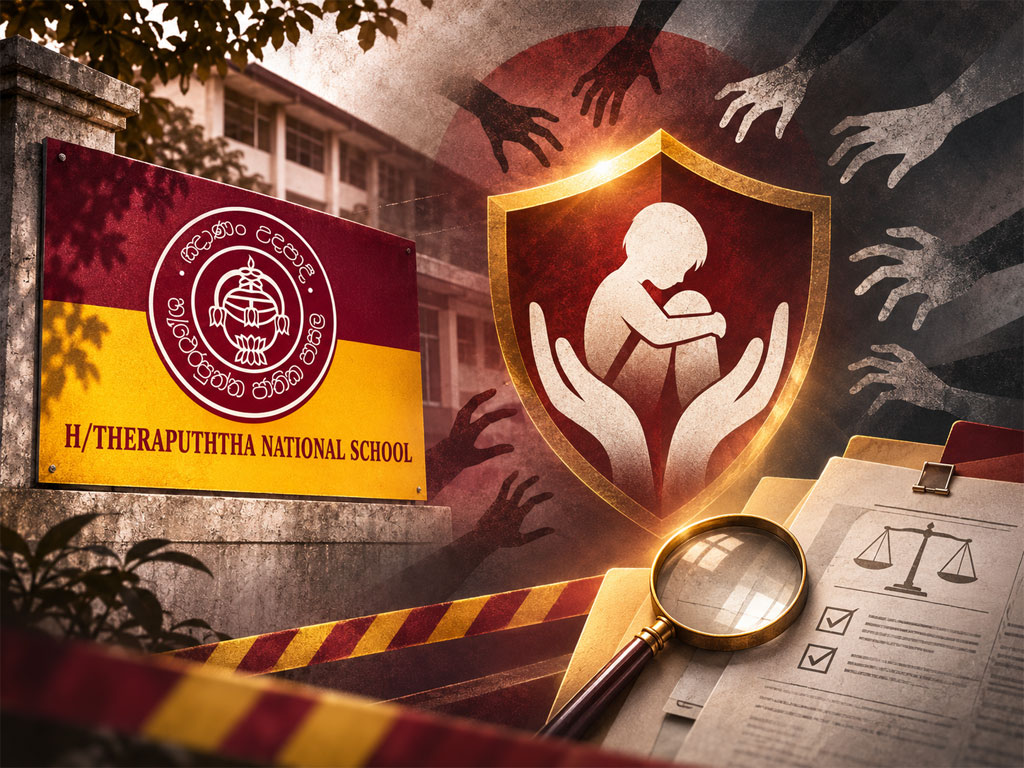
AMBALANTOTA, Sri Lanka, November 24, 2026 — More than six months after a schoolgirl was allegedly sexually assaulted during a sporting event at Theraputtha National School, renewed allegations of administrative concealment, mishandled video evidence and inadequate disciplinary action have placed the school’s principal, deputy principal and education authorities under scrutiny.
The incident, reported to have occurred on May 21, 2026, resulted in the arrest of the school’s principal, deputy principal and a teenage suspect on June 19. The two administrators were arrested on suspicion of concealing the alleged abuse.
According to an investigative report published by HariDeshayaLk, subsequent complaints submitted by the United Human Rights Organization have raised further concerns about the handling of the investigation, the treatment of the girl and the responsibilities of school administrators.
Central to the complaints is the allegation that video footage of the incident was circulated among adults, including school officials, without adequate action being taken to secure the evidence and protect the child.
The report also claims that the principal and deputy principal remained in their administrative positions after being granted bail, prompting calls for the Ministry of Education to clarify whether disciplinary proceedings have been initiated.
These subsequent allegations have not been independently established, and the current employment status of the two administrators requires official confirmation.

Alleged Assault During School Sporting Event
The reported incident occurred on May 21, 2026, while a zonal volleyball tournament was being held at Theraputtha National School in Ambalantota.
According to the original investigative account, the girl, then aged approximately 14 years and eight months, was allegedly assaulted near a school building during school hours.
The report states that the incident was recorded on a mobile telephone by individuals nearby. Investigators had previously confirmed that footage relating to the alleged assault was recorded and subsequently circulated on social media.
The existence and distribution of such material raise separate concerns about the protection of the child’s identity, the preservation of digital evidence and the possible responsibility of individuals involved in recording or disseminating it.
HariDeshayaLk states that it has obtained video material relevant to the investigation. The contents and evidentiary value of that material must, however, be determined by the appropriate investigative and judicial authorities.
Any recordings depicting the alleged sexual abuse of a child should be handled exclusively through authorised investigative channels and must not be circulated or republished.
Allegations That Video Evidence Reached 14 Adults
One of the most serious claims concerns the reported presence of video footage on the mobile telephones of 14 adults, allegedly including the school’s principal and deputy principal.
The investigative report attributes this information to material said to have been presented before the Hambantota Magistrate’s Court by Ambalantota Police.
If established, the circumstances would require investigators to determine how the footage was obtained, who received it, whether it was redistributed and whether recipients took appropriate steps to report and preserve evidence of a suspected offence.
The United Human Rights Organization has questioned whether the devices were referred to the Government Analyst for forensic examination.
The organisation’s account alleges that the failure to examine the telephones could have compromised the investigation. It also raises suspicions about possible exploitation beyond the original alleged assault.
No independently verified evidence supplied with the report establishes an organised exploitation operation or commercial activity involving the child. Such suspicions should therefore be treated as matters requiring investigation, not established criminal conduct.
Claims of Pressure to Remove the Girl From School
Further allegations concern the treatment of the schoolgirl after the incident became known to administrators.
According to the United Human Rights Organization, the principal allegedly prevented the girl from continuing her attendance and pressured her mother to represent the child’s departure as a voluntary withdrawal.
If substantiated, those actions would raise serious questions about the school’s duty to protect a vulnerable student and ensure that she can continue her education without intimidation or discrimination.
The organisation also alleges that teachers who attempted to report the incident faced pressure, threats or administrative retaliation.
Such claims warrant examination through an independent administrative inquiry, with safeguards for teachers, parents and other potential witnesses.
The original report further alleges that the teenage suspect had previously been removed from the school following another complaint of inappropriate sexual conduct involving a teacher’s daughter. It also describes him as a friend of the principal’s son.
Those assertions have not been independently verified and should not be treated as evidence of prior offending, preferential treatment or complicity by the school administration.
Arrests, Bail and Questions Over Medical Evidence
On June 19, 2026, Ambalantota Police arrested Principal Nishantha Liyanage, Deputy Principal Wasantha Abeywardena and the teenage suspect in connection with the investigation.
The original report identifies the proceedings before the Hambantota Magistrate’s Court as Case No. B 4411/26 and states that the suspects were subsequently granted bail.
The account also refers to a letter dated September 24, 2026, from Attorney H. A. Amarasena, President of the United Human Rights Organization, addressed to the National Child Protection Authority.
According to the organisation, the letter raised concerns about alleged inconsistencies between the findings of a medical examination and the offences reported to court.
The report claims that medical evidence indicated rape, while the suspect was produced before court in connection with an allegation of aggravated sexual abuse.
However, the medical documentation, police submissions and relevant court records have not been independently examined for this article. It is therefore not possible to establish whether the reported difference reflects an investigative omission, a legal classification or another procedural consideration.
The organisation has called for the medical evidence and the offences under investigation to be reviewed to ensure that the judicial proceedings accurately reflect the available evidence.
Establishments Code and Administrative Accountability
Questions have also been raised about whether the school’s principal and deputy principal should continue exercising administrative authority while the proceedings remain unresolved.
The United Human Rights Organization refers to Chapter XLVIII of Volume II of Sri Lanka’s Establishments Code, particularly Section 27:10, in calling for disciplinary action.
The Code contains provisions governing interdiction and disciplinary procedures when criminal proceedings are instituted against public officers. Its amended provisions distinguish between categories of offences and provide for administrative inquiries and decisions on interdiction.
Consequently, the existence of criminal proceedings does not, by itself, establish that the officials have unlawfully remained in service. The relevant disciplinary authority must determine the applicable provisions and whether the necessary administrative steps have been taken.
Nevertheless, the allegations of concealment and possible interference with evidence warrant a clear explanation from the Ministry of Education about the administrative response.
The original investigative report also refers to separate proceedings against the principal arising from an alleged November 2025 assault on an Advanced Level student, reportedly involving injuries requiring 14 stitches.
That proceeding is identified as Case No. B 7737/25. According to the report, the principal was granted bail in connection with the earlier incident.
The status and circumstances of those separate proceedings require verification. No finding of guilt should be inferred from the existence of the allegation or the granting of bail.
Calls for Independent Investigation and Child Protection
The complaints have placed several unresolved matters before the relevant authorities, including the handling of the original abuse allegation, the reported distribution of video evidence and the administrative measures taken after the arrests.
Parents and civil society organisations cited in the investigative account have called for an independent inquiry and appropriate action against any official found to have obstructed reporting, intimidated witnesses or failed to fulfil child protection responsibilities.
Their demands include examination of the relevant digital evidence, review of the police investigation and consideration of whether the principal and deputy principal should remain in administrative positions while inquiries continue.
Any investigation must also safeguard the girl’s privacy, access to education and welfare, while respecting the legal rights of all individuals accused.
The National Child Protection Authority, Ministry of Education, Sri Lanka Police and the relevant disciplinary authorities are expected to establish what action has been taken in response to the reported complaints.
Until their findings and the relevant court records are available, the allegations of deliberate concealment, interference with evidence and administrative misconduct remain unresolved.
The immediate priority is to ensure that the child receives appropriate protection and support, that the evidence is independently examined and that any failures established through due process result in accountability.
SOURCE:- HARI DESHAYA