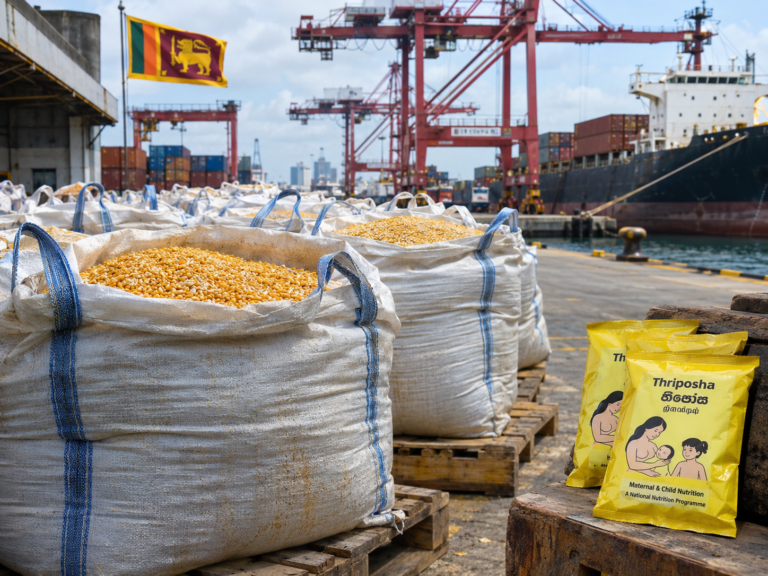
A prolonged delay in releasing imported maize intended for Sri Lanka’s national nutritional programme has raised serious concerns over administrative efficiency, food security, public expenditure and the welfare of vulnerable mothers and children.
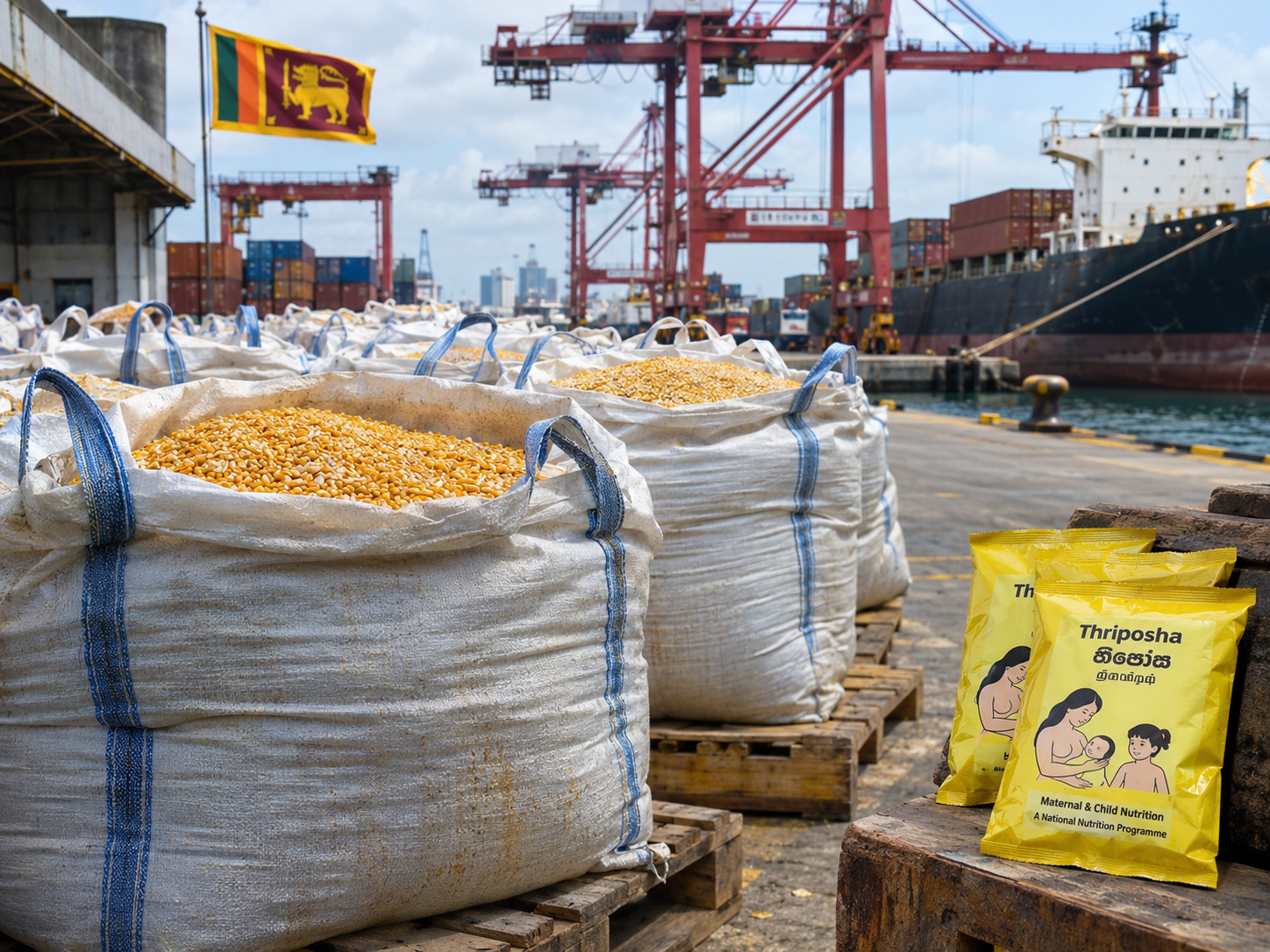
Sri Lanka’s Committee on Public Enterprises (COPE) has been informed that approximately 2,000 metric tonnes of imported maize intended for the production of Thriposha remain held at the port, despite the country’s continuing requirement for the nutritional supplement.
The revelation has placed the management of Lanka Thriposha Limited and the administrative processes governing the importation of essential raw materials under scrutiny.
According to reports on the parliamentary proceedings, the consignment has remained unreleased for several months, raising concerns over storage conditions, additional expenditure and whether the maize remains suitable for nutritional food production.

Vulnerable Mothers and Children at Risk
Thriposha plays an important role in Sri Lanka’s public nutrition programme, particularly in supporting pregnant women, breastfeeding mothers and young children requiring supplementary nutrition.
Any prolonged disruption to production could undermine the effectiveness of nutritional programmes designed to protect vulnerable communities.
The continued detention of such a substantial quantity of raw materials also raises questions about coordination between government institutions responsible for procurement, import clearance and food quality assurance.
Public Funds and Administrative Accountability
Beyond the immediate nutritional implications, authorities must establish whether the delay has resulted in additional storage charges, demurrage payments or other avoidable expenses.
If prolonged storage has compromised the quality of the maize, the financial consequences could extend beyond the original procurement cost.
A comprehensive explanation is required regarding the circumstances that prevented the consignment from being released, the institutions responsible for resolving the issue and the measures taken to prevent further delays.
At a time when Sri Lanka continues to face economic pressures and concerns over household nutrition, ensuring that essential nutritional supplies reach their intended beneficiaries must remain a national priority.
The matter represents an important test of whether parliamentary oversight can translate into timely administrative action and meaningful public accountability.