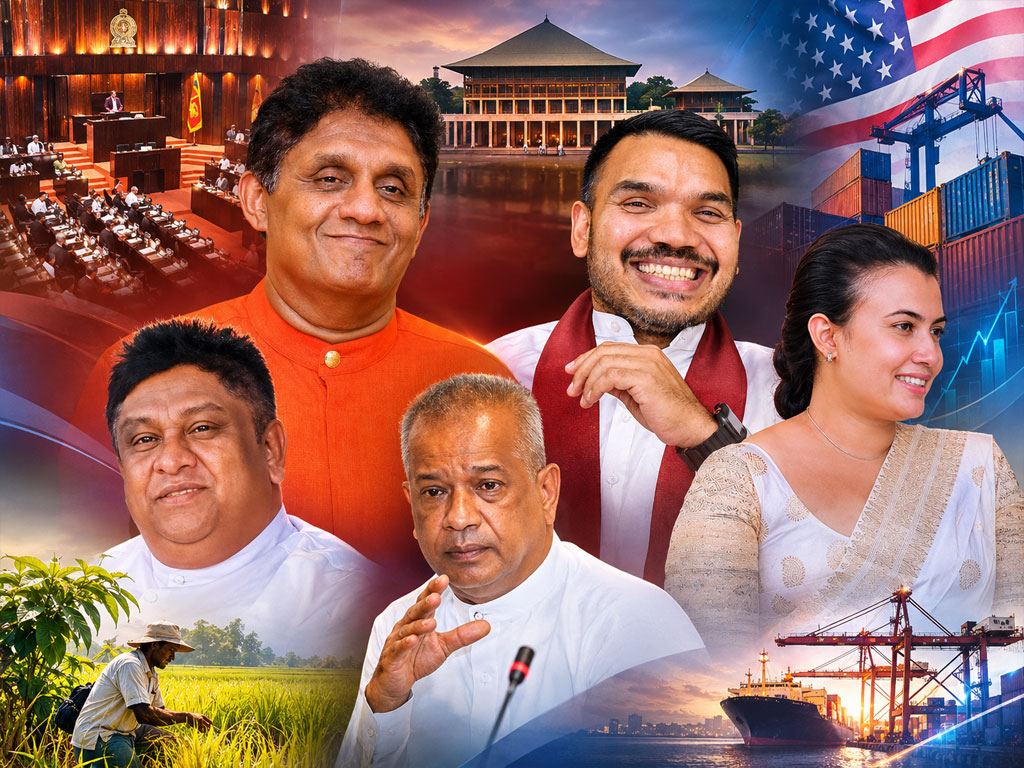
COLOMBO, November 28, 2026 — Sri Lanka’s political debate has intensified over the 2027 Budget, while speculation about the Rajapaksa family’s future, developments involving opposition politicians and United States trade measures have brought fresh attention to the country’s domestic and diplomatic priorities.
The following edited political roundup draws on the original Inside Politics column. Accounts attributed to unnamed political or diplomatic sources, private conversations and speculation are identified as such. They should not be treated as independently established facts.
Opposition Seeks Momentum During 2027 Budget Debate
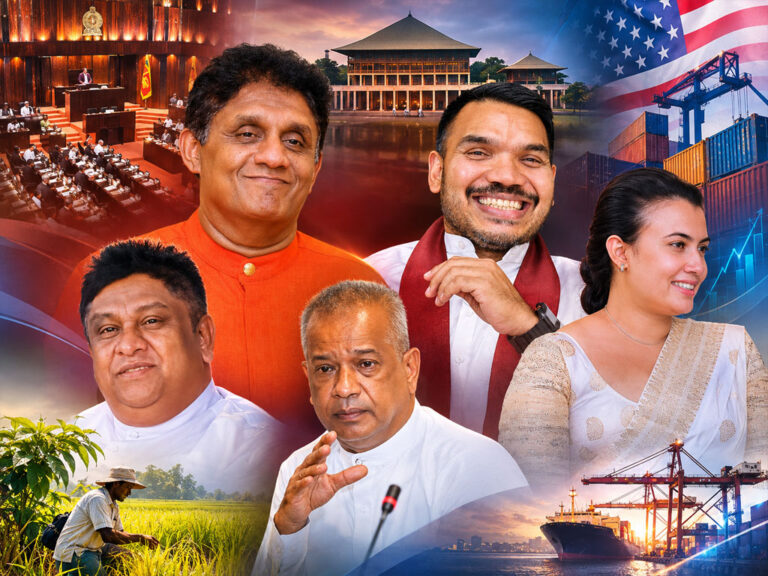
Opposition Leader Sajith Premadasa has drawn renewed attention to the opposition’s parliamentary strategy after personally opening its response to the Government’s 2027 Budget, departing from the customary arrangement under which Samagi Jana Balawegaya (SJB) economist Dr. Harsha de Silva had delivered the opening speech.
The decision attracted discussion among government and opposition parliamentarians, particularly because de Silva has traditionally played a prominent role in examining national budgets and economic policy.
According to the original political column, Premadasa’s speech established a framework for subsequent opposition contributions, directing attention towards the Government’s fiscal priorities and policy commitments.
The column described the opposition’s parliamentary interventions as receiving greater public and media attention than in previous budget debates. That assessment, however, remains an editorial interpretation rather than a conclusion supported by independently measured audience figures.

Harsha de Silva Explains the Change
Prime Minister Harini Amarasuriya referred to the change in speaking arrangements when she addressed Parliament following Premadasa’s contribution.
The decision subsequently became a subject of discussion during de Silva’s appearance on the Derana 360 television programme.
Responding to a question about why he had not delivered the opening speech, de Silva explained that the arrangement resulted from a collective decision by the party rather than an individual choice.
According to the column, SJB parliamentarian Kabir Hashim was among the first to congratulate Premadasa after his address.
The episode illustrated the attention being paid to the opposition’s presentation of its economic arguments as parliamentary scrutiny of the 2027 Budget continued.
Whether that attention translates into broader political support will depend on developments beyond individual parliamentary speeches.
Parliament Marks Campaign Against Gender-Based Violence
A separate parliamentary event on November 25 attracted attention when members participated in the international 16 Days of Activism Against Gender-Based Violence campaign.
The Women Parliamentarians’ Caucus organised activities supporting the campaign, with orange clothing and commemorative badges used to demonstrate solidarity with women and girls affected by violence.
Premadasa attended Parliament wearing orange attire, while MP Chamindranee Kiriella presented him with a commemorative badge.
Speaker Jagath Wickramaratne publicly complimented the Opposition Leader on his clothing, prompting Premadasa to explain that he was responding to the parliamentary appeal to support the campaign.
The original column suggested that government members had largely failed to participate. That account requires an important qualification: official parliamentary reporting and contemporaneous photographs confirm that government as well as opposition members, including Prime Minister Amarasuriya, wore orange or orange-themed clothing.
A Longstanding Position on Women’s Health
The occasion also recalled Premadasa’s advocacy of menstrual health measures during the 2019 presidential campaign.
At that time, he proposed providing sanitary products free of charge to schoolgirls as part of a programme intended to improve their health and wellbeing.
The proposal attracted criticism and ridicule from political opponents, although menstrual health subsequently received greater attention in public policy discussions.
Participation in the November 25 campaign brought these earlier commitments back into political discussion.
The wider objective of the annual international initiative, observed from November 25 to December 10, is to encourage sustained action against violence affecting women and girls.
Its effectiveness will ultimately depend on institutional measures, legal protection, access to justice and continued public engagement rather than symbolic participation alone.
Limini Rajapaksa Becomes Subject of Political Speculation
The future leadership of the Sri Lanka Podujana Peramuna (SLPP) has become a subject of speculation amid the continuing legal proceedings involving parliamentarian Namal Rajapaksa.
According to Inside Politics, the appearance of Namal’s wife, Limini Rajapaksa, at court proceedings prompted discussion on social media and within sections of the party about whether she might eventually assume a more visible political role.
Her appearance attracted particular attention because she attended court wearing a white saree and a long-sleeved blouse.
The column described the public reaction as unusually strong, with speculation focusing on the possibility of her entering politics while Namal remains unable to participate fully in political activities.
There is, however, no confirmed announcement that Limini intends to enter politics or seek a leadership position within the SLPP.
Earlier Speculation and Family Precedents
Similar rumours reportedly circulated during an earlier period of legal proceedings involving Namal.
At that time, Limini’s father publicly rejected suggestions that she was preparing to enter politics to replace her husband.
The renewed discussion has drawn comparisons with prominent women who entered Sri Lankan politics following major changes in their families’ circumstances.
Following the assassination of Prime Minister S.W.R.D. Bandaranaike, Sirimavo Bandaranaike entered politics and became the world’s first woman prime minister.
Chandrika Bandaranaike Kumaratunga later emerged as a leading political figure following the assassination of her husband, Vijaya Kumaratunga, eventually becoming Sri Lanka’s first woman president.
These historical examples do not establish that Limini will follow a similar path.
The original column also reports that she has participated in religious observances, including Bodhi Pooja ceremonies and prayers for Namal’s wellbeing during his remand.
According to the account, she has interacted with women attending these ceremonies, attracting attention from some individuals associated with the SLPP.
Such activities, however, cannot independently be interpreted as evidence of a decision to launch a political career.
Rohitha Rajapaksa Also Mentioned as Possible SLPP Figure
Speculation about the SLPP’s leadership has extended to Rohitha Rajapaksa, another member of the Rajapaksa family.
The original column states that certain party figures have discussed the possibility of Rohitha assuming a more prominent role while Namal remains involved in legal proceedings.
It also suggests that an influential family member has expressed support for Limini taking on greater responsibility.
Neither suggestion has been supported by an official party announcement or a publicly documented leadership decision.
FCID Questioning Draws Attention
Rohitha recently appeared before the Financial Crimes Investigation Division (FCID) to provide a statement concerning the SupremeSAT satellite project.
According to the column, he spent approximately five hours with investigators before responding to questions from journalists outside the premises.
His interaction with the media prompted speculation about whether he was becoming more comfortable with public political communication.
Some observers interpreted his responses as resembling those of an experienced politician, although such impressions are subjective.
Rohitha previously participated in political activities in the Kurunegala District before the 2015 presidential election.
The column claims that opposition from influential political figures within the district discouraged him from pursuing a more active role at the time.
Following Mahinda Rajapaksa’s defeat in the 2015 presidential election, Rohitha’s political ambitions reportedly became less visible.
With the SLPP facing internal questions about its future direction, both Rohitha and Limini have been mentioned in political discussions.
Neither has publicly confirmed an intention to seek the party leadership.
For the SLPP, the immediate question is whether its leadership arrangements will remain unchanged pending developments involving Namal or whether the party will formally consider an interim arrangement.
Chamara Sampath Reportedly Confronts Opposition MP
Another incident described by Inside Politics concerns a reported confrontation involving former minister and parliamentarian Chamara Sampath Dassanayake in the parliamentary opposition lobby.
According to the column, the exchange occurred after Dassanayake participated in the 2027 Budget debate.
He reportedly entered the opposition lobby while several MPs were engaged in conversation.
One opposition parliamentarian greeted him by asking:
“Ah, Honourable MP, how are you?”
The greeting allegedly provoked an angry response.
The column attributes the following remarks to Dassanayake:
“Don’t get ready to ask me how I am, Honourable MP. I’ve been waiting for a time like this. You’ve betrayed the party and are carrying water for the government. You’ve done this before, and you’re doing it again now. Don’t be prepared to do this kind of dirty work.”
The account states that the unnamed MP attempted to respond but was not given an opportunity to explain.
Dassanayake reportedly criticised what he regarded as cooperation with the Government by an opposition colleague while he was facing legal proceedings and remand detention.
The identity of the parliamentarian involved was not disclosed in the original report.
No independently verified recording or statement from the other MP has been presented to establish the precise exchange.
The reported confrontation nevertheless reflects the column’s broader account of disagreements within opposition ranks over how individual politicians should respond to ongoing investigations and legal proceedings.
US Trade Investigations Bring Fresh Attention to Sri Lanka
Sri Lanka’s trade relationship with the United States has become a significant part of the political discussion following renewed American scrutiny of industrial subsidies, excess manufacturing capacity and international supply chains.
On November 25, 2026, the Office of the United States Trade Representative (USTR) announced determinations concerning 14 economies under Section 301 of the Trade Act of 1974.
The countries and territories covered included China, the European Union, India, Japan, Bangladesh, Vietnam, South Korea, Taiwan, Singapore, Switzerland, Indonesia, Malaysia, Cambodia and Thailand.
The original investigations covered 16 economies, including Mexico and Norway, but no determination was announced for those two at that stage.
Sri Lanka was not included in the industrial excess-capacity investigations.
That exclusion means Sri Lanka is not directly subject to the proposed measures arising from those particular investigations. It does not establish that the country is exempt from other American trade restrictions.
Competition With India and Bangladesh
India and Bangladesh are important competitors for Sri Lankan exporters, particularly in garments and other manufactured products.
Consequently, changes in American trade arrangements with those countries could alter their competitive positions.
Additional tariffs on competing exporters might create opportunities for Sri Lanka, depending on the affected products, existing duties and purchasing decisions by American importers.
Alternatively, changes in supply chains, production costs or trade negotiations could create new competitive pressures.
The USTR’s November 25 announcement proposed country-specific tariff measures rather than a uniform additional duty of approximately 15% for every economy involved.
For example, the proposals included tariffs of up to 25% on Indian goods and up to 18% on Bangladeshi goods, with qualifications relating to existing duties and exemptions.
Those figures should not be interpreted as final, universally applicable tariff increases.
Sri Lanka’s export competitiveness will depend on the actual measures implemented, the treatment of individual products and the outcome of trade negotiations.
Questions Over American Agricultural Seed Proposals
The original Inside Politics column revisits an earlier report claiming that American negotiators had proposed the purchase and introduction of United States agricultural seeds in Sri Lanka.
According to that account, Sri Lankan officials were reluctant to accept the proposal because of concerns about difficulties reportedly experienced by Indian farmers following the introduction of certain imported seeds.
The column suggests that disagreement over this issue contributed to delays in concluding a formal trade arrangement with Washington.
No negotiating document or official statement establishing that the seed proposal was a condition of a bilateral agreement was provided in the source article.
The claim therefore remains an attributed report requiring confirmation from the relevant authorities.
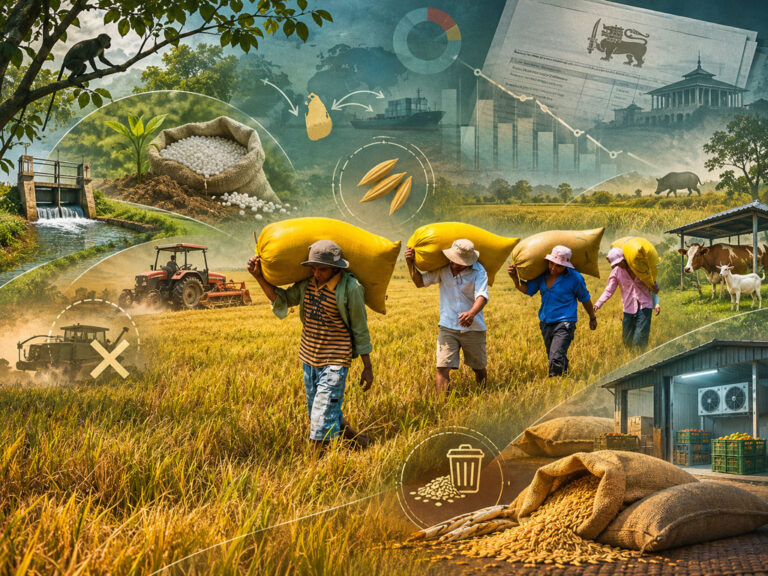
Lalkantha’s Paddy Cultivation Remarks
The column also refers to a statement attributed to Agriculture Minister K.D. Lalkantha concerning a proposed reduction of paddy cultivation by two-thirds.
It says the remarks prompted speculation about whether Sri Lanka was being encouraged to purchase American agricultural seeds.
These are separate questions.
A proposal concerning the extent of land used for paddy cultivation does not, by itself, establish a connection with international trade negotiations or foreign seed imports.
Any assessment would require the minister’s complete statement, the agricultural policy underlying it and evidence of the negotiations alleged by the column.
According to Inside Politics, opposition parties were examining the remarks and preparing to question the Government.
Whether the agricultural proposals form part of broader trade negotiations remains unestablished.
Forced-Labour Tariffs Create a Separate Trade Challenge
A second American trade measure concerns goods produced through forced labour and the enforcement of prohibitions on their importation.
The original column discusses a proposed additional tariff of 12.5% affecting Sri Lanka and several other economies.
An important chronological distinction is necessary.
The USTR began investigations involving 60 economies on March 12, 2026. Following its findings and proposed action in June, it announced final action in July, providing for tariffs of 10% or 12.5%, subject to product exemptions.
Sri Lanka was included among the economies covered by these proceedings.
The July announcement therefore cannot accurately be presented in November as merely a newly proposed investigation.
The measures concern whether trading partners prohibit and effectively enforce restrictions on importing products manufactured through forced labour.
They do not constitute a finding that all exports from Sri Lanka are produced through forced labour.
Implications for the Garment Industry
The United States remains a major destination for Sri Lankan apparel exports, making changes in American import duties especially relevant to manufacturers, workers and exporters.
The source article expresses concern that higher tariffs could increase costs for American buyers and affect the competitiveness of Sri Lankan garments.
It also notes that domestic manufacturers use imported materials, including inputs obtained from China and other countries.
The financial consequences of American tariff measures depend on the precise product categories covered, exemptions, the applicable tariff arrangements and the ability of exporters to adjust their supply chains.
For that reason, the original column’s suggestion that an additional 12.5% duty would necessarily combine with an existing 20% tariff to create the same total rate for every product should not be treated as an established calculation.
The relevant American customs classifications and tariff notices must be examined before determining the final duty on any shipment.
Diplomatic Questions Surround Sergio Gor’s Absence
The original political column links several developments in Sri Lanka’s relations with Washington to the reported absence of American diplomatic representative Sergio Gor from a vessel handover ceremony.
According to Inside Politics, Gor previously met President Anura Kumara Dissanayake during the President’s visit to New York for the United Nations General Assembly.
During that meeting, Gor reportedly indicated that he could facilitate direct communication with President Donald Trump when necessary.
The column further claims that Gor subsequently visited Sri Lanka, met the President at the Presidential Secretariat and inspected facilities at the Colombo Port.
Its account describes him visiting the Eastern and Western terminals, climbing gantry cranes and observing the harbour and surrounding waters.
The same report says that discussions included American assistance involving a coast guard vessel and ten search-and-rescue helicopters.
Gor reportedly expressed an intention to return for the handover ceremony.
However, according to the column, he was absent when the vessel was subsequently handed over in a ceremony attended by the Sri Lankan President.
Was the Absence Connected to a Diplomatic Disagreement?
Inside Politics attributes Gor’s reported absence to tensions concerning Sri Lanka’s position on a United Nations initiative relating to the Strait of Hormuz.
This is a significant allegation about the motivations behind a diplomatic decision.
The source article does not provide an official explanation from Gor, the United States Government or the Sri Lankan Foreign Ministry establishing that his absence resulted from a disagreement over the proposed resolution.
Accordingly, the suggested connection remains unverified.
A decision not to attend a diplomatic ceremony cannot, without supporting evidence, be interpreted as proof of punitive action.
The Strait of Hormuz and Sri Lanka’s Reported Position
The underlying United Nations dispute concerned efforts to protect commercial shipping through the Strait of Hormuz during the conflict involving Iran.
On April 7, 2026, China and Russia vetoed a Security Council draft resolution concerning maritime navigation through the strategic waterway.
The proposal had been presented by Bahrain and other Gulf states.
Following the vetoes, the United Nations General Assembly held a debate under the mechanism established for examining the use of Security Council veto powers.
The original column goes further, claiming that Washington sought additional international support and approached several South Asian governments.
According to its account, India, Bangladesh and Nepal supported the initiative, while Pakistan declined because of its reported role in facilitating discussions between the United States and Iran.
The column alleges that Sri Lanka also declined to endorse the proposal because Iran had not participated in developing it.
It further claims that American and United Nations representatives repeatedly sought a response from Colombo before Sri Lanka communicated its refusal.
These specific accounts of diplomatic communications require independent documentary confirmation.
A Question of Diplomatic Consequences
The column suggests that Washington was disappointed with Sri Lanka’s position and that the disagreement may have influenced subsequent diplomatic engagements.
It also raises the possibility that tensions over the United Nations issue could affect American trade decisions.
No evidence presented in the original article establishes that the USTR’s trade investigations or tariffs were imposed in retaliation for Sri Lanka’s position on the Strait of Hormuz.
The forced-labour investigations were formally initiated in March 2026, before the April Security Council veto, while the industrial excess-capacity investigations also began in March.
The chronology therefore does not support treating either investigation as a response to the later United Nations dispute.
Sri Lanka’s diplomatic position and American trade policy may both warrant scrutiny, but a causal connection between them remains unproven.
Uncertainty Over the Next Stage of US Trade Negotiations
The original column also examines Sri Lanka’s efforts to negotiate tariff arrangements with Washington.
It credits former Sri Lankan Ambassador to the United States Mahinda Samarasinghe with pursuing discussions intended to reduce the burden of American tariffs on Sri Lankan exports.
According to Inside Politics, negotiations had advanced towards a possible formal agreement, with July 20 mentioned as a prospective signing deadline.
The column claims that some disagreements remained unresolved, including the reported agricultural seed proposal.
It also raises questions about the implications of Samarasinghe’s departure and whether his successor could secure further concessions.
Those claims concerning negotiating dates, draft agreements and specific conditions should be confirmed against official diplomatic records.
Trade discussions may involve multiple stages, including preliminary understandings, political commitments, technical negotiations and legally operative agreements.
These should not be presented as interchangeable.
For Sri Lankan exporters, the practical priorities remain securing clarity on applicable duties, understanding product exemptions and obtaining predictable access to the American market.
The outcome of negotiations will matter more than speculation surrounding individual diplomatic appointments.
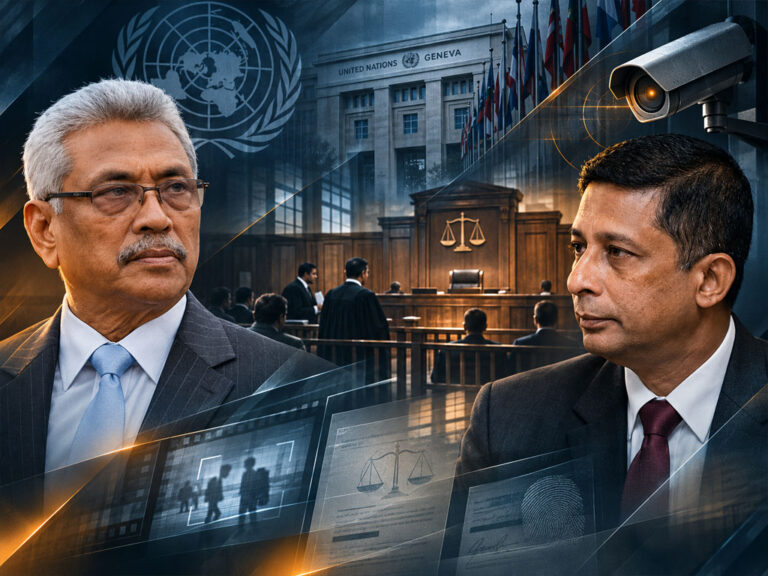
Namal Rajapaksa and Ananda Palitha: Reported Prison Conversations
The final section of Inside Politics turns to a series of conversations allegedly involving Namal Rajapaksa, Chamara Sampath Dassanayake and trade union activist Ananda Palitha while in remand custody.
The column reports that Palitha, who has been associated with trade unions aligned with the Samagi political movement, joined the other politicians in custody.
Palitha had been arrested in connection with allegations involving overtime payments at the Ceylon Petroleum Corporation.
His arrest and the legal proceedings involving the other figures do not establish their guilt.
An Alleged Conversation Between Political Rivals
According to the column, Namal welcomed Palitha with the words:
“Palitha, come over. Here’s our newest member.”
Chamara reportedly joked that the gathering resembled an all-party conference:
“This feels like an all-party conference now. We’ve got someone from the ‘Gas Cylinder’ camp, Namal from the SLPP, and Ananda Palitha from Samagi.”
Namal allegedly responded:
“And don’t forget our former MP Chandana Kathriarachchi is here too.”
The column describes a further conversation later that evening while the detainees were watching a television news bulletin.
According to its account, the bulletin referred to a message Namal had published on X expressing support for Palitha.
Palitha reportedly expressed appreciation:
“Honestly, Sir, the fact that you even remembered me means a lot.”
Namal was quoted as replying:
“Oh, that’s nothing. This happened because you acted against the government. That’s why they did this to you.”
Chamara allegedly added:
“The only thing this government knows is suppression. There’s plenty of talk, but they still can’t get anything done.”
The exchange reportedly concluded with Namal saying:
“Palitha, don’t think about it too much. Governments don’t last forever.”
These conversations have not been independently authenticated. They are reproduced as claims attributed to the original political column rather than confirmed transcripts.
Similarly, the suggestion that the arrests were politically motivated represents a claim attributed to the speakers, not an established finding about the legal proceedings.
Political Attention Shifts Between Parliament, Trade and the Courts
Taken together, the episodes described in Inside Politics illustrate several issues occupying Sri Lanka’s political debate as 2026 draws to a close.
The 2027 Budget has provided an opportunity for the opposition to challenge government policy, while questions about the SLPP’s leadership have generated speculation involving members of the Rajapaksa family.
The American trade measures present a separate set of economic considerations, particularly for exporters competing in international markets.
Meanwhile, diplomatic reporting concerning the Strait of Hormuz and Sergio Gor requires careful separation of confirmed events from claims attributed to unnamed sources.
The reported prison conversations add another dimension to the political narrative, but they cannot substitute for independently established evidence about arrests, prosecutions or political motivations.
For the public, the most consequential developments will be the outcome of budgetary decisions, the direction of trade negotiations, the handling of pending legal proceedings and the actions political parties take in response to their internal challenges.
Those outcomes, rather than unverified accounts of private political discussions, will provide a more reliable measure of how Sri Lanka’s political landscape changes in the months ahead.
Edited from the Inside Politics political column. Reported private conversations, political speculation and anonymous-source claims remain attributed to the original publication.