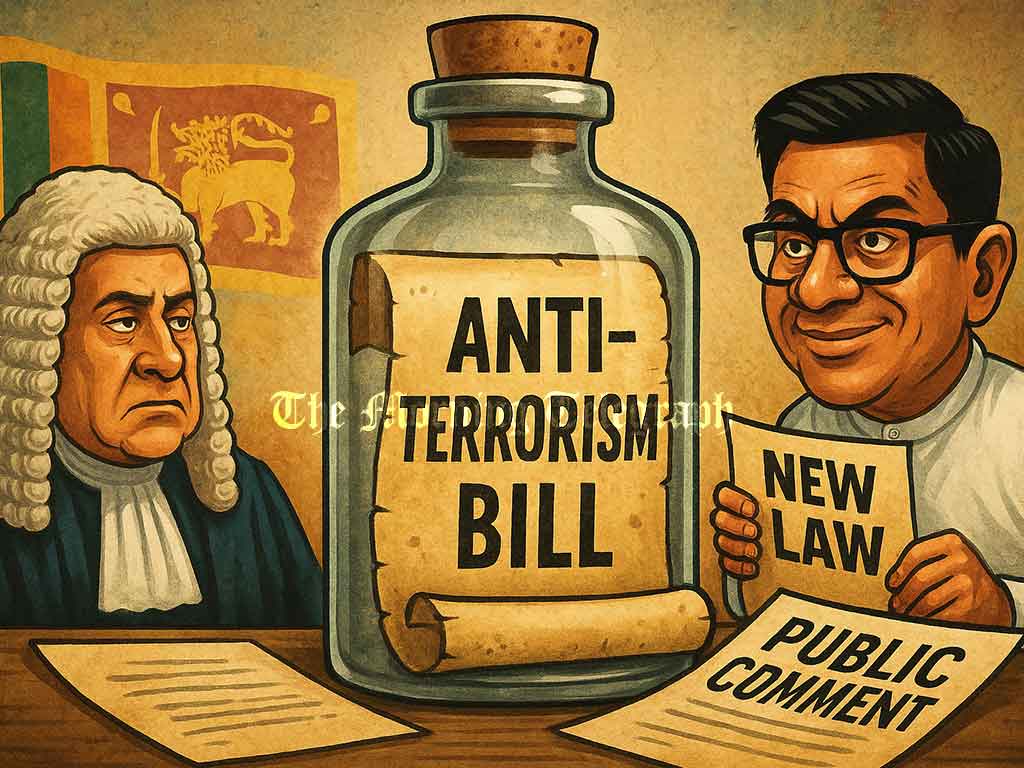
After years of promises to scrap the draconian Prevention of Terrorism Act, the government is finally set to unveil its shiny new Anti-Terrorism Bill – because nothing screams democracy like replacing one controversial law with another and calling it reform.
Justice Minister Harshana Nanayakkara announced that the draft bill, now ready in English, will be presented to the President this week before being shared with “relevant parties.” Once translated into Sinhala and Tamil, it will be opened up for public comment in the form of a white paper. Citizens will get at least a month to have their say before the bill heads to parliament.
“The goal is to complete the consultation and submit it to the cabinet and parliament within a year,” the minister declared, sounding almost optimistic about fast-tracking a law that has already sparked concerns among international watchdogs.
Foreign governments and the UN Human Rights Council have repeatedly urged Sri Lanka to repeal its sweeping anti-terror legislation, warning that its vague definitions have long been misused to target dissenters, journalists, and minority communities. But instead of outright repeal, the government now aims for a “replacement act,” raising the question of whether the abuses will end or simply be repackaged with updated wording.

For now, the public awaits its chance to comment on the draft. Whether those comments will matter is another story. In Sri Lanka’s democracy, consultation often means listening politely, then doing whatever was planned anyway.