A new national survey reveals alarming levels of harassment, fear, and psychological distress among Sri Lankan women, raising urgent questions about alcohol misuse, public safety, and the need for stronger government action.
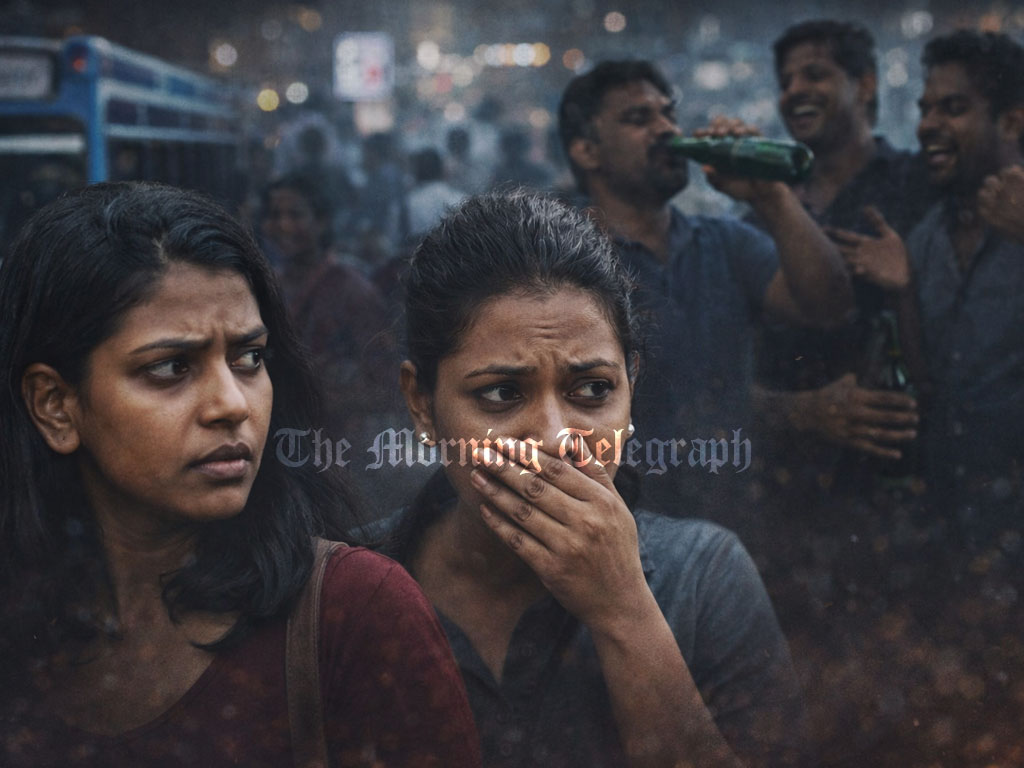
A recent national survey by the Alcohol and Drug Information Center (ADIC) has revealed a troubling reality about public safety in Sri Lanka. According to the findings, 71 percent of women say they feel unsafe in public places because of the presence and behavior of alcohol users. Conducted to mark International Women’s Day 2026, the study surveyed 1,157 women aged over 15 across 25 districts, uncovering widespread experiences of harassment, intimidation, and psychological discomfort in everyday public environments.

Public transportation emerged as the most concerning space for women’s safety. About 77 percent of respondents reported feeling unsafe while travelling on buses and trains. Roads and streets followed closely, with 43.7 percent expressing fear in these environments. Bus and train stations were cited by 43 percent of women as unsafe locations, while 26.6 percent reported discomfort in parks and other public outdoor spaces. Even taxi services were mentioned as areas of concern, with 13.4 percent of respondents indicating that they felt uneasy using such services.
The survey also documented the forms of harassment women frequently face. More than half of participants, 55.4 percent, said they had experienced verbal harassment from alcohol users. Nearly half, 48.8 percent, reported embarrassing or threatening situations such as being followed or closely watched in public. Physical harassment was reported by 36 percent of respondents, while 67 percent said they had been disturbed by aggressive behavior or unpleasant odors associated with intoxicated individuals.
Fear and social pressure often prevent women from responding to harassment. Around 66.2 percent of respondents said they avoided confronting offenders due to fear, lack of support, or limited confidence. As a result, many women have changed their daily routines. About 67.3 percent now avoid certain public areas, 55.4 percent adjust their travel times, and 27.6 percent seek accompaniment when moving through public spaces. The emotional impact is also significant, with more than 41 percent reporting psychological distress.
Although alcohol consumption among women in Sri Lanka remains relatively low at 1.2 percent, the survey highlights the broader societal consequences of alcohol misuse. Nearly all respondents, 98.4 percent, called on the government to introduce stronger policies, including formal complaint systems, stricter alcohol control enforcement, and improved implementation of the National Authority on Tobacco and Alcohol Act. The report emphasizes the need for cultural change and greater accountability to ensure safer public spaces for women.