Sri Lanka’s Easter Sunday investigation enters a dramatic new phase as former State Intelligence Service chief Suresh Sallay is officially named a suspect, triggering fierce legal debate over evidence, national security, and the use of the Prevention of Terrorism Act.
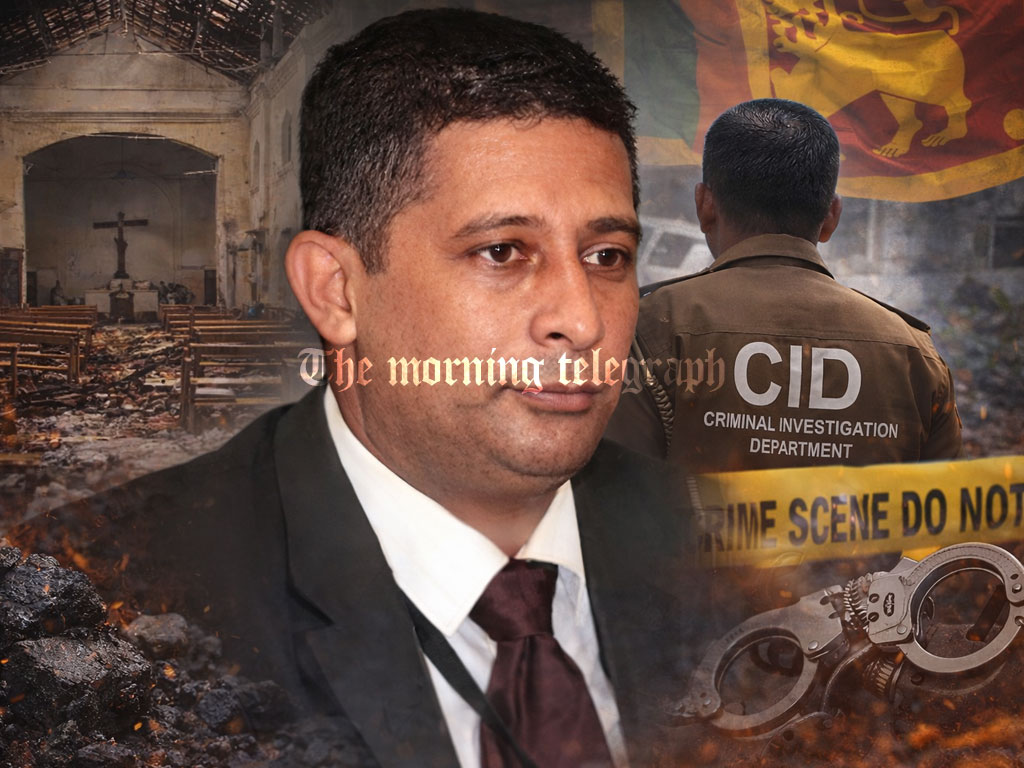
Sri Lanka’s long running investigation into the devastating Easter Sunday terrorist attacks has taken a dramatic turn after the Criminal Investigation Department confirmed in court that former State Intelligence Service Director Major General Suresh Sallay has been named as the third suspect in the case.

The announcement was made before Colombo Fort Magistrate Isuru Netthikumara when the case related to the Easter Sunday attacks was taken up in court through a formal motion presented by the Criminal Investigation Department. Investigators informed the court that Sallay, who previously served as the head of Sri Lanka’s State Intelligence Service, has now been formally identified as a suspect based on findings emerging from ongoing investigations into the 2019 terror attacks.
CID officials also confirmed that Suresh Sallay had already been arrested on the 25th in the Peliyagoda area and is currently being detained under a 90 day detention order issued under the Prevention of Terrorism Act. According to the department, this detention order was obtained in order to question the former intelligence chief further regarding information uncovered during the investigation.
During the court proceedings, Magistrate Netthikumara directly questioned the Criminal Investigation Department on whether investigators had obtained sufficient evidence to justify naming Sallay as a suspect in the Easter Sunday attacks. Responding to the magistrate’s inquiry, CID officials told the court that the investigations conducted so far had uncovered enough evidence to reasonably identify the former intelligence chief as a suspect in connection with the incident.
Following this statement, CID officers requested that the court allow them to present Suresh Sallay for judicial observation while he remains under remand and detention orders. The court was informed that the wider investigation covers multiple events linked to the Easter Sunday attacks, including the killing of two police officers in the Vavuniya area and an explosion connected to the Saindamaradu incident.
While the CID continues its investigation, the legal battle surrounding Sallay’s detention has already reached the Supreme Court. Retired Major General Suresh Sallay has filed a Fundamental Rights petition challenging both his arrest and his detention under the Prevention of Terrorism Act.
The petition was filed by Shantha Jayathilake, a retired officer of the Sri Lanka Air Force, acting on behalf of Sallay. In the petition, several high ranking government officials have been named as respondents, including the Minister of Defence, the Secretary to the Ministry of Defence, the Secretary to the Ministry of Public Security, the Inspector General of Police, and the Criminal Investigation Department.
According to the petition, the use of the Prevention of Terrorism Act against Sallay raises serious legal and constitutional concerns. The petitioner argues that the law is intended to be used only against individuals or groups who engage in acts that threaten the unity and territorial integrity of the country or who attempt to overthrow a legally elected government.
The petition further argues that no such allegations have been formally made against Sallay. The legal filing claims that the Prevention of Terrorism Act historically applied to armed movements such as the Liberation Tigers of Tamil Eelam which sought to undermine the state through armed struggle.
The petitioner also argued that even the protest movement that erupted across Sri Lanka in 2022 could potentially have fallen within the scope of the Act under certain interpretations, but that the Easter Sunday attacks themselves were carried out primarily based on extremist religious ideology rather than a campaign aimed at overthrowing the government or dividing the country.
According to the petition, the Criminal Investigation Department has not yet presented clear charges or detailed evidence against Sallay in relation to the use of the Prevention of Terrorism Act. The petitioner claims this raises questions about whether the detention order meets the legal threshold required under Sri Lankan law.
The Supreme Court has been requested to consider the case as a matter of public interest and public welfare, with the petitioner arguing that Sallay’s arrest and detention may constitute a violation of fundamental human rights.
In addition, the petition calls on the court to direct the Criminal Investigation Department to formally present any charges and supporting evidence related to the Prevention of Terrorism Act before the courts without delay.
If investigators fail to demonstrate sufficient legal grounds for the detention, the petitioner has requested the Supreme Court to issue appropriate orders safeguarding the constitutional rights of the former intelligence chief while the investigation continues.