Hambantota Port has set a new benchmark in container operations, reinforcing its growing status as a key regional maritime hub after handling its highest ever container volume from a single vessel.
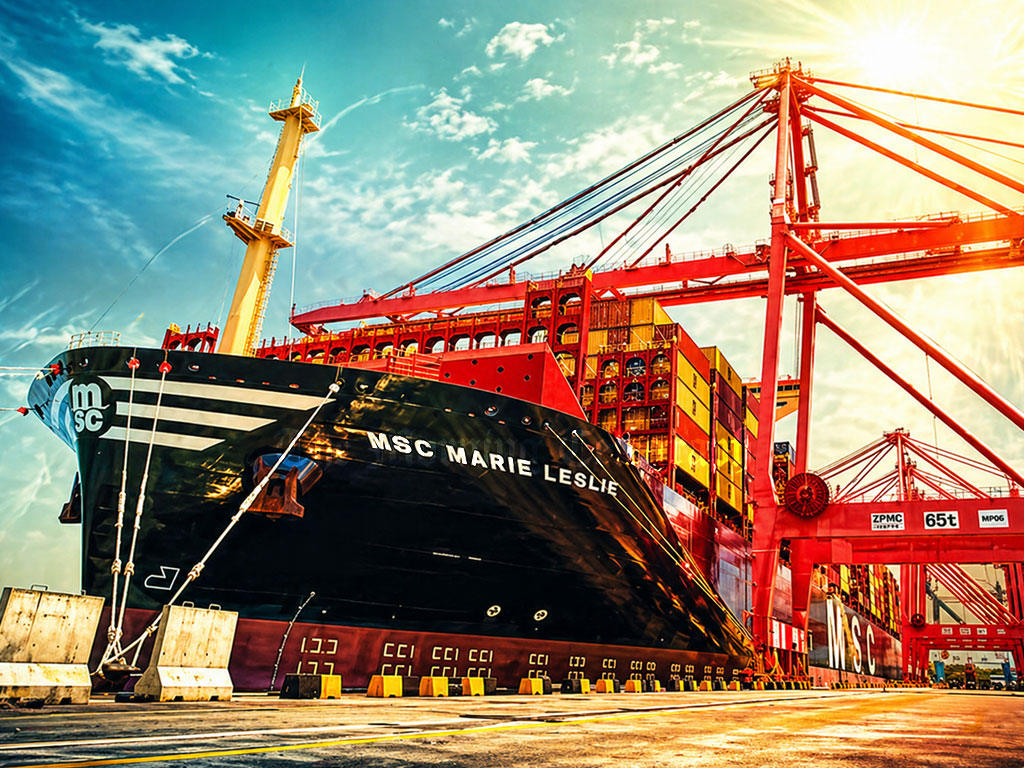
The Hambantota International Port achieved this milestone during the successful operation of the vessel MSC Marie Leslie, owned by the Mediterranean Shipping Company. The achievement marks a significant moment for the port, which has steadily worked to position itself as a major player in regional transshipment.
Between April 11 and April 15, 2026, the port handled a total of 7,968 containers, reaching an overall volume of 13,260 TEUs. This performance surpasses previous records set at the same facility, including the MSC Elenia with 12,957 TEUs and the MSC Ruby with 11,369 TEUs.

The latest figures highlight a clear upward trajectory in Hambantota Port’s operational capacity. In a relatively short period, the port has demonstrated its ability to manage large scale container movements efficiently, signaling both technological readiness and improved logistical coordination.
Port authorities have emphasized that this rapid growth reflects not only enhanced infrastructure but also the port’s capability to accommodate increasingly larger vessels. The successful handling of the MSC Marie Leslie is being viewed as a strong indicator of confidence from global shipping operators.
However, questions remain about whether this momentum can be sustained consistently in the long term. While the record breaking performance strengthens Hambantota’s reputation, the challenge now lies in maintaining steady volumes and attracting repeat business in a competitive regional environment.
This raises concerns about how the port will continue to differentiate itself among established transshipment hubs. Strategic partnerships, operational reliability, and continued investment in technology will likely play a crucial role in shaping its future trajectory.
What happens next could be critical. If Hambantota Port continues on this path, it may not only silence critics but also redefine its role in global shipping networks, positioning itself as a dependable and high capacity maritime gateway in the region.