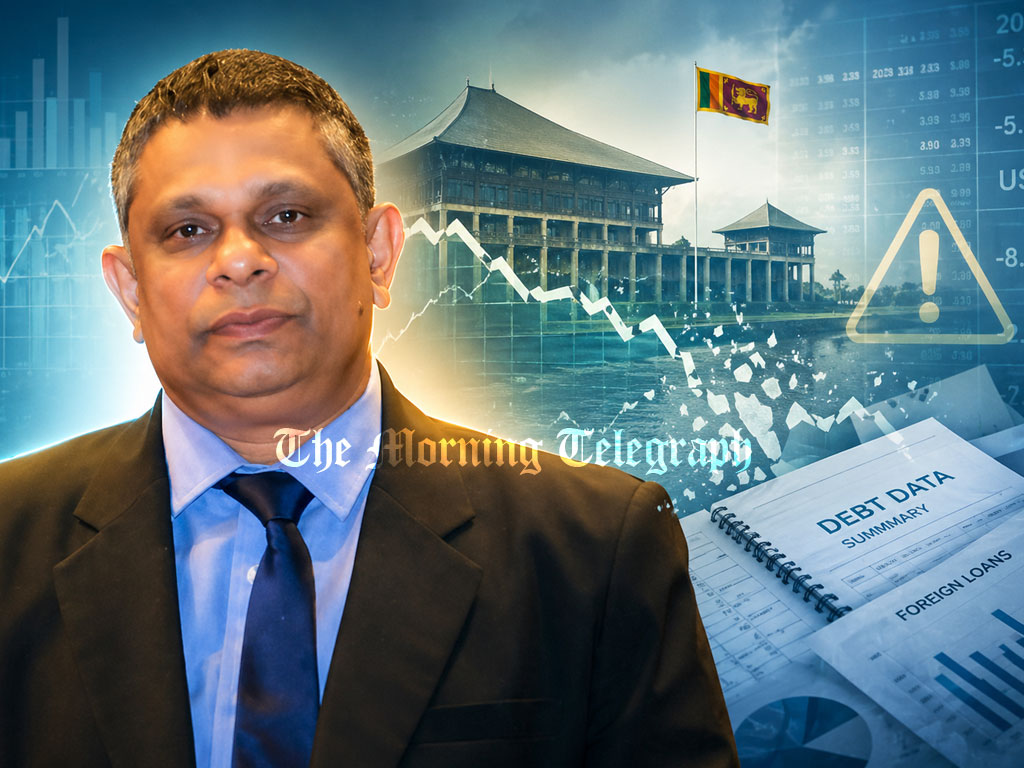
Treasury reporting delay raises alarm as Prof. Wasantha Athukorala highlights IMF debt data gaps and risks to Sri Lanka’s financial transparency.
The Treasury reporting delay has come under scrutiny after Prof. Wasantha Athukorala raised serious concerns over how information on alleged fund misappropriation was handled by top financial authorities.
Professor Wasantha Athukorala of the Department of Economics at the University of Peradeniya stated that it is deeply troubling that the Secretary to the Ministry of Finance did not immediately inform the President or Parliament once details of the alleged Treasury misappropriation surfaced.

He pointed out that such delays undermine the principles of transparency and accountability that are critical to maintaining financial discipline. In a system where timely disclosure is essential, any hesitation raises questions about institutional responsibility.
One of the major issues highlighted by the professor is the weakness in Sri Lanka’s debt data system. While the International Monetary Fund introduced a formal structure to track loans obtained since 2021, there remains a significant gap in records for loans taken before that period.
This raises concerns about how earlier borrowings were managed and repaid. The absence of comprehensive historical data creates blind spots that could conceal past irregularities or inefficiencies in debt servicing.
The professor also stressed the need for a broader investigation beyond the current incident. He noted that authorities must examine whether similar financial irregularities or misappropriation occurred in the settlement of foreign loan installments prior to 2021.
However, questions remain about whether such an investigation will be carried out with the urgency and independence required. The possibility of systemic issues within the financial framework cannot be ignored, especially when data gaps and reporting delays intersect.
This raises concerns about the overall integrity of Sri Lanka’s financial governance. Public confidence, already fragile, risks further erosion if transparency is perceived to be compromised or selectively applied.
Athukorala emphasized that responsible officials are expected to act promptly in situations involving potential financial misconduct. Any perceived concealment or delay not only weakens institutional credibility but also affects the country’s standing with international partners.
What happens next could be critical. Addressing these gaps in data systems and ensuring timely reporting will be essential in restoring trust and strengthening financial oversight.
As scrutiny intensifies, the focus will remain on whether authorities can close these loopholes and demonstrate a clear commitment to accountability in managing public finances.