A classified intelligence assessment warns that even a massive US led war may fail to overthrow Iran’s powerful religious and military establishment, exposing the limits of regime change ambitions in Tehran.
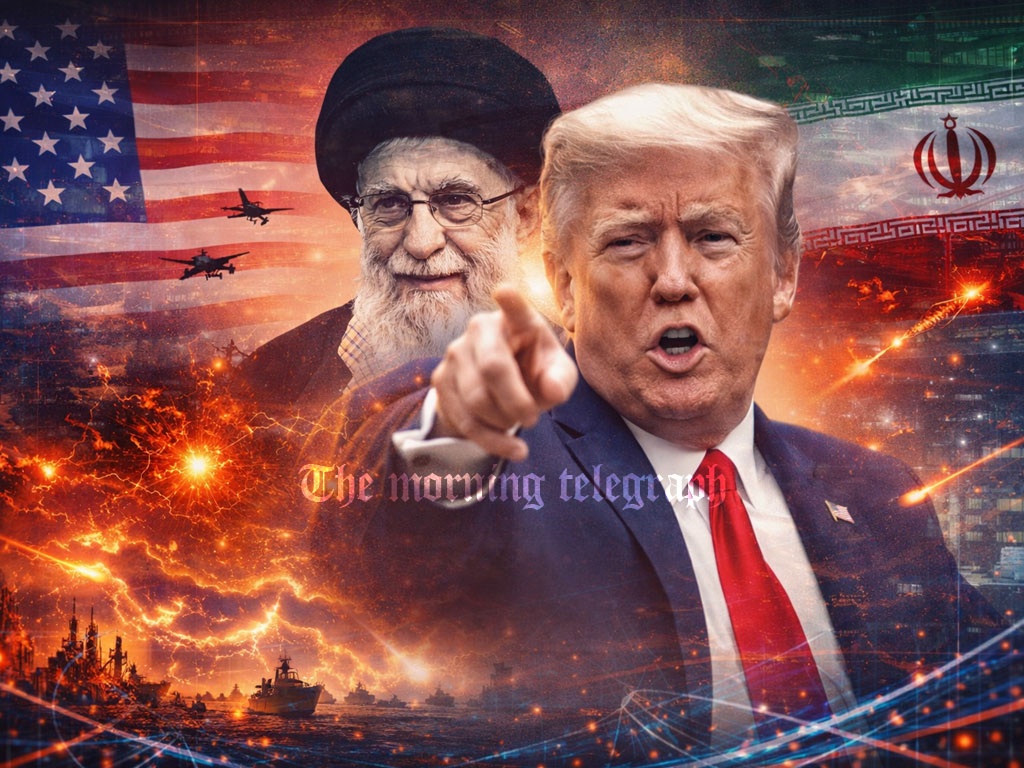
A confidential intelligence report circulating within the United States national security system has cast serious doubt on whether military force alone can topple Iran’s ruling establishment. According to analysts from the US National Intelligence Community, even a large scale American military campaign targeting Tehran’s leadership structure would be unlikely to dismantle the deeply entrenched political and religious institutions that control the country.

The report arrives at a sensitive moment in global geopolitics. The United States and Israel have already launched major military operations against Iranian targets, while President Donald Trump’s administration insists that the conflict has only begun. Despite the aggressive rhetoric surrounding the war, intelligence officials appear far less confident that battlefield victories will translate into political regime change.
Sources familiar with the classified document told the Washington Post that intelligence analysts carefully evaluated multiple scenarios before the war began on February 28. These scenarios included limited strikes targeting senior Iranian leaders as well as broader campaigns aimed at government institutions, security networks, and strategic command structures.
In both situations, the conclusion reached by analysts remained remarkably consistent. The Islamic Republic’s governing system is designed to survive leadership losses and adapt during crisis situations. Even if Supreme Leader Ali Khamenei were killed or removed, the Iranian religious and military establishment possesses well established mechanisms to maintain continuity of power.
The report also addressed another frequently discussed possibility in Western political debates. Intelligence analysts assessed the likelihood that fragmented Iranian opposition movements could seize control of the state following military pressure or leadership collapse. Their conclusion was blunt. Such an outcome remains unlikely under current conditions.
The US National Intelligence Community, composed of eighteen intelligence agencies, produces these strategic assessments by combining military intelligence, diplomatic reporting, and long term geopolitical analysis. Their findings often shape policy debates inside Washington even when political leaders publicly promote more optimistic scenarios.
Meanwhile the war itself has expanded rapidly across multiple geographic theaters. Military operations now stretch across the Middle East, with air strikes targeting Iranian infrastructure, missile exchanges occurring near NATO member Turkey, and naval activity intensifying in the Indian Ocean. Submarine deployments and maritime security operations have added a new dimension to the growing conflict.
The White House continues to frame the campaign as a decisive strategic effort. Spokesperson Anna Kelly recently stated that the objectives of Operation Epic Fury are clear and comprehensive. According to the administration, the mission aims to destroy Iranian ballistic missile capabilities, dismantle naval forces, disrupt Tehran’s ability to arm regional proxies, and permanently prevent the country from acquiring nuclear weapons.
Despite these ambitious goals, intelligence analysts remain cautious about predicting political outcomes inside Iran. Previous reports from the New York Times and Wall Street Journal had already hinted that American intelligence agencies doubted whether Iran’s opposition movements were capable of taking control if the ruling establishment collapsed.
Suzanne Maloney, vice president of the Brookings Institution and a leading Iran specialist, believes the intelligence community’s conclusion reflects decades of studying the structure of the Iranian state. She notes that the Islamic Republic has built resilient institutions capable of absorbing major shocks while preserving the authority of the ruling system.
The report also highlights the formal procedures governing leadership succession inside Iran. If the Supreme Leader dies, the powerful Assembly of Experts holds the constitutional authority to select a replacement. However, the Revolutionary Guard and national security apparatus are widely expected to exert considerable influence over that process.
Speculation has already emerged about possible successors. Mojtaba Khamenei, the son of the late Supreme Leader, is frequently mentioned as a potential candidate supported by elements within the Revolutionary Guard. Yet other powerful political figures, including senior security officials such as Ali Larijani, are also believed to hold significant influence in Tehran’s internal power struggles.
President Trump has repeatedly insisted that Iran must accept unconditional surrender, suggesting that Washington could influence the choice of Iran’s next leader. He has publicly criticized Mojtaba Khamenei and indicated that the United States prefers alternative figures who would abandon Tehran’s nuclear and missile ambitions.
Iranian leaders have rejected such suggestions outright. Parliamentary Speaker Mohammad Baqer Qalibaf responded by declaring that Iran’s political future will be determined only by the Iranian people and their institutions.
For now, American intelligence officials say they see little evidence of a nationwide uprising or a breakdown within Iran’s security apparatus. Experts argue that as long as the country’s military and religious leadership remains united, external military pressure alone is unlikely to force regime change.