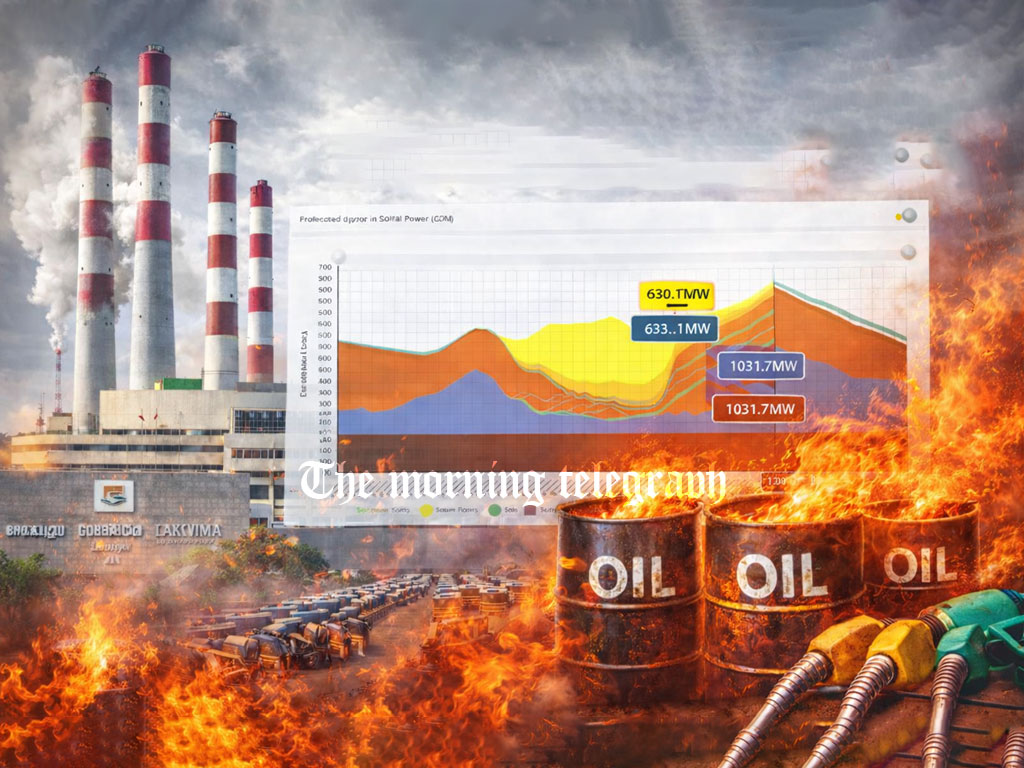
With diesel and furnace oil prices soaring after the latest fuel hike, thermal power generation costs have doubled, and reduced output from the Norochcholai coal power plant is forcing authorities to consider passing the massive additional expense onto consumers through increased electricity tariffs.
Following the Ceylon Petroleum Corporation’s sharp increase in fuel prices effective from midnight yesterday, attention has now turned toward a likely hike in electricity tariffs in the coming period. Energy sector sources indicate that such a step may become necessary to cover the rising cost of electricity generation.

The fuel price hike has dealt a severe blow to the power sector, compounded by reduced generation capacity at the Norochcholai coal power plant. According to data from yesterday, during the evening peak demand period at 7:00 p.m., coal based generation stood at only 630 megawatts, significantly below its installed capacity.
To compensate for this shortfall at Norochcholai, authorities have been forced to rely more heavily on expensive thermal oil powered plants. Data shows that to meet the evening peak demand of 2,817.5 megawatts, thermal power plants contributed a massive 1,031.7 megawatts to the grid.
With diesel and furnace oil prices rising sharply, the cost of generating one unit of electricity through thermal plants has now approximately doubled. The sharp increase in fuel costs has made thermal generation significantly more expensive, placing immense financial pressure on the Ceylon Electricity Board.
If the ongoing issues at the Norochcholai plant continue to force dependence on thermal power, the additional cost will likely be passed on to consumers through an electricity tariff revision. A special discussion between officials of the Ceylon Electricity Board and the Public Utilities Commission is scheduled to be held in the coming days to address the situation.