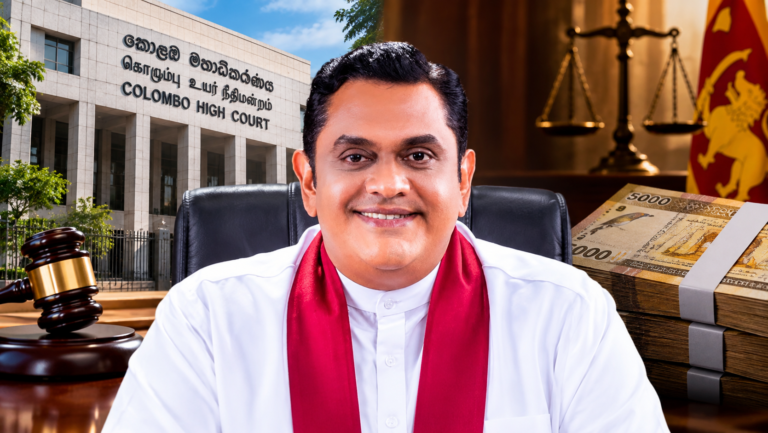
Sri Lanka leans on record foreign reserves as a financial lifeline, with the Central Bank expressing cautious confidence in weathering global shocks driven by Middle East tensions and rising energy uncertainty.
Sri Lanka is positioning itself to face a potential economic storm as tensions in the Middle East continue to escalate, threatening global markets and energy supply chains. Central Bank Governor Dr. Nandalal Weerasinghe has indicated that the country remains in a relatively strong position to manage external shocks, largely due to its record-high foreign reserves. Addressing a media briefing at the Central Bank headquarters on March 25, he highlighted that Sri Lanka’s reserves, estimated at around US $7.3 billion, act as a financial buffer capable of stabilizing the economy in the event of disruptions to trade, fuel prices, or capital movements.

The Governor’s remarks present a cautiously optimistic outlook on Sri Lanka’s financial resilience. With foreign reserves now at their highest levels in recent years, Dr. Weerasinghe suggested that authorities have the flexibility to strategically deploy these funds to absorb short-term economic pressures. This approach aims to protect fiscal stability while cushioning the domestic economy from sudden spikes in import costs, particularly in critical sectors such as energy and essential goods. The ongoing Middle East conflict, which continues to influence oil prices and global supply chains, remains a key risk factor in this equation.
Beyond financial measures, Dr. Weerasinghe also pointed to the resilience and adaptability of the Sri Lankan population. Reflecting on past crises including the Covid-19 pandemic, Cyclone Ditya, and the recent economic downturn, he expressed confidence that the country has developed the capacity to navigate uncertainty. This collective experience, he noted, provides a strong foundation for managing future economic challenges while minimizing both social and financial strain.
The Central Bank’s stance reinforces the importance of maintaining strong foreign reserves as a strategic economic safeguard. In a volatile global environment marked by rising oil prices and potential disruptions to trade routes, a solid reserve position allows policymakers to intervene in currency markets, maintain liquidity, and ensure the continued flow of essential imports. Crucially, this reduces the immediate need for emergency borrowing or severe fiscal tightening, offering a degree of stability during uncertain times.
However, while the message from the Central Bank signals confidence, it also reflects an underlying awareness of global fragility. The Middle East crisis has already introduced volatility into international energy markets, and economies that depend heavily on imports remain particularly exposed to sudden price shocks. Sri Lanka’s current reserve strength offers a temporary cushion, but prolonged geopolitical instability could still pose significant risks. Continuous monitoring, prudent financial management, and potential policy adjustments may be required to ensure long-term economic stability.