A shocking corruption scandal inside Sri Lanka’s Motor Traffic Department reveals alleged fraud, favouritism, and a controversial Rs. 700 million tender decision, raising serious questions about governance, accountability, and misuse of public funds.
The Department of Motor Traffic, a key public institution responsible for vehicle registration, roadworthiness certification, and driver licensing in Sri Lanka, has now been thrust into the spotlight amid a growing corruption scandal that is capturing national attention.
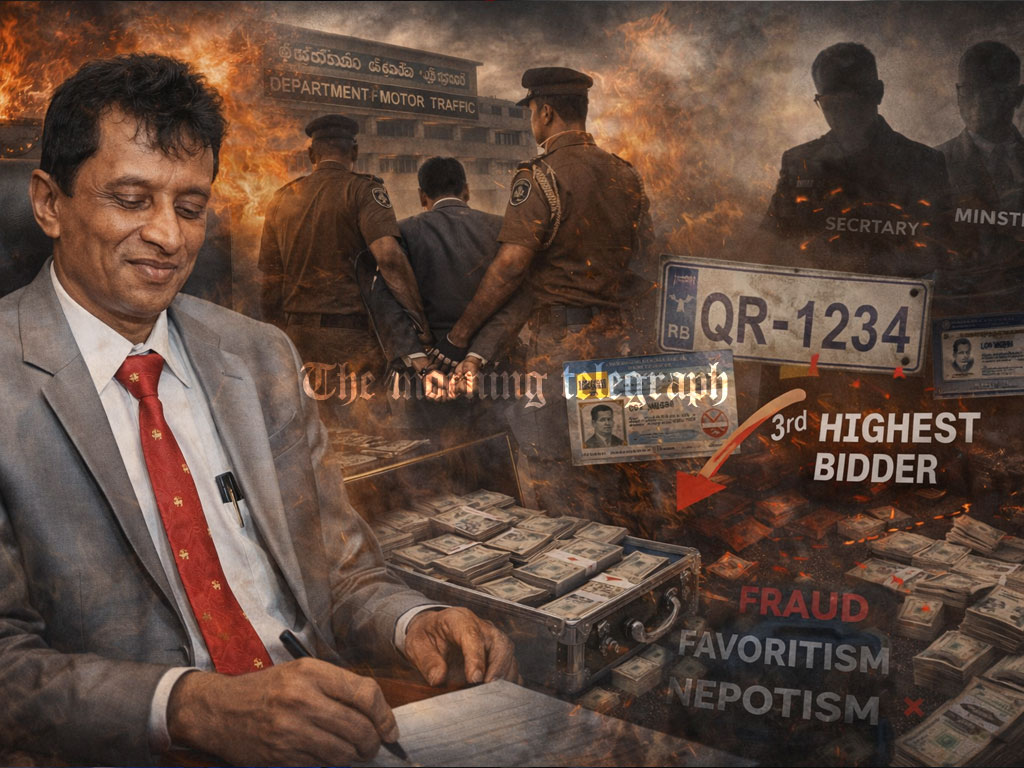
The recent arrest of the Commissioner General has triggered deeper scrutiny, suggesting that the issue extends far beyond isolated misconduct. What is now emerging points toward a systemic failure rooted in abuse of authority, weak governance, and personal financial gain.

At the centre of the controversy are serious allegations that senior officials within the department exploited their positions to divert millions in public funds. A regulatory body meant to protect the public interest now faces accusations of functioning as a mechanism for corruption and financial manipulation.
Equally alarming is the apparent breakdown in oversight and accountability. The Secretary and the Minister responsible appear to have either underestimated or ignored the severity of the irregularities, allowing questionable practices to continue unchecked. This has intensified concerns about leadership failure and institutional negligence at the highest levels of government.
The role of the Secretary has drawn particular criticism. As a non SLAS officer, doubts have been raised regarding his understanding of public administration and governance. Observers have pointed to his previous tenure as Secretary to the Ministry of Education, which was widely criticised for poor outcomes, as evidence of a troubling pattern now resurfacing within the Motor Traffic Department.
The controversy surrounding the delayed vehicle number plate tender has further deepened public distrust. In a highly controversial procurement decision, the contract was awarded to the third highest bidder at a cost reportedly Rs. 700 million higher than competing bids, raising major red flags about transparency and procurement integrity.
The process that led to this decision has also come under heavy scrutiny. Samples submitted by bidders were tested at the materials laboratory of the University of Moratuwa, reportedly under the direction of the Secretary, who had previously served as Acting Vice Chancellor of the same university.
Crucially, this laboratory is not accredited by the Sri Lanka Accreditation Board, casting serious doubt on the validity and credibility of the testing process that influenced the final tender outcome.
Based on the findings of this non accredited facility, the two lowest bidders were disqualified, effectively clearing the way for the highest cost bidder to secure the contract, raising concerns about manipulation of the tender process.
Aggrieved bidders appealed to the Presidential Appeals Board, which acknowledged procedural flaws and directed that the rejected samples be retested through an accredited laboratory to ensure fairness and compliance with procurement standards.
However, in a decision that has further fuelled suspicion, only the rejected samples were sent for retesting. The sample of the selected bidder, which formed the basis of the final award, was not subjected to independent accredited verification, raising serious questions about transparency and possible concealment.
Adding to the controversy is a striking connection. The successful bidder is reportedly the son in law of the previous supplier who held the number plate contract for over two decades, intensifying concerns of favouritism, nepotism, and the preservation of long standing monopolies within government procurement systems.
The implications of these developments are deeply concerning for Sri Lanka’s governance and public finance management.
The Cabinet has effectively approved a product that has not been verified by an accredited authority, while the public is expected to bear the burden of significantly higher costs for vehicle number plates, highlighting issues of financial mismanagement.
This situation has evolved beyond a routine administrative lapse and now represents a serious crisis of public trust, institutional integrity, and adherence to the rule of law within Sri Lanka’s public sector.
Civil society organisations and public accountability groups must now take an active role in demanding transparency. Investigative authorities must initiate a comprehensive and independent probe into these allegations. Failure to act decisively will only reinforce perceptions that corruption is tolerated and public funds can be misused without consequence.