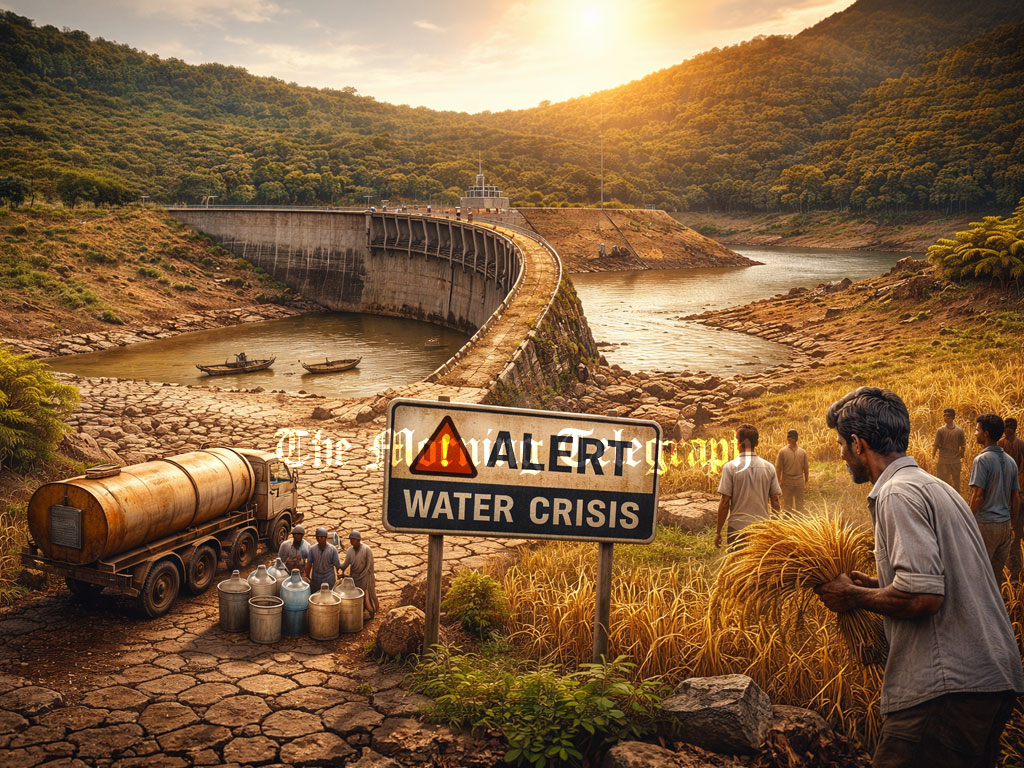
A controversial move to release critical water reserves to manage the energy crisis is now triggering a looming disaster, threatening drinking water, agriculture, and food security across Sri Lanka.
Sri Lanka is facing an escalating water and energy crisis as concerns grow over the rapid depletion of the Victoria Reservoir, a move critics say stems from attempts to manage the coal shortage and related financial irregularities. Frontline Socialist Party Bahujan Secretary Duminda Nagamuwa has strongly criticized the government, warning that the decision is placing millions at risk.

The controversy centers on an extraordinary decision to release large volumes of water from the Victoria Reservoir in an effort to save Rs. 7260 million while addressing the ongoing energy crisis. Experts warn that this move could dangerously reduce water levels from the required 405 million cubic meters to as low as 75 million cubic meters, creating a severe imbalance in water resource management.
The immediate impacts of this decision are already being felt across several regions. The Balagolla pumping station has become inoperable, leaving approximately 17000 families in Balagolla, Kundasala, and Digana without access to safe drinking water. Instead of meeting the daily requirement of 12000 cubic meters, authorities are currently supplying only around 500 cubic meters through water bowsers, highlighting the gravity of the supply shortfall.
Industrial activity has also been affected, with several factories in the Pallekele Investment Promotion Zone forced to halt operations since April 10 due to the worsening water shortage. This disruption is expected to have broader economic consequences, particularly in manufacturing and employment sectors.
Looking ahead, the situation raises serious concerns for the agricultural sector. With forecasts indicating the possibility of severe drought conditions, farmers in the Minipe and Mahaweli H zones may soon face a critical lack of irrigation water. This could directly impact paddy cultivation, leading to reduced rice production, rising food prices, and increased pressure on consumers already struggling with inflation.
Analysts emphasize that the current crisis underscores the urgent need for sustainable water management, energy planning, and transparency in decision making. Calls are growing for the government to reconsider and immediately reverse policies that risk undermining essential resources such as drinking water and agriculture in an attempt to manage deeper systemic issues.