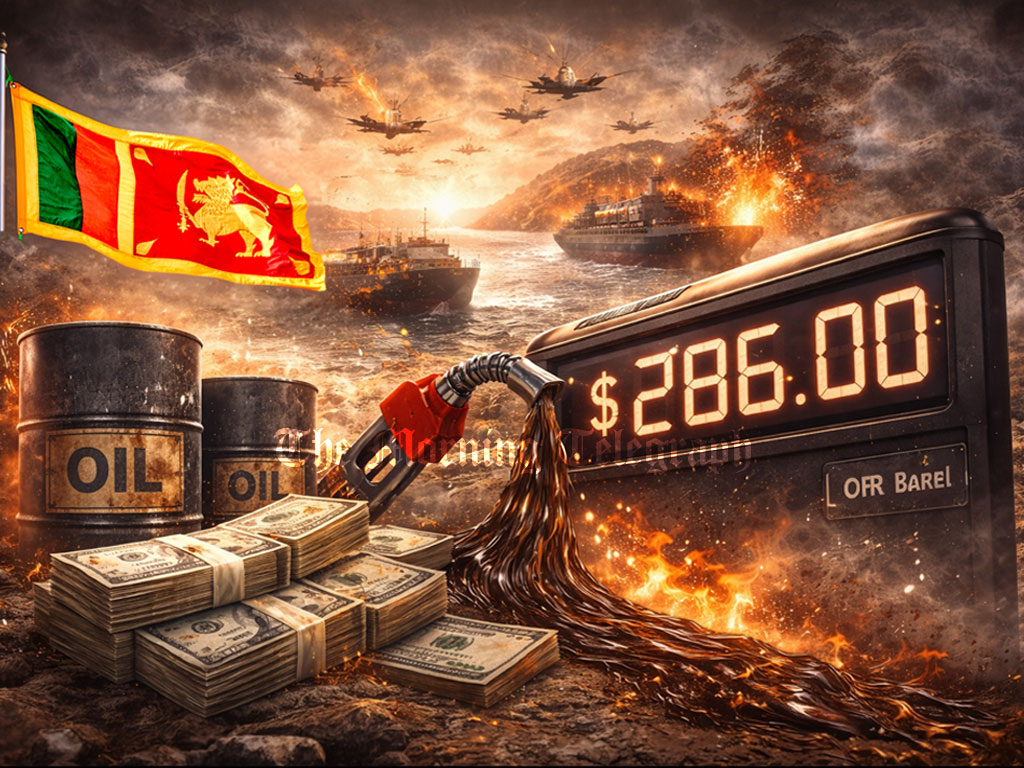
A shocking price gap exposed at a global conference reveals how geopolitical conflict, supply disruptions, and hidden costs are forcing Sri Lanka to pay nearly double for crude oil, deepening its economic strain.
Amid escalating tensions in the Middle East, countries with smaller economies like Sri Lanka are facing an extreme burden in oil prices, with costs reaching as high as $286 per barrel, according to HSBC Group CEO Georges Elhedery.
Speaking at a global investment conference in Hong Kong, Elhedery highlighted that benchmark crude oil prices in international markets fail to reflect the true cost faced by many Asian countries, where additional expenses significantly inflate the final price.

He explained that beyond global benchmark rates, factors such as rising insurance premiums, higher shipping costs, and constrained oil supply chains have driven the actual price of crude oil far above expected levels for import-dependent nations.
The crisis has been largely triggered by disruptions in oil transportation through the Strait of Hormuz, a critical global energy route affected by ongoing tensions involving the United States, Israel, and Iran.
While global crude oil prices have crossed the $100 mark due to geopolitical instability and restrictions linked to Iran’s control over the strait, Asian buyers have been paying between $140 and $150 per barrel under normal strained conditions.
However, the reported figure of $286 paid by Sri Lanka stands out as one of the highest oil prices recorded, underscoring the severe economic pressure on the country during the current global energy crisis.
With such elevated costs, there is growing concern over a potential increase in domestic fuel prices, as the government has already taken steps to revise fuel rates in March in response to global market conditions.
Economic analysts warn that continued exposure to high oil import costs could significantly weaken foreign exchange reserves, especially for countries like Sri Lanka that rely heavily on imported fuel to sustain economic activity.
They further stress that the ongoing energy crisis highlights the urgent need for strategic measures such as reducing fuel consumption, improving energy efficiency, and exploring alternative energy sources to ensure long-term energy security.