A powerful majority, a costly coal procurement crisis, and rising public anger are colliding to reshape Sri Lanka’s political battlefield, as the government’s own decisions risk turning strength into vulnerability.
Sri Lankan governments that secure overwhelming majorities often fall into a familiar trap, becoming overly confident and assuming that their weakened political opponents will never recover. In doing so, they tend to ignore public sentiment and push ahead recklessly, believing their dominance guarantees stability. History shows otherwise. Governments that commanded two-thirds majorities have repeatedly faced unexpected defeats, as seen in 1977, 2015 and 2024. The UNP victory in 1977 remains a rare exception, achieved through controversial means including election manipulation and political violence, even extending to a disputed referendum to bypass the 1982 general election. Today, the JVP-NPP government appears to be repeating similar mistakes, particularly in its handling of the controversial coal procurement crisis.

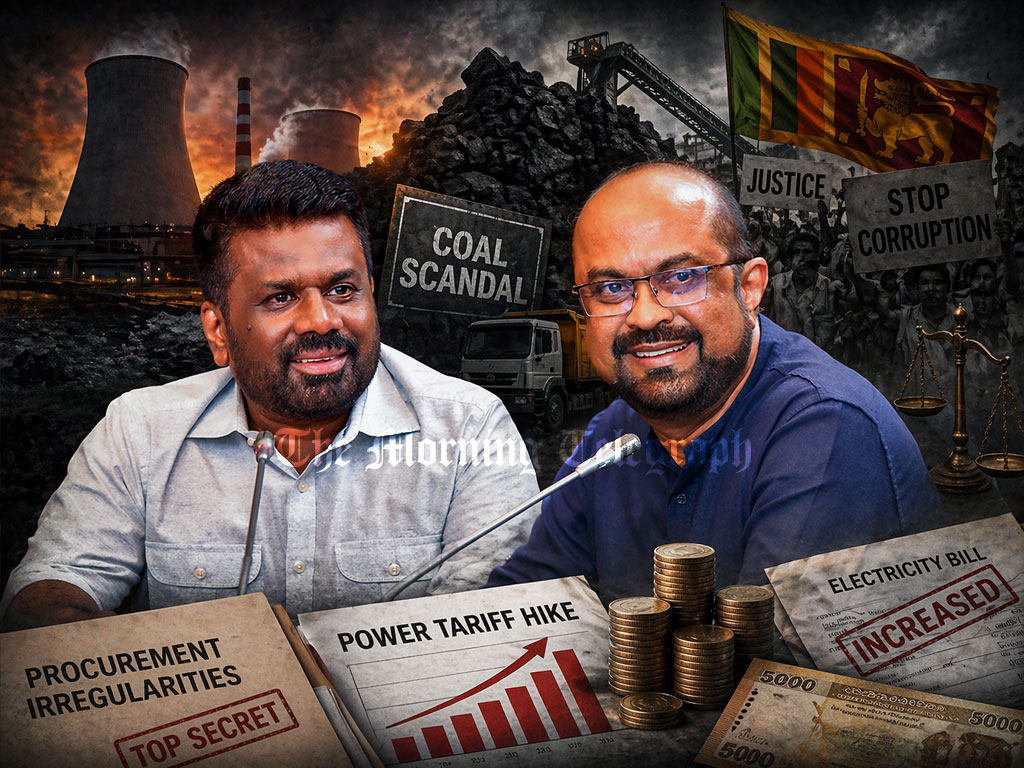
The JVP-NPP administration has made a determined effort to convince the public that none of its members were involved in the coal procurement scandal, despite allegations of massive financial losses to the state. Unlike previous corruption accusations that seemed distant to ordinary citizens, this issue has had a direct and visible impact on the public. Substandard coal imports have disrupted electricity generation at the Norochcholai coal power plant, forcing oil-powered plants to compensate for the shortfall. This shift has significantly increased costs, which are ultimately passed on to citizens through higher electricity tariffs and rising fuel prices. The Ceylon Petroleum Corporation has even acknowledged purchasing diesel at around USD 286 per barrel, one of the highest prices recorded globally, highlighting the urgency and pressure surrounding power generation. This situation has made it easier for the Opposition to mobilize public dissatisfaction.
In attempting to defend itself, the government has unintentionally handed its rivals a powerful political opportunity. The Opposition has seized on the coal procurement controversy as a central issue, using it to challenge the credibility of the ruling coalition. A government once known for its aggressive political stance now finds itself under pressure, forced into a defensive position it likely never anticipated. Having risen to power on promises of accountability and strong criticism of corruption, the JVP-NPP leadership now faces similar allegations, placing it in an uncomfortable and vulnerable situation.
Opposition parties have already made it clear that a full investigation into the coal procurement scandal will be among their top priorities if there is a change in government. Their strategy is straightforward. By highlighting alleged irregularities in coal imports, they aim to shift public opinion and weaken the ruling coalition’s support base. Given Sri Lanka’s history of protest voting, where public frustration often leads to dramatic electoral swings, the government has legitimate reasons to be concerned about its political future.
Recent history offers a clear warning. In 2015, voters rejected the Rajapaksa administration largely due to allegations of corruption and misuse of power. Yet by 2018, the same electorate delivered a strong mandate to the SLPP in local government elections, paving the way for its return to power. This pattern demonstrates how quickly public sentiment can shift, especially when corruption becomes a central campaign issue. The current situation suggests that the Opposition could once again capitalize on anti-corruption messaging to regain political ground.
There is also a growing irony in the current political narrative. The very figures once criticized by the JVP-NPP as symbols of corruption are now accusing the ruling party of similar misconduct. Questions surrounding asset declarations of key JVP leaders have further complicated matters. Before the 2024 elections, party leaders emphasized their modest lifestyles and full-time political dedication. Now, attempts to portray themselves as financially stable prior to entering politics appear inconsistent with earlier claims of representing the working class and marginalized communities.
The government’s current predicament has largely been shaped by its response to the coal procurement issue. Instead of taking immediate corrective action, such as holding key officials accountable and launching a transparent investigation, it chose to defend those implicated. Energy Minister Kumara Jayakody and Ministry Secretary Udayanga Hemapala remained protected despite emerging concerns. A decisive and transparent response could have strengthened the government’s credibility and limited political damage. Instead, the administration defended its position in Parliament during a no-confidence motion and later appointed a presidential commission to investigate coal procurement practices dating back to 2009, a move widely seen as an attempt to dilute the immediate controversy.
In doing so, the government may have undermined its own standing. What could have been an opportunity to reinforce accountability has instead become a liability, giving the Opposition a clear narrative to rally around. The political consequences of this miscalculation are still unfolding, but the signs are unmistakable. A government that once appeared firmly in control now faces growing scrutiny, and the coal procurement crisis has become a defining issue that could shape the next phase of Sri Lanka’s political landscape.