A deepening political storm is unfolding as allegations mount that democratic processes are being deliberately stalled under the cover of reform, raising urgent questions about accountability, governance, and the future of elections in Sri Lanka.
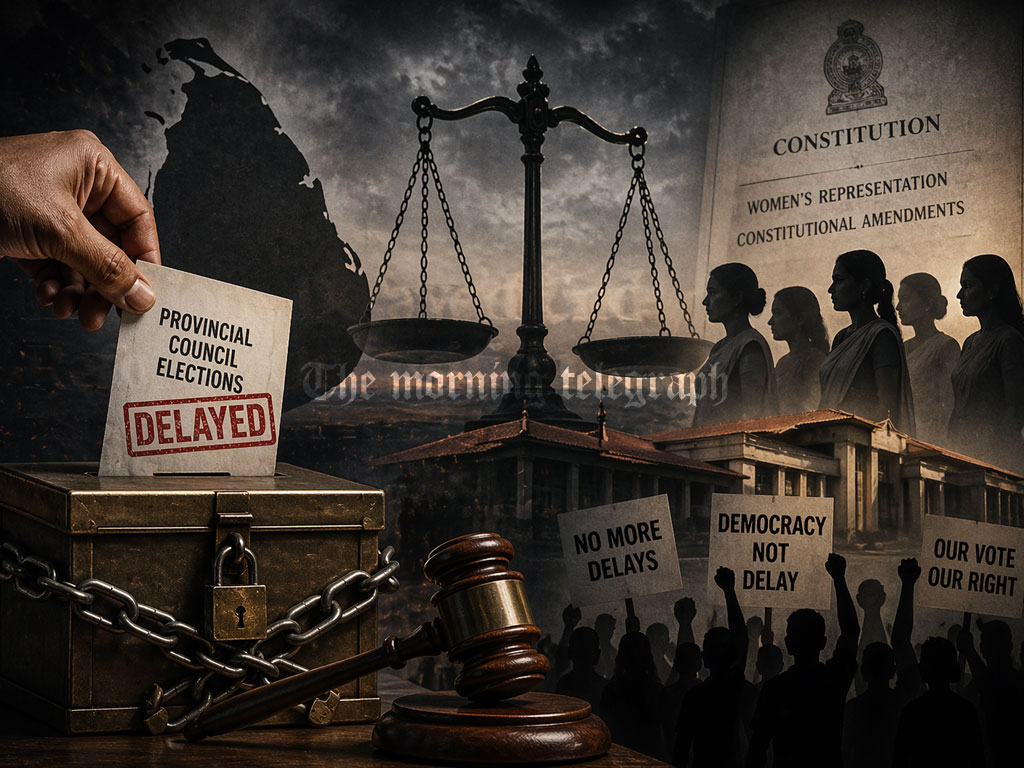
A growing political controversy has erupted in Sri Lanka over the continued delay of Provincial Council elections, with opposition figures alleging that the government is orchestrating a calculated diversion under the guise of progressive reform. M. A. Sumanthiran of the Ilankai Tamil Arasu Kachchi has publicly declared that his party will resist any move to indefinitely postpone the elections, arguing that the government’s stated commitment to increasing women’s representation is being used as a political smokescreen to delay electoral accountability and democratic processes.

In a statement shared on social media, Sumanthiran highlighted what he described as a clear pattern of deliberate delay tactics. He acknowledged that improving women’s political representation is an important and necessary objective. However, he questioned the timing and urgency of introducing constitutional amendments before holding elections, stating that such actions appear increasingly suspicious. According to him, similar proposals to conduct elections under the existing system had already been presented in previous parliaments, yet no meaningful progress had been achieved. This, he argued, demonstrates that the current justification is less about genuine reform and more about avoiding accountability through elections.
Sumanthiran also pointed to broader regional parallels beyond Sri Lanka, referencing developments in India where electoral delimitation debates have sparked concerns about representation based on population changes. He warned that regions such as Tamil Nadu could face reduced political representation despite successful population control measures. This, he suggested, reflects a wider regional issue where demographic shifts are being used to justify political imbalances and shifts in power.
Turning back to the Sri Lankan context, he emphasized the unique challenges faced by the Tamil community. Decades of conflict, displacement, and forced migration have significantly reduced the Tamil population in certain regions, leading to a corresponding decline in political representation. Sumanthiran argued that it would be deeply unjust to further erode their political voice based on population statistics that were shaped by historical violence and displacement, rather than natural demographic changes.
Using a strong cultural analogy, he described the situation as compounding an already existing injustice, stressing that democratic processes must not be undermined by procedural excuses. While reaffirming his party’s support for increasing female political representation, Sumanthiran made it clear that such reforms must not come at the expense of delaying elections. He concluded with a firm warning that any attempt to bypass the democratic mandate of the people would be strongly challenged, signaling a deepening political confrontation in the country.