Seven years after the Easter Sunday terror attacks, unanswered questions, political shadows, and unresolved accountability continue to haunt Sri Lanka’s search for justice.
‘Mastermind’ has become a widely used term in Sri Lanka since the Easter Sunday terror attacks of 2019. Over the past seven years, multiple investigations led by police units, committees, and even a Presidential Commission have examined the devastating attacks that shook the nation and the world. Yet, there is still no clear consensus on who truly masterminded the terror strikes. Numerous theories and competing narratives have emerged about the perpetrators and those behind them, leaving the question of accountability unresolved and the timeline for closure uncertain.

The Easter Sunday tragedy has significantly reshaped how Sri Lankans view terrorism and national security. There is now a unified stance in condemning such acts without hesitation or justification. The rejection of any attempt to rationalize or excuse terrorism marks a positive shift in public consciousness, reinforcing a stronger national commitment against extremism.
Terrorism must be condemned and eliminated in all its forms. It has no place in a civilised society, regardless of the motivations or grievances claimed by perpetrators. There can be no justification for violence against innocent people in pursuit of legitimacy. Terrorism is not merely a tactic but a destructive end in itself, and it must be treated as such in policy, governance, and public discourse.
However, history shows that public opinion in Sri Lanka has not always been consistent when confronting terrorism. During periods of violence carried out by the LTTE and the JVP, society was often divided in its response to these campaigns. Velupillai Prabhakaran was widely identified as the mastermind behind LTTE attacks on civilians, yet certain political, religious, and even diplomatic actors engaged with him, granting a degree of legitimacy. Similarly, figures associated with the JVP insurgency, including those linked to Rohana Wijeweera, have been commemorated publicly. In contrast, no such recognition exists for Zaharan Hashim, the leader of the National Thowheed Jamaath, who orchestrated the Easter Sunday attacks that killed over 275 people and injured around 500 others.
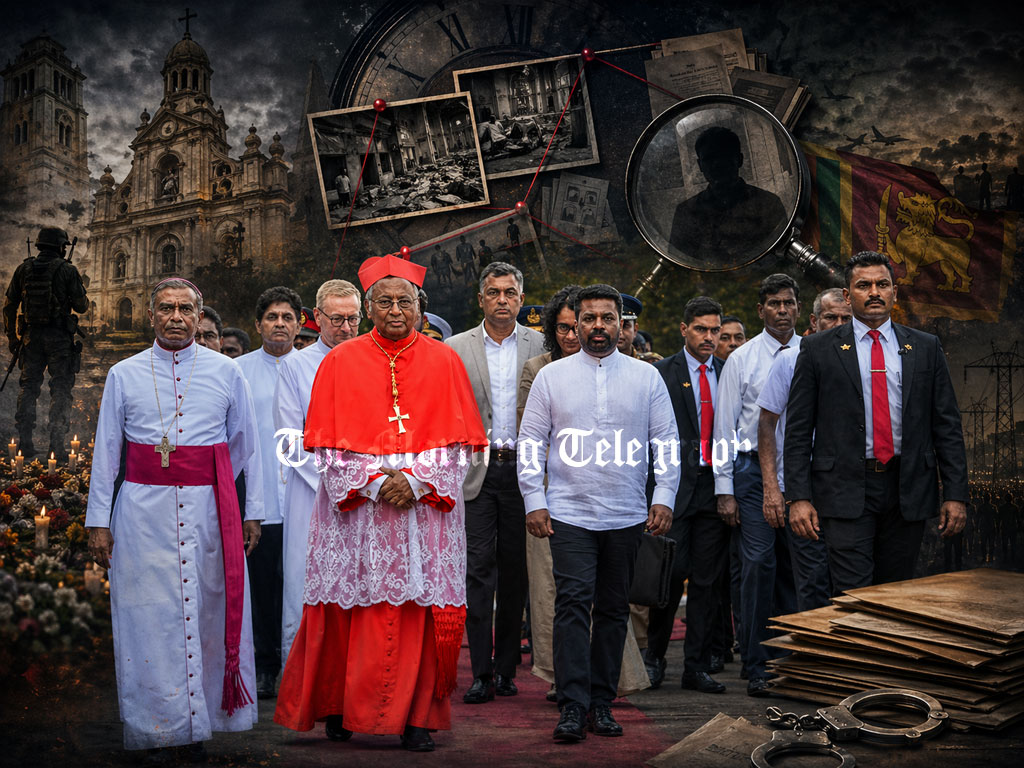
Failure to prevent such attacks despite credible intelligence is also a grave issue that demands accountability. Lives could have been saved if authorities, including the police, intelligence agencies, and government leadership, had acted promptly on available warnings. Only a limited number of individuals have faced legal consequences for these failures, and compensation to victims has been insufficient. All recommendations put forward by the Presidential Commission that investigated the Easter Sunday attacks must be fully implemented to ensure justice and prevent recurrence.
Adding to the complexity, those currently leading renewed investigations into the Easter Sunday attacks include individuals who held key positions in 2019 when the attacks occurred. Retired SSP Shani Abeysekara and retired SDIG Ravi Seneviratne are now serving in senior roles within the CID and the Ministry of Public Security. Their political affiliations and the circumstances of their appointments have raised concerns about potential conflicts of interest and the integrity of the ongoing investigations.
Calls for accountability have also extended to Deputy Defence Minister Maj. Gen. Aruna Jayasekera, who served as Security Forces Commander in the Eastern Province at the time of the attacks. Critics argue that there is a conflict of interest given that some intelligence officers under his command are now under investigation for alleged links to extremist groups. Despite this, similar demands have not been consistently directed at other officials involved in the current investigative process, raising further questions about fairness and transparency.
Meanwhile, other major financial crimes in Sri Lanka have also failed to reveal their true masterminds. The 2015 Treasury bond scandal was widely attributed to then Central Bank Governor Arjuna Mahendran, yet it is commonly believed that he acted under the influence of powerful political figures. Neither the Presidential Commission of Inquiry nor parliamentary oversight bodies such as COPE conclusively identified those behind the scheme. At the same time, political leaders associated with the JVP maintained close relations with the UNP. The coal procurement scam, which has caused significant financial losses and increased electricity costs, also remains unresolved, with questions lingering over whether individuals blamed for the scandal acted independently or under direction.