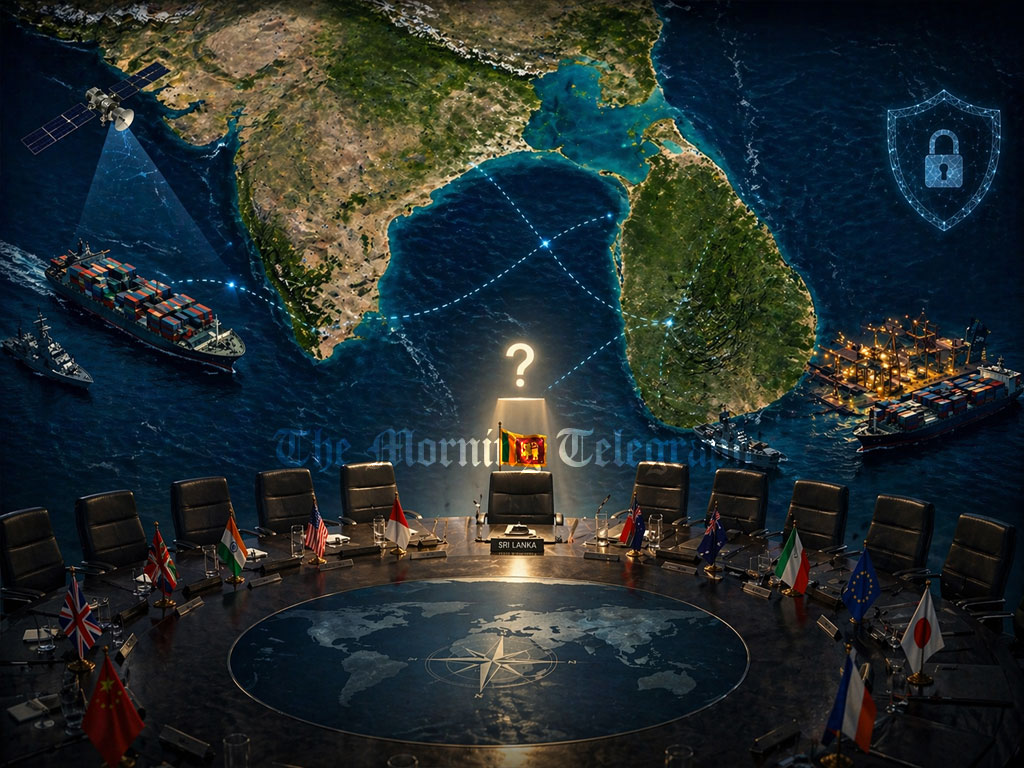
A strategic silence sparks concern as Sri Lanka skips a critical Indian Ocean Conference, raising urgent questions about diplomacy, regional security, and its role in a rapidly shifting geopolitical landscape.
At the 8th Indian Ocean Conference held in Oman in 2025, Sri Lanka was represented by Foreign Minister Vijitha Herath, who played an active diplomatic role during the event. On the sidelines of the conference, he met with India’s External Affairs Minister S. Jaishankar, engaging in detailed discussions that focused on strengthening Indo–Sri Lanka relations and enhancing regional cooperation.

The Indian Ocean Conference, launched in 2016 by the India Foundation, has evolved into a significant forum that brings together policymakers, strategic experts, and ministers from nearly 40 countries. It is widely recognized as a vital platform for maritime diplomacy, security dialogue, and economic cooperation across the Indian Ocean region.
Sri Lanka has also held a prominent leadership role within the Indian Ocean Rim Association, serving as chair from 2023 to 2025. During this period, the country remained actively involved in regional initiatives, with Foreign Minister Vijitha Herath participating in key engagements and presiding over important meetings in 2025.
Historically, Sri Lanka has played a forward-looking role in shaping regional peace frameworks. It was among the nations that proposed declaring the Indian Ocean a zone of peace, an initiative that was later endorsed by the United Nations. Today, as geopolitical tensions rise, Sri Lanka’s need for regional collaboration and maritime security partnerships has become increasingly urgent.
This urgency was highlighted by a recent security incident involving a United States strike on Iranian vessels near Sri Lanka’s maritime zone, drawing the island nation into a sensitive international situation. Such developments underscore the importance of maintaining strong diplomatic engagement and active participation in regional security discussions.
At a time when stability in the Indian Ocean is under pressure, Sri Lanka’s presence in forums that address maritime security, strategic cooperation, and diplomatic engagement is more crucial than ever. Participation in such platforms ensures that the country remains part of key decision-making processes that directly impact its national interests.
However, at the recently concluded 9th Indian Ocean Conference held in Mauritius, Sri Lanka’s absence was notable. Foreign Minister Vijitha Herath did not attend the event, and significantly, no senior government representative was present on behalf of the country.
Despite its relatively small size, Sri Lanka holds considerable geopolitical significance due to its strategic location along vital maritime routes in the Indian Ocean. This positioning has long made it an important partner in regional affairs, drawing attention from global powers and neighboring states alike.
To maintain and strengthen this strategic relevance, Sri Lanka must continue to engage closely with regional partners and actively contribute to discussions that shape the future of the Indian Ocean. Failure to participate in such critical forums risks diminishing its influence and could place the country at a disadvantage in an increasingly competitive geopolitical environment.