A bold move by Sri Lanka’s Motor Traffic Department could soon replace traditional number plates with personalized name plates, sparking debate over identity, regulation, and revenue generation.
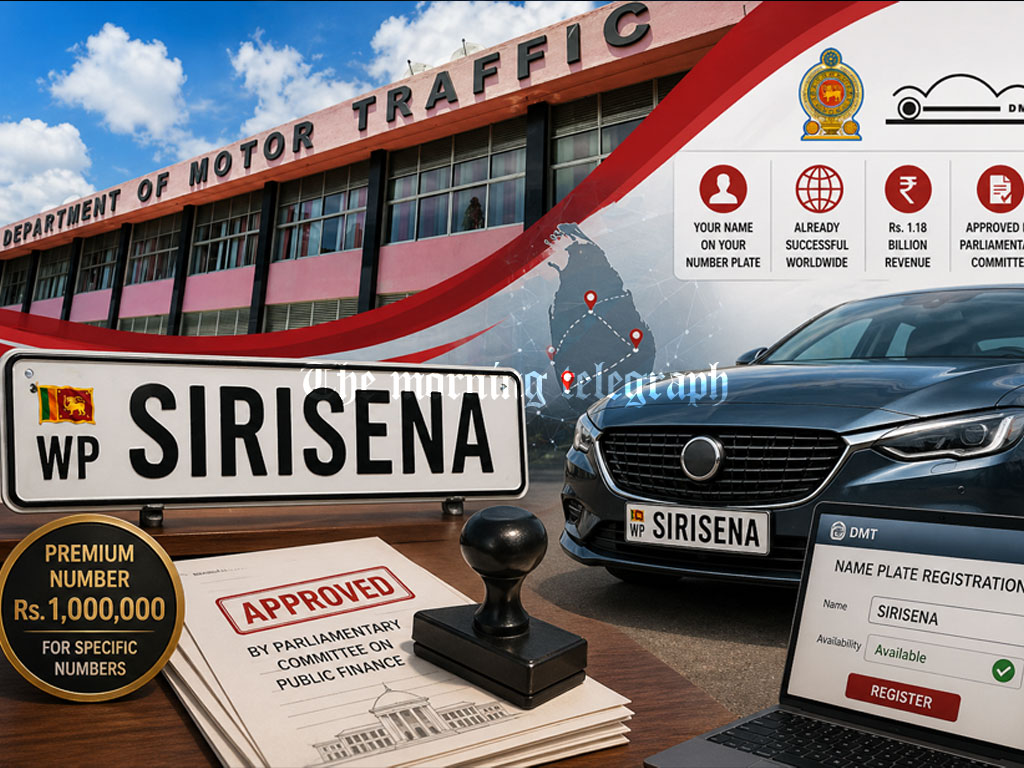
The Department of Motor Traffic in Sri Lanka is moving forward with plans to introduce a new vehicle registration system where personal names could replace the conventional alphanumeric number plates currently in use. The proposal has already begun drawing attention as a significant shift in vehicle identification practices.

A senior female official representing the Commissioner General of Motor Traffic recently informed the Parliamentary Committee on Public Finance about the initiative, highlighting that similar personalized vehicle plate systems have already been successfully implemented in several countries worldwide. This global precedent has been cited as a key factor supporting the proposed transition.
The department has already demonstrated the financial potential of customized vehicle identification, having generated approximately Rs. 1.18 billion in revenue through the issuance of preferred number plates within the front range category, particularly those below one hundred thousand. These high demand vehicle numbers have become a lucrative source of income for the state.
Currently, individuals seeking specific or premium number plates are required to pay a fee of Rs. one million per number. This pricing structure reflects the strong demand for personalized vehicle registration options among motorists.
However, it has been revealed that these fees were collected over the past three years without the backing of an official Gazette notification. This raised procedural concerns, prompting scrutiny from oversight bodies regarding regulatory compliance and transparency.
Following a review of the matter, the Parliamentary Committee on Public Finance has now granted formal approval to regularize the process, allowing the Department of Motor Traffic to continue charging fees for issuing specific vehicle numbers under proper authorization.
The proposed shift toward name based vehicle number plates is expected to further expand revenue streams while also modernizing Sri Lanka’s vehicle registration system. At the same time, it raises important questions about implementation, standardization, and the balance between personalization and regulatory control.