China-Pakistan missile shield deal worth $12 billion could reshape South Asia’s defence balance and challenge India’s air power.
China-Pakistan missile shield plans are raising fresh alarm in South Asia, with reports indicating that Islamabad and Beijing are nearing a major defence agreement that could reshape the region’s military balance.
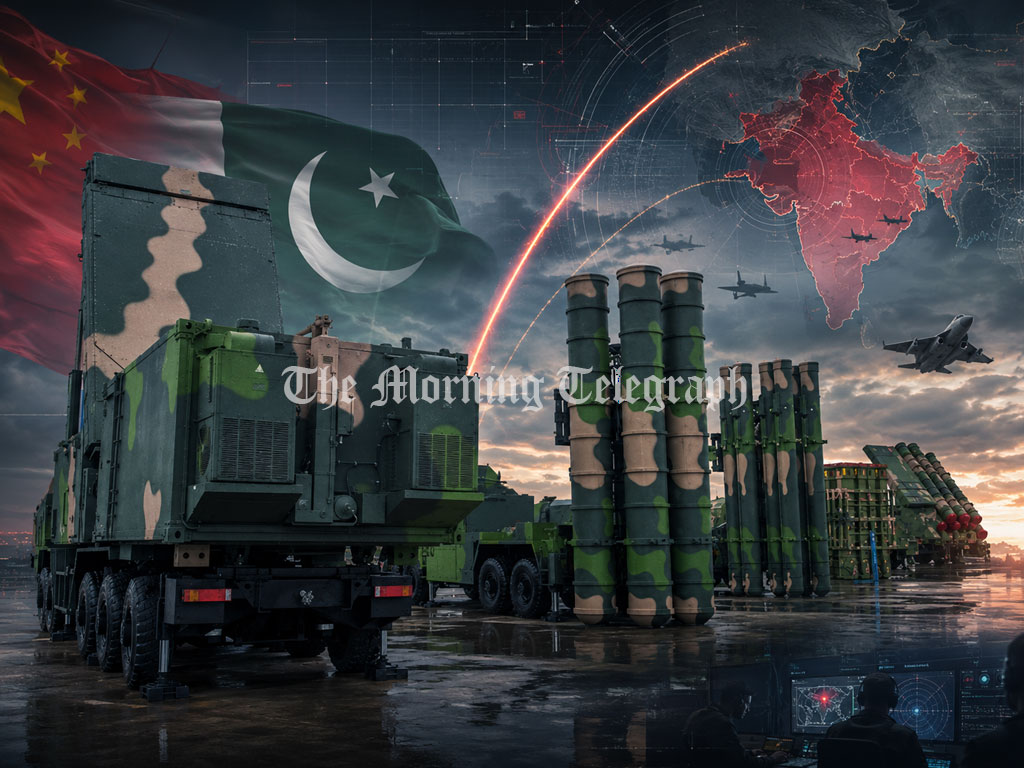
Accordingly, Pakistan is preparing to invest nearly $12 billion to acquire China’s advanced HQ-19 anti-ballistic missile system.
Defence analysts have described the proposed agreement as one of the most decisive defence deals in modern South Asian military history.

The special capability of the HQ-19 system lies in its ability to destroy high-speed ballistic missiles and even hypersonic vehicles while they are still in mid-air.
Pakistan is expected to use the system as a shield against threats from India’s supersonic missiles, including BrahMos, as well as other modern weapons in India’s arsenal.
In addition to the HQ-19 missile defence system, Pakistan is also preparing to include China’s J-35A stealth fighter jets and KJ-500 early warning aircraft in its defence structure.
During the four-day conflict linked to Operation Sindoor between India and Pakistan in June 2025, weaknesses were reportedly observed in Pakistan’s existing air defence systems, including the HQ-9B.
To overcome those weaknesses, Prime Minister Shehbaz Sharif’s government has accelerated discussions with China to build a stronger and more modern defence shield.
Through this deal, China’s defence and surveillance influence across the Indian Ocean region is also expected to expand further.
Reports also indicate that Pakistani military officials are already receiving training in China on how to operate these systems.
According to Indian military planners, the deployment of such an advanced missile defence system in Pakistan would create a serious challenge to India’s air superiority in any future conventional military conflict.
The possible agreement therefore marks not only a major upgrade for Pakistan’s defence capabilities, but also a development that could deepen strategic tensions between India, Pakistan, and China.