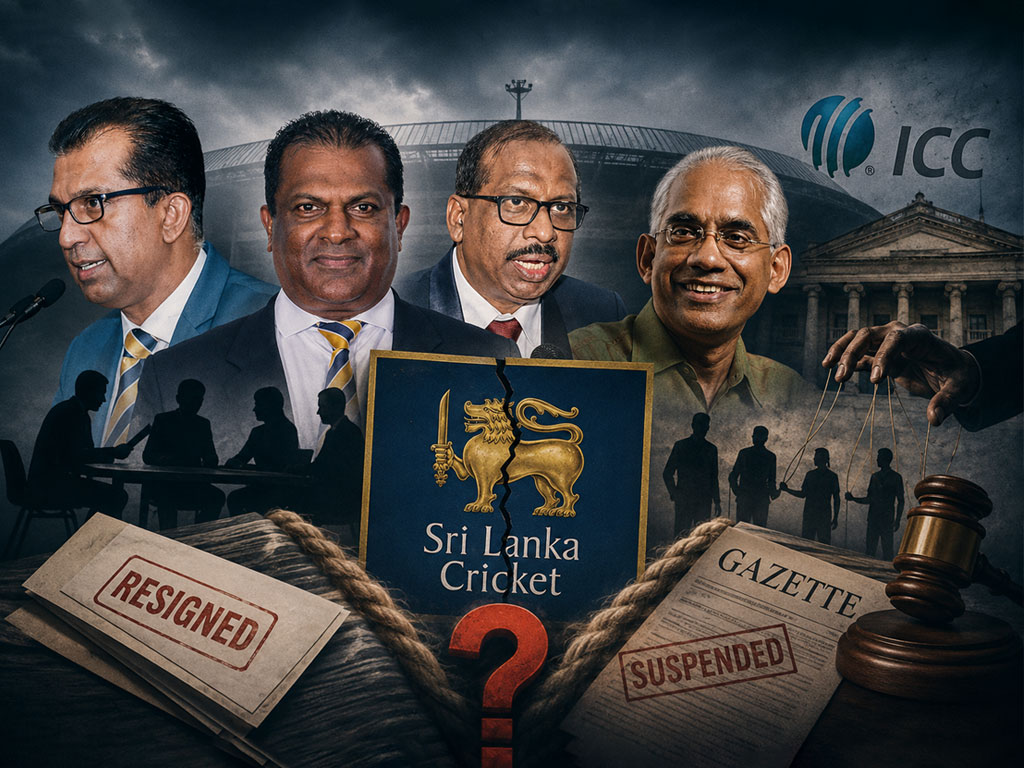
Samantha Dodanwela’s return as LPL Director barely weeks after resigning from Sri Lanka Cricket’s Executive Committee has reopened serious questions over the mass resignations, the same-day gazette, conflict-of-interest concerns, and possible ICC implications.
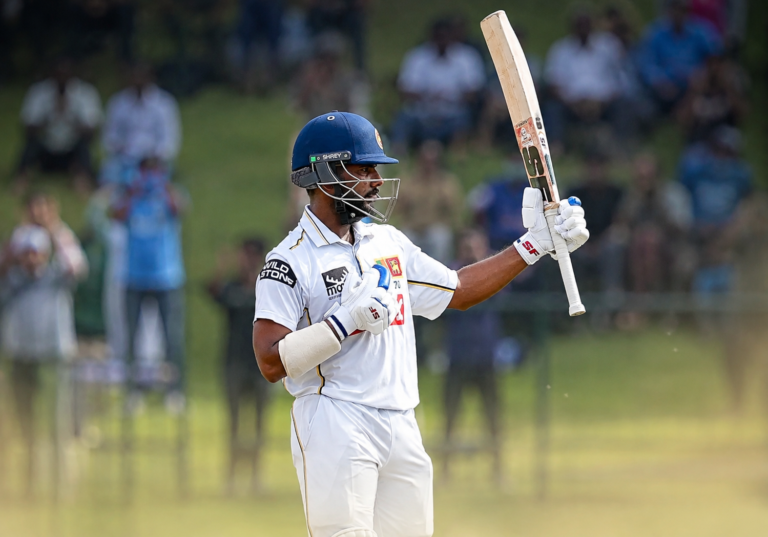
Barely weeks after resigning as part of the mass exit of Sri Lanka Cricket’s Executive Committee on 29 April 2026, Samantha Dodanwela is back inside the SLC system, returning to the role he had been performing as Director of the Lanka Premier League T20 Tournament for 2026.
His return has now become more than a routine administrative appointment.
It has reopened the central question surrounding the entire Sri Lanka Cricket shake-up: did Dodanwela and the rest of the Executive Committee resign voluntarily, or were they pushed out as part of a politically managed transition?

Dodanwela’s Return Raises the First Red Flag
If the former SLC Executive Committee resigned because of failure, collapse, or loss of confidence, as suggested in some political explanations, then Dodanwela’s quick return to a key tournament role raises an obvious contradiction.
How can a member of the same resigned administration now be allowed back to oversee one of SLC’s most commercially important events?
That is why Dodanwela’s return matters. It has become a symbol of the confusion surrounding the entire episode.
Was this a genuine transformation of Sri Lanka Cricket, or merely a reshuffle where some figures exited publicly while others quietly returned through operational roles?
Were the Resignations Voluntary or Forced?
The official position was that SLC President Shammi Silva and his entire Executive Committee resigned from their posts on 29 April 2026.
However, public suspicion has remained strong.
The general belief among many cricket followers, although still unconfirmed, is that Silva and his team may have been pressured into resigning from the highest political levels.
That suspicion grew because, just days before the resignations, The Morning Telegraph published a story on 19 April 2026 stating that outgoing National Olympic Committee President Suresh Subramaniam had reportedly refused the post of Chairman of an SLC Interim Committee offered to him by Sports Minister Sunil Kumara Gamage.
That raised a troubling question: how was talk of an interim arrangement already circulating before Shammi Silva and his Executive Committee had even resigned?
Same-Day Gazette Deepens the Mystery
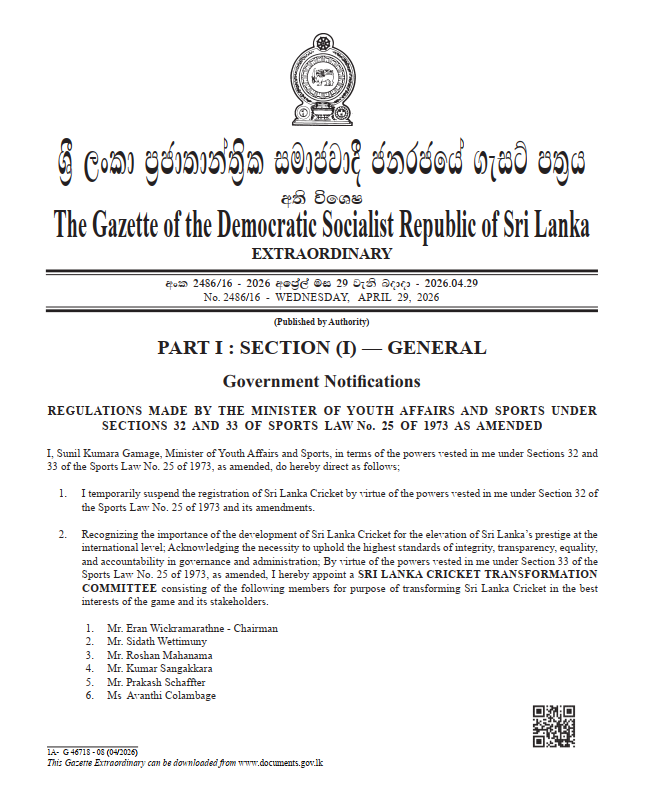
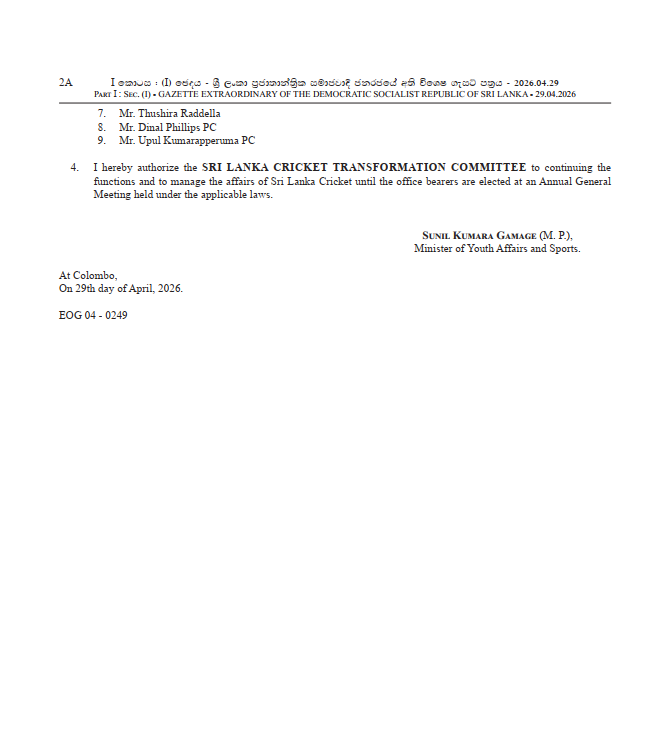
The most controversial part of the episode came on the very day the resignations were submitted.
On 29 April 2026, Minister of Sports Sunil Kumara Gamage issued a Gazette notification stating that he was suspending Sri Lanka Cricket and appointing a Cricket Transformation Committee, widely seen as an interim arrangement.
The Gazette reportedly relied on Section 32 of the Sports Law No. 25 of 1973, but is said not to specify the exact reason for suspending SLC.
That omission has become central to the controversy.
Section 32 allows the Minister to suspend or cancel the registration of a national sports association under specific conditions, including failure to remedy malpractice after written notice, inactivity, non-cooperation, obstruction of ministry policy, or failure to carry out duties and functions.
But if the entire Executive Committee had already resigned, the question becomes unavoidable:
On what specific violation was Sri Lanka Cricket suspended?
Transformation Committee or Interim Takeover?
Instead of calling the new body an Interim Committee, as seen in previous cricket administration takeovers, the government labelled it a Cricket Transformation Committee.
The committee was appointed under Section 33 and headed by former Minister Eran Wickramaratne.
But critics argue that changing the name does not change the nature of the move.
If an elected cricket administration resigns and the Minister immediately suspends SLC before appointing a politician-led replacement body, the arrangement still carries the appearance of an interim takeover.
That appearance is especially sensitive because the ICC has repeatedly made it clear that political interference in cricket administration will not be tolerated.
Conflict Questions Over Sidath Wettimuny and Dinal Philips
The controversy has deepened further with questions surrounding two current members of the Cricket Transformation Committee, Sidath Wettimuny and lawyer Dinal Philips.
Both are said to be part of a team that filed a case bearing CA Writ 460/2020 against Sri Lanka Cricket and the Minister of Sports, a matter still before court.
That raises a serious conflict-of-interest question.
How can two individuals linked to ongoing legal action involving SLC and the Ministry now serve on a committee appointed by the same Minister of Sports, while also being involved with the very institution connected to the dispute?
At the very least, the optics are troubling. At worst, critics may argue that it raises concerns over impartiality, independence, and fairness.
ICC Shadow Hangs Over the Move
The ICC factor cannot be ignored.
Sri Lanka has already faced international consequences in the past over political interference in cricket administration. Therefore, the sequence of events now becomes highly important.
First, Shammi Silva and the Executive Committee resign.
Then, on the same day, the Minister suspends SLC by Gazette.
Then, a new committee headed by a politician is appointed.
To critics, that sequence looks less like an organic administrative transition and more like a carefully managed process designed to avoid the direct appearance of political interference.
SLC Members Push Back on Constitutional Changes
It is also reliably learnt that SLC members have collectively written to the ICC, stating that they oppose any further changes to the SLC constitution without their involvement.
This is significant because only a few months ago, SLC members themselves came together and made changes to the election voting process, reducing the number of votes from 147 to 61.
Having already participated in constitutional reform, the membership now appears unwilling to allow further changes to be imposed without their direct participation.
This places the Cricket Transformation Committee in a difficult position. Any attempt to change SLC’s constitution without the involvement of its members could trigger further domestic resistance and possible ICC scrutiny.
Minister’s Explanation Now Under Question
Minister Gamage, speaking under parliamentary privilege, reportedly claimed that the SLC Executive Committee resigned because it had failed to rebuild cricket.
However, the resigning Executive Committee is said to have described its reasons as personal.
That creates a major contradiction.
Did the Executive Committee resign because it accepted failure?
Did it resign for personal reasons?
Or was the resignation the result of pressure that has not yet been publicly disclosed?
Reform or Political Takeover?
Samantha Dodanwela’s return as LPL Director may seem like a small administrative detail.
But in the wider context, it has become one of the clearest signs that the SLC transition is filled with unanswered questions.
The same-day resignations, the same-day Gazette, the missing reason for suspension, the appointment of a politician-led committee, the conflict-of-interest concerns involving committee members, the ICC’s position on political interference, and now Dodanwela’s return all point to a deeper mystery.
Was Sri Lanka Cricket genuinely transformed?
Or was it politically pushed into a new shape while parts of the old machinery quietly remained?
Until the Minister of Sports clearly explains the legal basis for suspending SLC, and until the government comes clean on what truly happened before and after 29 April 2026, one uncomfortable question will remain:
Was this cricket reform, or a political takeover dressed up as transformation?