By Marlon Dale Ferreira
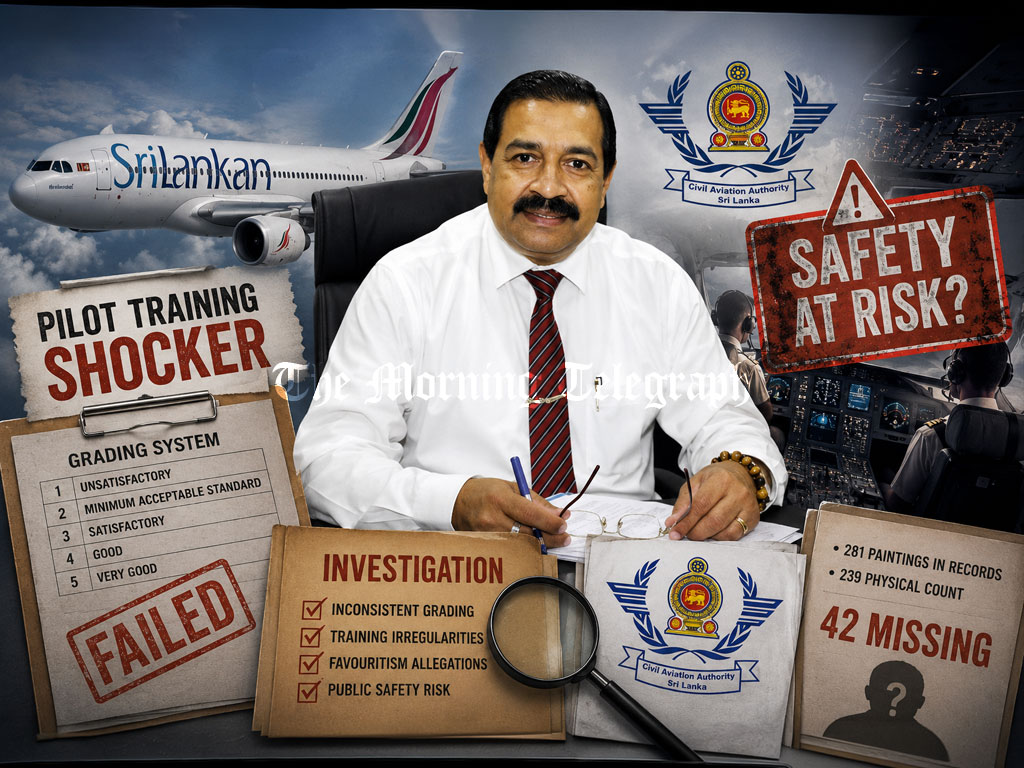
A deeper investigation into SriLankan Airlines’ A320 pilot training controversy now raises far more serious questions than the Rs. 8.7 million write-off. A former CAASL Director General had warned that some trainees were allowed to continue and be cleared despite not meeting approved grading standards, creating a public safety issue that may now demand urgent forensic scrutiny.
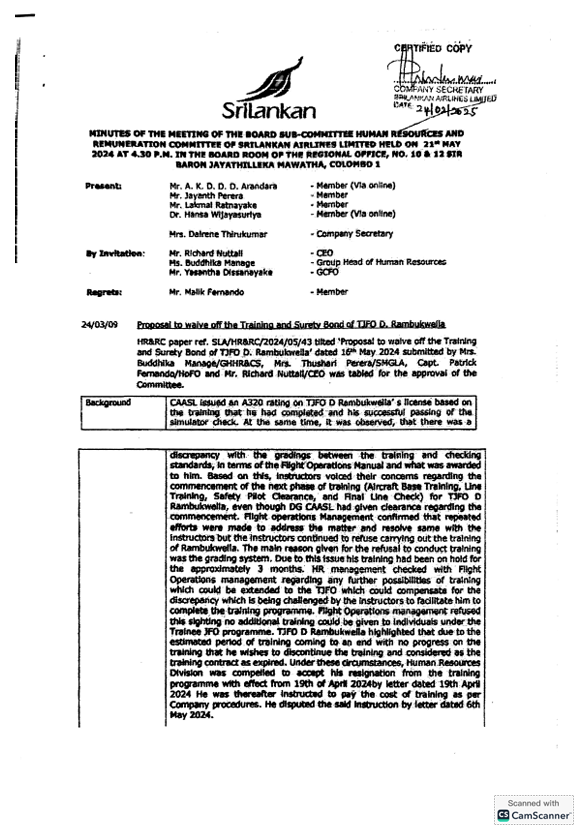
The recent exposure of how SriLankan Airlines wrote off Rs. 8.7 million connected to an Airbus A320 Type Rating has now opened a far bigger and more dangerous can of worms.
What first appeared to be a dispute involving one Trainee Junior First Officer and a controversial training bond waiver may now point to something far more alarming: possible systemic failures in pilot training, instructor grading, regulatory oversight, and public safety at Sri Lanka’s national carrier.
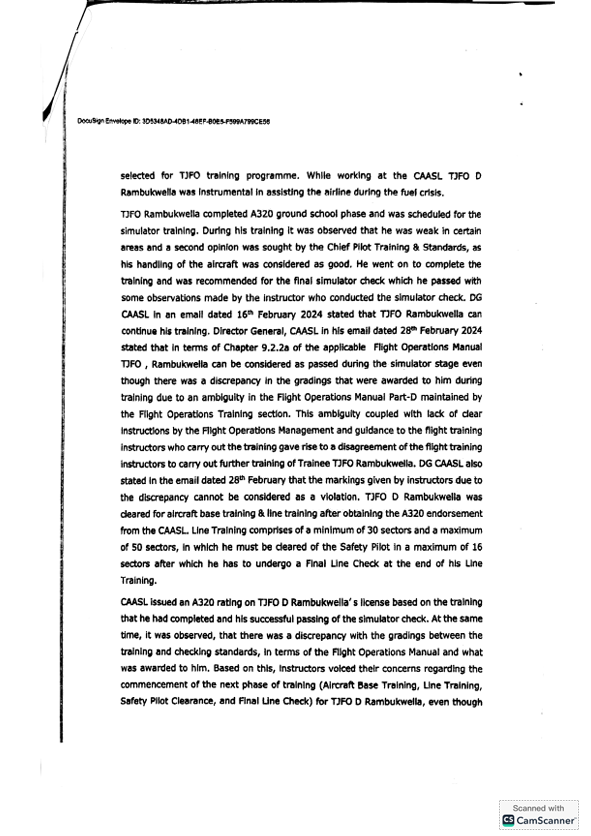
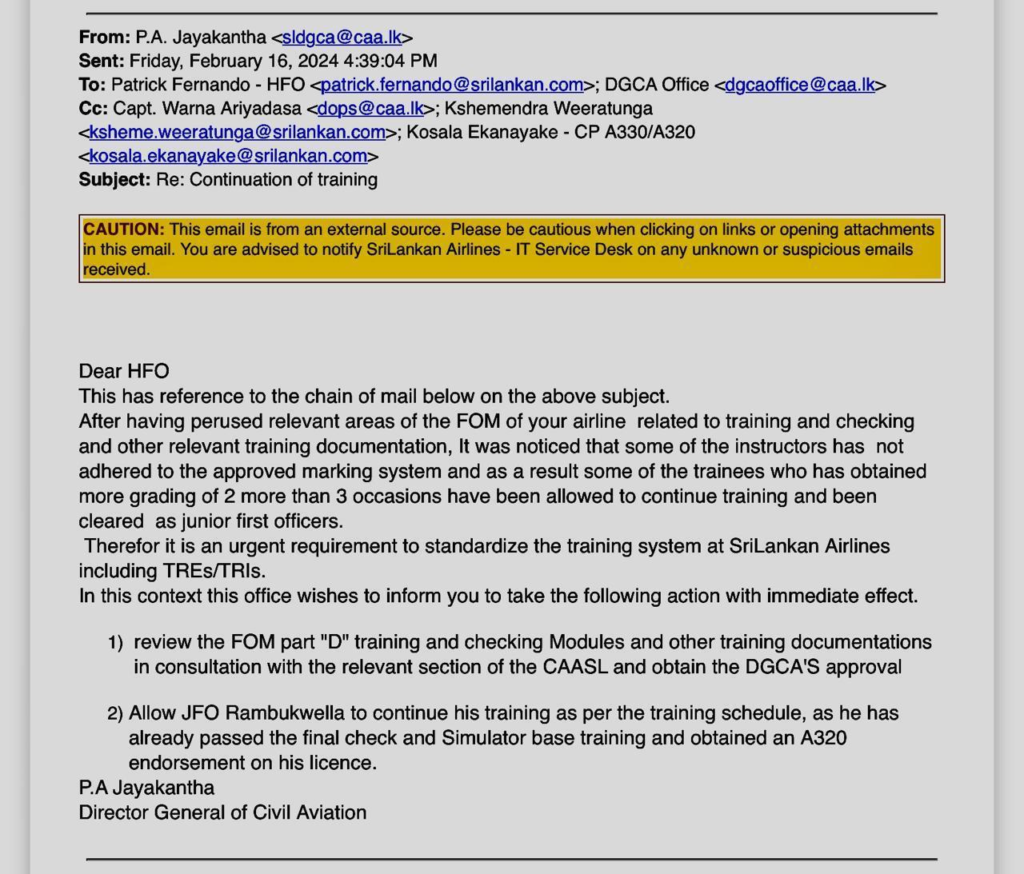
According to material seen by The Morning Telegraph, former Director General of the Civil Aviation Authority of Sri Lanka, P.A. Jayakantha, had raised serious concerns in writing over the manner in which some pilots undergoing training at SriLankan Airlines had allegedly been allowed to continue training and be cleared as Junior First Officers despite not meeting the required grading standards.

Former DG’s Email Raises Serious Alarm
In an email dated 16 February 2024, written under the subject “Continuation of Training” and addressed to SriLankan Airlines Head of Flight Operations Captain Patrick Fernando, former DGCA P.A. Jayakantha made a disturbing observation.
After reviewing relevant areas of the airline’s Flight Operations Manual, training and checking provisions, and other training documentation, Jayakantha stated that some instructors had not adhered to the approved marking system.
More seriously, he observed that, as a result, some trainees who had obtained more than the permitted number of low-grade markings had been allowed to continue training and had been cleared as Junior First Officers.
That statement goes far beyond an internal administrative dispute.
It raises a direct public safety question: were pilots who failed to meet the airline’s own training grading standards allowed to progress into operational flying pathways?
The A320 Grading System Explained
The SriLankan Airlines flight crew training system for the A320 Type Rating is understood to use a grading scale from 1 to 5.
A Grade 1 is considered Unsatisfactory.
A Grade 2 is considered Minimum Acceptable Standard.
A Grade 3 is considered Satisfactory.
A Grade 4 is considered Good.
A Grade 5 is considered Very Good.
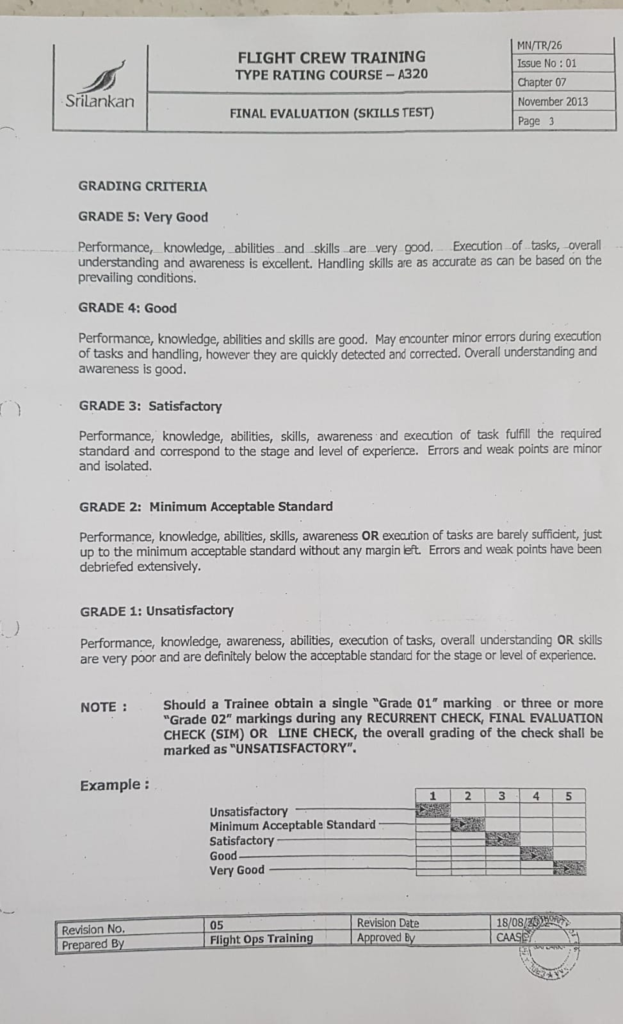
The critical rule is this: if a trainee receives a single Grade 1, or three or more Grade 2 markings during any recurrent check, final simulator evaluation, or line check, the overall grading of that check must be marked Unsatisfactory.
That makes the former DG’s concern extremely serious.
If trainees had crossed that threshold but were still allowed to continue and be cleared, then the question is no longer about one pilot, one type rating, or one training dispute.
It becomes a matter of flight safety, regulatory compliance, and whether passengers were placed at risk by a training system that may not have enforced its own standards.
Rambukwella Case Exposed the Bigger Problem
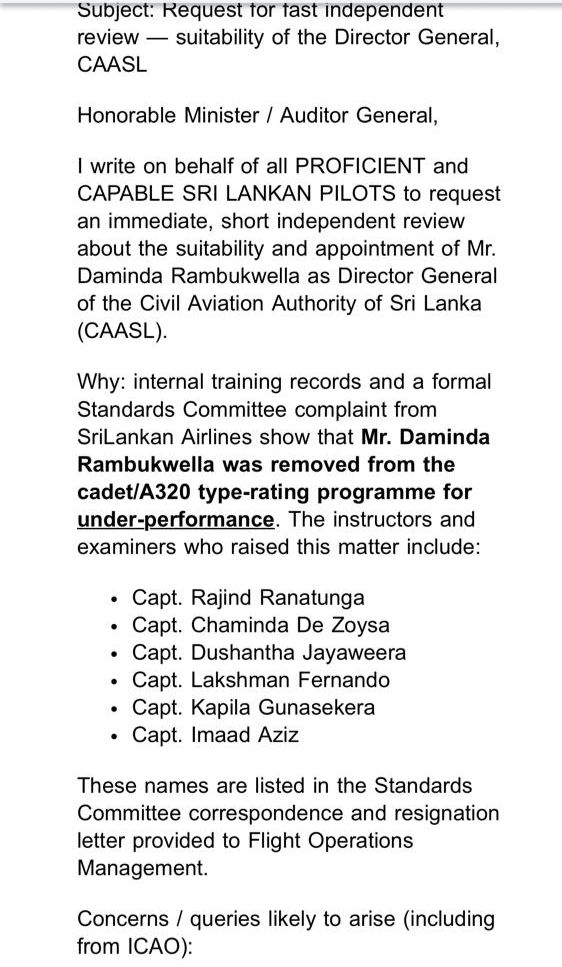
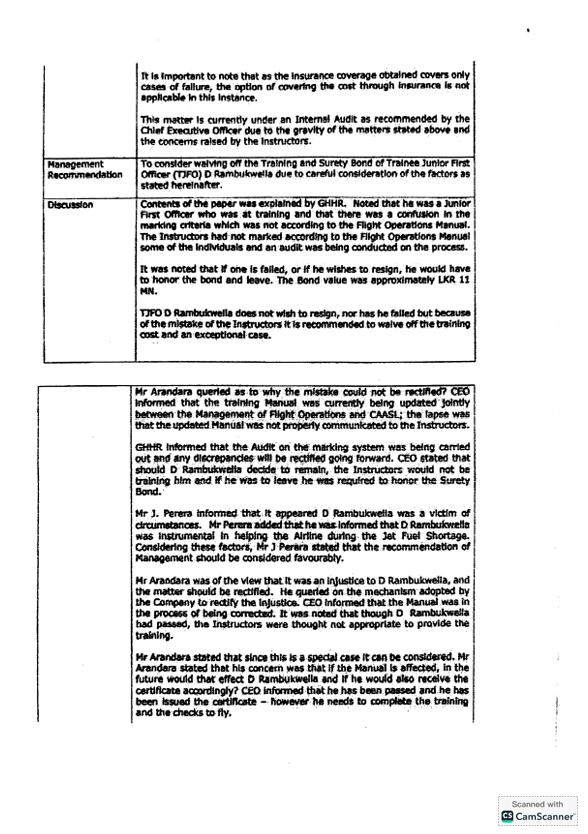
The controversy exploded after six TRIs/TREs complained that the certified A320 Type Rating of current CAASL Director General Daminda Rambukwella was not in keeping with the laid-down grading system.
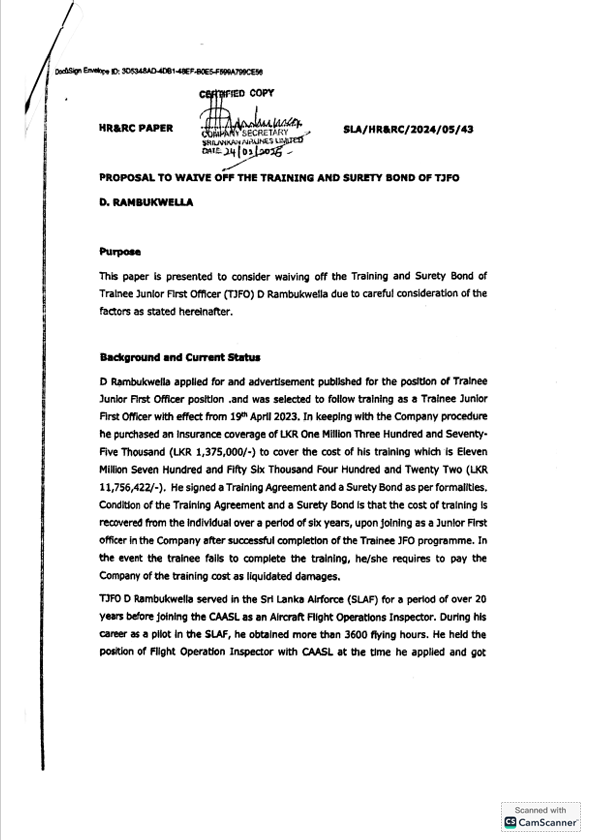
Those instructors later refused to provide the necessary line training to Rambukwella, who had joined the cadet batch as a Trainee Junior First Officer after previously serving in the Sri Lanka Air Force and accumulating over 3,600 flying hours.
For more than three months, his line training did not proceed.
However, according to the material now available, former DGCA Jayakantha had highlighted broader inconsistencies in pilot training to the Head of Flight Operations and instructed that line training be provided to TJFO Rambukwella.
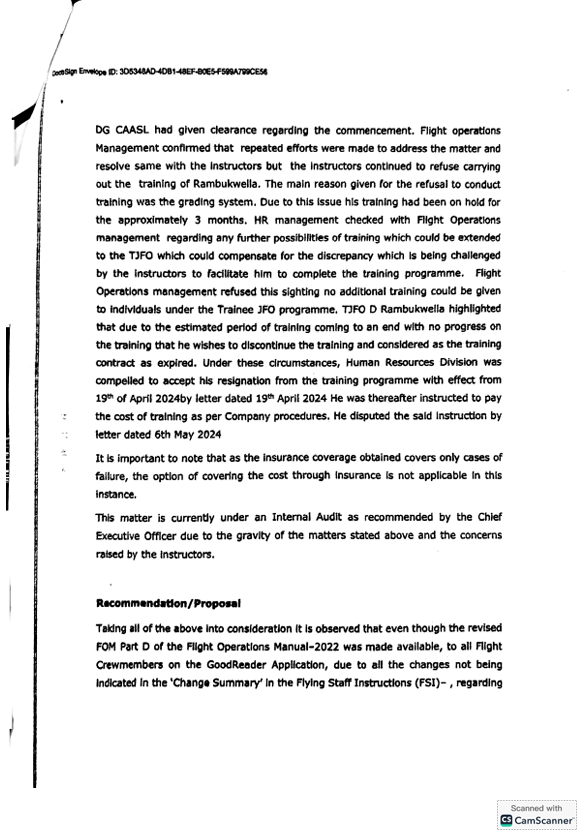
Eventually, Rambukwella chose to resign from the training programme.
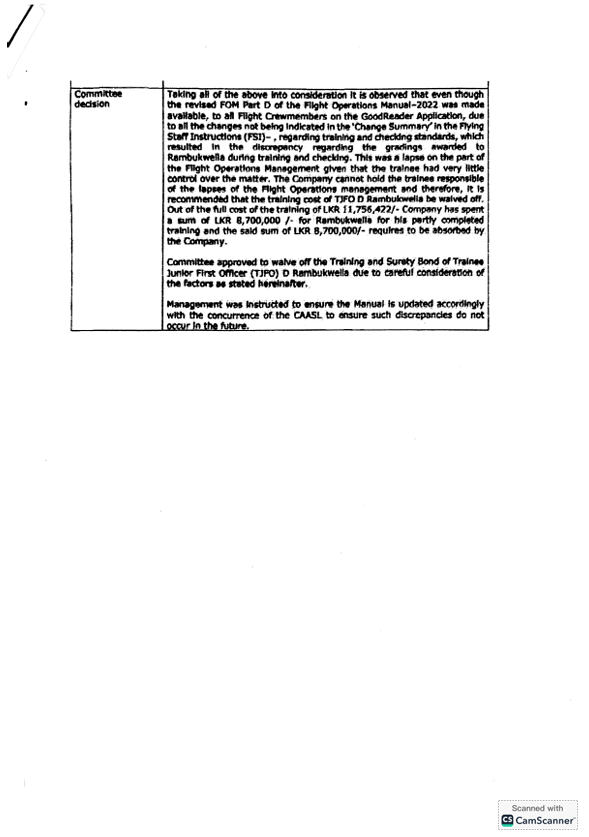
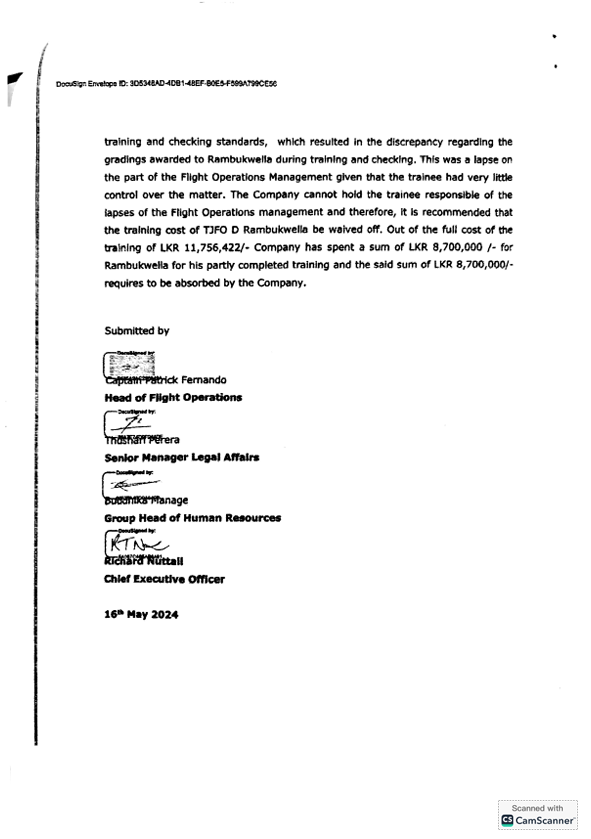
SriLankan Airlines senior management and its Board later took the view that he had been made a victim of the process. The airline then decided to write off Rs. 8.7 million in training costs and provide him with a release letter.
Was One Trainee Singled Out?
This is where the matter becomes explosive.
If several trainees had previously been allowed to continue despite grading concerns, why did the system suddenly become rigid in Rambukwella’s case?
If the grading system was inconsistently applied, who benefited from that inconsistency?
If some pilots were passed despite falling short of the required standard, why were they allowed to progress?
And if Rambukwella was blocked because instructors claimed he had not satisfied the grading criteria, why did the former DGCA point to earlier cases where others had allegedly been allowed through despite similar or worse grading concerns?
These questions now cut to the heart of fairness, safety, and possible selective enforcement inside the airline’s pilot training structure.
Family Dynasties and Preferential Treatment Allegations
The issue becomes even more troubling when viewed against long-standing concerns whispered within aviation circles.
There have been persistent allegations that pilot training at SriLankan Airlines has not always been free from influence, favouritism, or internal protection networks.
Concerns have been raised over a culture where the sons of current or retired pilots allegedly received preferential treatment, even when serious training concerns were raised.
These allegations remain sensitive and must be investigated carefully. But if true, they would point to a dangerous breakdown in the one area of aviation where compromise should never be tolerated: pilot competency.
A cockpit is not a family inheritance.
A pilot’s seat cannot be handed down through influence, old-boy networks, internal pressure, or managerial convenience.
It must be earned through skill, discipline, assessment, training, and uncompromising safety standards.
The Trivandrum Incident That Still Raises Questions
One case now being discussed involves a pilot with powerful connections who was allegedly passed despite concerns over his standard.
According to the material, that pilot later went on to burst several aircraft tyres during an unsafe landing in Trivandrum. More dangerously, he allegedly continued taxiing the aircraft to the parking bay on damaged tyres and bare steel rims, a situation that could have triggered a catastrophic outcome if friction had generated fire or further structural failure.
Miraculously, a disaster was avoided.
Yet the bigger question remains: how was a pilot with such serious operational concerns later promoted into a safety-related management role?
If this account is accurate, then it should deeply concern not only SriLankan Airlines, but also CAASL, ICAO auditors, passengers, insurers, and the travelling public.
CAASL Cannot Escape Scrutiny
The Civil Aviation Authority of Sri Lanka now faces its own difficult questions.
If the former DGCA was aware that some trainees had allegedly been passed despite falling short of required grading standards, what regulatory action followed?
Were the files reviewed?
Were the pilots reassessed?
Were instructors questioned?
Were training records audited?
Were any safety directives issued?
Was SriLankan Airlines asked to ground, retrain, or recheck any pilot whose training record contained discrepancies?
The concern now is not merely that Jayakantha raised the issue.
The concern is whether CAASL, as the regulator, did enough after becoming aware of it.
A regulator cannot simply observe a safety concern and move on.
If pilot training standards were compromised, even historically, the regulator had a duty to act decisively.
A Two-Edged Sword for the Former DGCA
Jayakantha’s position now cuts both ways.
On one hand, he appears to have exposed a serious inconsistency in pilot training and grading at SriLankan Airlines.
On the other hand, that very exposure raises the question of what was done by CAASL under his leadership once such inconsistencies became known.
If the regulator believed some trainees had been incorrectly passed, then the matter should not have remained buried in correspondence.
It should have triggered a full training audit, record review, simulator reassessment where necessary, and possible corrective action.
Why a Forensic Audit Is Now Essential
What is now required is not another internal explanation, quiet settlement, or convenient administrative note.
What is required is a serious forensic audit into SriLankan Airlines’ pilot training records, especially relating to A320 Type Rating, simulator checks, line training, recurrent checks, grading sheets, instructor approvals, and CAASL endorsements.
The audit must determine:
Which trainees received Grade 1 or multiple Grade 2 markings.
Whether any trainee was allowed to continue despite being required to receive an Unsatisfactory overall result.
Who approved those trainees to continue.
Whether instructor grading standards were applied consistently.
Whether any pilot currently flying should be removed from line operations pending reassessment.
Whether CAASL was informed and, if so, what action it took.
Whether family, influence, internal pressure, or management interference played any role in training outcomes.
This is not about punishing pilots unfairly.
It is about protecting passengers.
Public Safety Must Come Before Airline Politics
SriLankan Airlines cannot treat pilot training as an internal HR matter.
CAASL cannot treat training irregularities as paperwork confusion.
The Ministry cannot look away because the facts are uncomfortable.
If pilots were passed despite not meeting training criteria, then the matter touches public safety at the highest level.
Every passenger boarding a SriLankan Airlines aircraft has the right to know that the person in the cockpit earned that position through proper training, proper checks, proper grading, and proper regulatory oversight.
Anything less is unacceptable.
ICAO Audit Around the Corner
The timing could not be worse.
With an ICAO audit reportedly around the corner, Sri Lanka cannot afford unresolved questions over pilot training standards, regulatory oversight, and airline safety culture.
If documented evidence exists that pilots were passed despite not meeting required grading standards, then Sri Lanka’s aviation authorities must act before international auditors ask the same questions.
The worst outcome would be for Sri Lanka to wait until foreign auditors expose what local authorities already knew.
A Pilot Training Scandal Bigger Than One Type Rating
The Rs. 8.7 million A320 Type Rating write-off involving Daminda Rambukwella may have been the spark.
But the fire now appears much larger.
Former DGCA P.A. Jayakantha’s concerns suggest that the issue may not have been only about one trainee pilot. It may have exposed a deeper weakness in SriLankan Airlines’ pilot training and checking system.
If pilots were passed despite falling short of approved grading requirements, then this is not just an airline controversy.
It is a public safety alarm.
The question now is no longer whether one pilot was made a victim of a flawed process.
The bigger question is far more frightening:
How many others may have passed through that same flawed process, and are any of them still flying today?
Until SriLankan Airlines and CAASL answer that question with evidence, audits, names, files, and corrective action, public confidence in Sri Lanka’s aviation safety oversight will remain under a dark cloud.