By Roy Denish
What began as a maritime disaster off Sri Lanka’s coast has become a global warning about the hidden dangers of plastic pollution. Billions of toxic nurdles released into the ocean are now moving through marine ecosystems and the seafood chain, exposing a critical loophole in international shipping laws that threatens marine biodiversity, food security, and human health for generations to come.
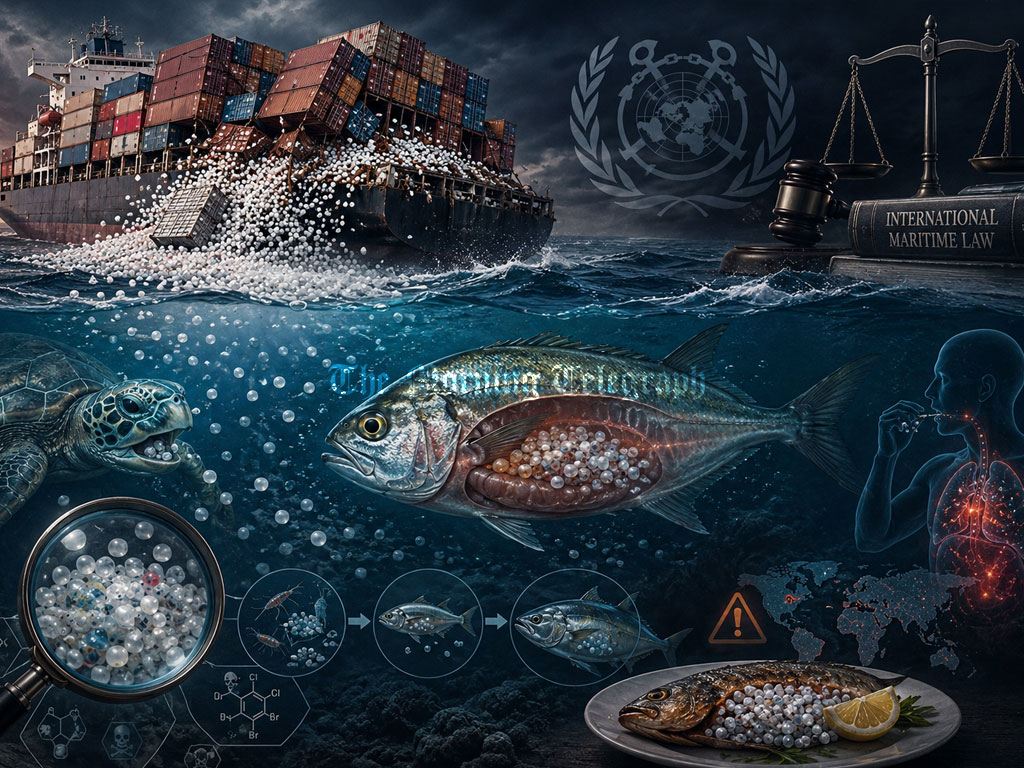
The catastrophic container ship spill off the coast of Sri Lanka serves as a stark warning of the systemic failures within international maritime law. By treating industrial plastic pellets as ordinary, non-hazardous cargo, current regulatory frameworks allow massive, toxic quantities of these materials to enter our oceans completely unmonitored. When predatory fish mistake these floating pellets for natural fish eggs, they ingest a concentrated cocktail of chemical additives and persistent organic toxins. These poisons rapidly bioaccumulate up the marine food web, turning a local environmental tragedy into a direct, global threat to human health when contaminated seafood reaches our dinner plates. Voluntary industry measures have thoroughly failed to address this crisis, making it absolutely vital for the International Maritime Organization to enforce strict, mandatory dangerous goods classifications before global supply chains permanently devastate both marine biodiversity and human food security.

Plastic resin pellets, colloquially known as nurdles, represent a severe and systemic threat to global marine environments that has historically been obscured by larger, more visible forms of macroplastic debris. These small, lentil-sized industrial raw materials are the precursor from which nearly all commercial plastic products are manufactured. Due to chronic handling leakages throughout global supply chains and catastrophic maritime shipping disasters, hundreds of thousands of tons of these pellets enter the ocean annually. Once introduced into marine ecosystems, their physical and chemical characteristics trigger widespread ecological devastation. Because of their size, buoyancy, and resemblance to natural prey like fish eggs, pellets are readily ingested by a vast array of marine taxa across multiple trophic levels, including zooplankton, pelagic fish, sea turtles, and apex predators.
The physiological consequences of pellet ingestion are profound and far-reaching. Ingestion routinely causes mechanical blockages within the digestive tracts of marine organisms, leading to a false sense of satiation, internal ulcerations, and eventual starvation. Recent pathological research has identified a specific condition known as plasticosis, where the chronic ingestion of these sharp-edged microplastics induces severe internal scarring and fibrotic tissue damage within the stomachs and intestines of seabirds and marine mammals. Beyond these physical injuries, plastic pellets act as dangerous vectors for environmental toxins. During the manufacturing process, they are embedded with hazardous chemical additives, including endocrine-disrupting plasticizers and flame retardants. Once afloat in the marine environment, the highly hydrophobic surface of the plastic acts as a chemical sponge, adsorbing and concentrating ambient persistent organic pollutants, such as polychlorinated biphenyls and polybrominated diphenyl ethers, from the surrounding seawater.
The human health implications of this pollution cycle become critical when these pellets enter the seafood supply chain. Because these floating plastic pellets closely resemble nutritious fish eggs, predatory fish consume them in massive quantities, mistaking the toxic debris for a natural food source. When marine organisms ingest these pellets, the concentrated persistent organic pollutants and hazardous chemical additives desorb inside the digestive systems of the fish. These toxins bioaccumulate within the fatty tissues of the marine life and biomagnify as they move higher up the food chain. When people eat fish that have ingested these plastic pellets, they inadvertently consume these accumulated chemical toxins, posing severe downstream risks to human health, including endocrine disruption, reproductive issues, and increased carcinogenic risks.
This catastrophic ecological and public health threat was vividly demonstrated during the X-Press Pearl disaster off the coast of Sri Lanka, which resulted in the largest single pellet spill in human history. The disaster released billions of plastic pellets into the ocean, decimating local fishing grounds and directly threatening the primary protein source of the coastal population. The severe ecological crisis in Sri Lanka highlights how plastic pellets resembling fish eggs enter the human food supply chain when people consume contaminated fish. This event acted as a global catalyst for reform, demonstrating that the international regulatory framework had failed to provide a cohesive or legally binding mechanism to prevent such transboundary pellet pollution.
The primary international instrument governing maritime waste, the International Convention for the Prevention of Pollution from Ships, known as MARPOL, explicitly prohibits the operational disposal of plastics into the sea. However, MARPOL contains a critical structural loophole regarding logistics, as it does not adequately address the accidental or unintended loss of plastics when transported as packaged cargo within freight containers. Consequently, when ultra-large container ships experience cargo collapses during severe weather, the resulting mass losses of plastic pellets are legally classified as maritime accidents rather than regulatory violations, which historically absolved vessel operators from strict pre-emptive safety mandates and comprehensive liability.
The scale of the disaster in Sri Lanka prompted United Nations Member States to demand that the International Maritime Organization establish mandatory, legally binding rules for the maritime transport of pellets. Current international legal debates focus heavily on amending the International Maritime Dangerous Goods Code to formally reclassify plastic pellets as hazardous substances or dangerous goods. Such a reclassification would mandate stringent, standardized protocols for high-durability packaging, explicit hazard labeling, and mandatory below-deck stowage to prevent losses at sea. Concurrently, regional initiatives like new European Union supply chain regulations and ongoing negotiations for the United Nations Global Plastics Treaty reflect a paradigm shift away from voluntary industry guidelines toward enforceable frameworks. Ultimately, mitigating the transboundary crisis of plastic pellet pollution requires international regulatory bodies to fully internalize the ecological risks of plastic logistics, transforming global maritime law to treat these industrial materials not as benign cargo, but as potent environmental pollutants that threaten both marine life and human consumers.