ADB support for Sri Lanka raises urgent questions over repayment terms, interest rates, conditions and the final burden on taxpayers amid tensions.
Sri Lanka’s ADB support request has raised a serious public question: is this genuine relief, or another loan taxpayers must one day repay?
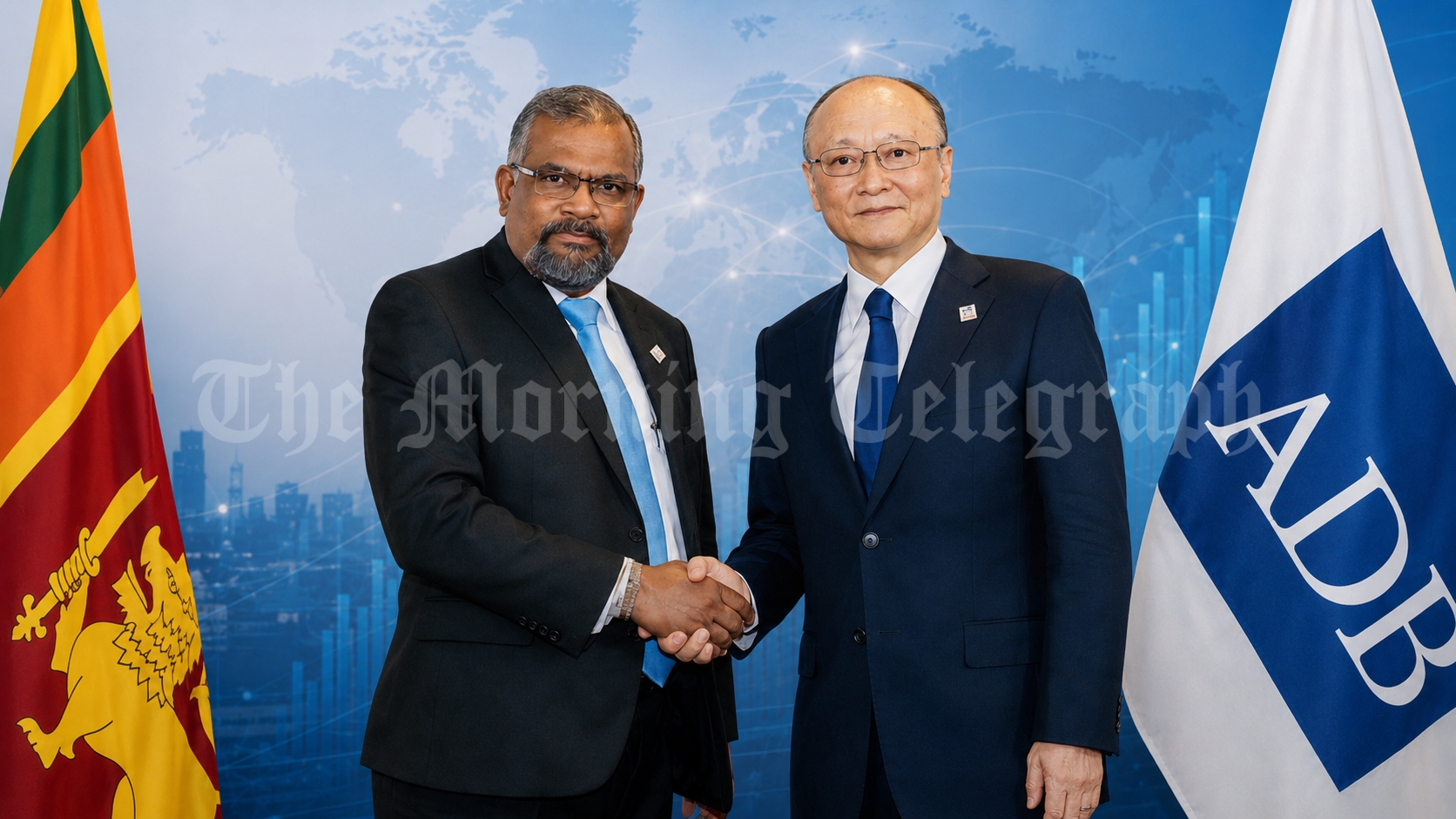
The Asian Development Bank has said it is ready to provide Sri Lanka with 100 million US dollars in additional budget support under a wider regional financial package designed to help countries face the economic and financial impact of Middle East tensions. The broader ADB package is worth around 4 billion US dollars, but Sri Lanka is not receiving that full amount. The Sri Lanka-specific figure publicly stated so far is 100 million US dollars, which would lift ADB’s planned 2026 budget support for the country to around 480 million US dollars.
That distinction matters because the word “support” does not automatically mean “free money.” Support can refer to a grant, a loan, a concessional loan, policy-based lending, emergency assistance, trade finance, or funding reallocated from an existing programme. At present, the available public information does not clearly say that the 100 million US dollars is a grant.
For that reason, the safest conclusion is that Sri Lanka should not treat this assistance as free money unless ADB or the Government clearly confirms it. The funding has been described as additional budget support, and budget support usually means financing given to the Government to manage a funding gap or economic pressure. Such financing may come with favourable terms, but favourable terms are not the same as a donation.

The first question is whether this is a grant or a loan. For now, the answer is not fully public. ADB has not described the 100 million US dollars as a grant in its public announcement. That means the Government must explain whether the money has to be repaid, and if it does, under what exact terms.
The second question is the interest rate. At this stage, the interest rate for this specific support has not been publicly confirmed. However, earlier ADB budget-support loans to Sri Lanka have included concessional terms, often carrying lower interest rates than commercial borrowing. In one previous case, a 100 million US dollar ADB budget-support loan was reported with a 2 percent interest rate. That example is relevant, but it does not prove the new support will carry the same rate.
The third question is the repayment period. Once again, the precise repayment schedule for this new support has not yet been clearly published. Previous ADB loans to Sri Lanka have included long repayment periods, including examples of 25-year terms with a 5-year grace period. But until the final agreement is made public, Sri Lankans cannot know when repayment will begin or how long the country will carry this obligation.
The fourth question is whether conditions are attached. That too remains unclear from the public information available so far. ADB policy-based lending usually supports general budget financing and is often connected to policy reforms, institutional changes, or economic management targets. If this new support comes with reform conditions, the public has a right to know what those conditions are.
The fifth question is where the money will actually go. Will it support fuel imports, food imports, reserves, social protection, tourism protection, remittance-related pressure, or general budget support? This is one of the most important questions because Sri Lanka has a long history of borrowing in the name of stability without clearly explaining how funds are used and who benefits from them.
There is no doubt that Sri Lanka is exposed to the impact of Middle East tensions. The country imports fuel, depends on shipping routes, relies on worker remittances, and needs tourism earnings to protect foreign reserves. Rising oil prices, supply chain disruption, weaker remittance flows, and higher import costs can all create pressure on households, businesses, and the national budget.
For that reason, ADB support may be useful and even necessary. If the money helps Sri Lanka protect essential imports, stabilise reserves, support vulnerable families, and manage a sudden external shock, it can provide valuable breathing space. But breathing space is not the same as free money.
The danger is that emergency relief can be presented as a victory today while the repayment burden is hidden until tomorrow. Sri Lanka already knows the cost of that mistake. The 2022 economic collapse exposed the damage caused by years of borrowing, weak fiscal discipline, poor planning, and a lack of transparency. Ordinary people paid the price through inflation, fuel queues, power cuts, higher taxes, and reduced living standards.
That is why the Government must be transparent about the ADB support before celebrating it. Sri Lankans deserve to know whether this is a grant, a concessional loan, policy-based financing, or trade finance. They deserve to know the interest rate, grace period, repayment period, currency of repayment, conditions attached, and the final cost to taxpayers.
This is not an argument against ADB. The Asian Development Bank has supported Sri Lanka for decades and may be offering timely assistance during a difficult external shock. The issue is not whether Sri Lanka should accept support. The issue is whether the people are being told the full terms of that support.
At this point, the answers remain incomplete. What is known is that Sri Lanka is expected to receive 100 million US dollars in additional ADB budget support, raising planned 2026 support to around 480 million US dollars. What is not yet clearly known is whether the support is a grant or loan, what the interest rate will be, when repayment begins, what conditions are attached, and how much of the burden will eventually fall on taxpayers.
Sri Lanka may need relief. But after the pain of the economic crisis, relief must come with transparency. The public should not have to wait years to discover the real cost of money borrowed in their name.
The question is simple: if this is relief, what are the terms? And if it is debt, who will pay?
#SriLanka #ADB #SriLankaEconomy #AsianDevelopmentBank #DebtCrisis #Taxpayers #PublicFinance #MiddleEastTensions #SriLankaDebt #MiddleEastCrisis #BudgetSupport #EconomicCrisis #PublicMoney