By Dwayne Ferreira.
Sri Lanka rupee gains support from remittances, tourism dollars and investment despite a widening US$5.5 billion trade deficit.
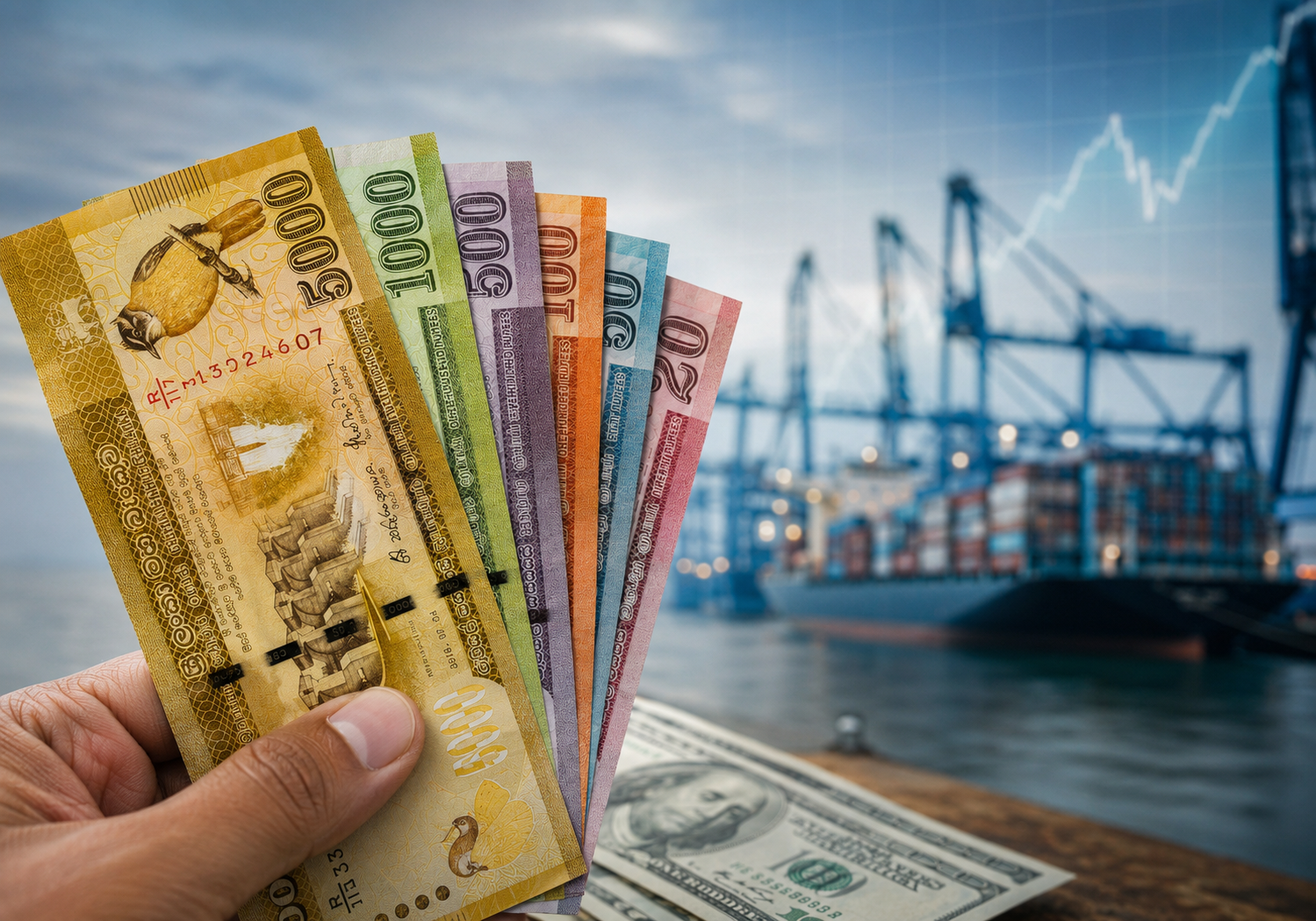
The Sri Lanka rupee is showing signs of stabilisation against the US dollar, supported by strong worker remittances, tourism-related foreign currency earnings, investment inflows and tighter monetary conditions. However, beneath that improvement lies a striking contradiction. The country’s trade deficit has widened sharply.
Central Bank data show that Sri Lanka recorded a merchandise trade deficit of US$5.5 billion during the first six months of 2026. That compares with US$3.3 billion during the same period last year. Imports climbed 26.9% to US$12.39 billion, while merchandise exports rose only 6.3% to US$6.9 billion.
Fuel was one of the largest contributors. Sri Lanka spent approximately US$3.17 billion on fuel imports during the first half of the year. That was 58.8% higher than during the corresponding period in 2025.
However, monthly fuel expenditure has started falling. It dropped from US$886 million in April to US$536 million in May and US$465 million in June. Vehicle import expenditure also declined 27.1% month-on-month in June.
Remittances Provide Crucial Support for Sri Lanka Rupee
The strongest counterweight has been money sent home by Sri Lankans working overseas.
Workers’ remittances reached US$695 million in June, bringing total inflows between January and June to approximately US$4.6 billion. That represented a 23.2% increase from the previous year.
These dollars enter Sri Lanka’s financial system and help meet demand from importers and other businesses requiring foreign currency.
Tourism remains another important source of dollars, although earnings have weakened. Sri Lanka earned about US$1.51 billion from tourism during the first half of 2026, down 11.8% year-on-year as Middle East tensions affected travel. Despite the decline, tourism continues to bring foreign currency into the economy.
Foreign investment offered additional, although comparatively smaller, support. Government securities attracted a net US$30.2 million in June. Meanwhile, the Colombo Stock Exchange recorded a marginal US$0.4 million net outflow.
Sri Lanka also held US$6.5 billion in gross official reserves at the end of June, including the People’s Bank of China swap facility.
Trade Deficit Remains a Warning Sign
The Central Bank raised its Overnight Policy Rate by one percentage point to 8.75% in May. The move came amid inflation, strong credit growth, rising imports and pressure on the external sector.
Higher interest rates can curb credit-driven imports and reduce demand for foreign currency. This can, in turn, ease pressure on the Sri Lanka rupee.
However, the recent improvement does not represent a complete turnaround. The rupee remained 7.8% weaker against the dollar at end-July compared with end-2025. Nevertheless, the Central Bank said the pace of depreciation had moderated and volatility had declined.
The picture therefore remains finely balanced. Sri Lanka is receiving substantial dollars through remittances, tourism and other inflows. At the same time, the country is spending considerably more on imported goods than it earns from merchandise exports.
For the Sri Lanka rupee, the crucial question is whether these foreign-currency inflows can continue offsetting a trade deficit that has grown by more than US$2 billion in a single year.