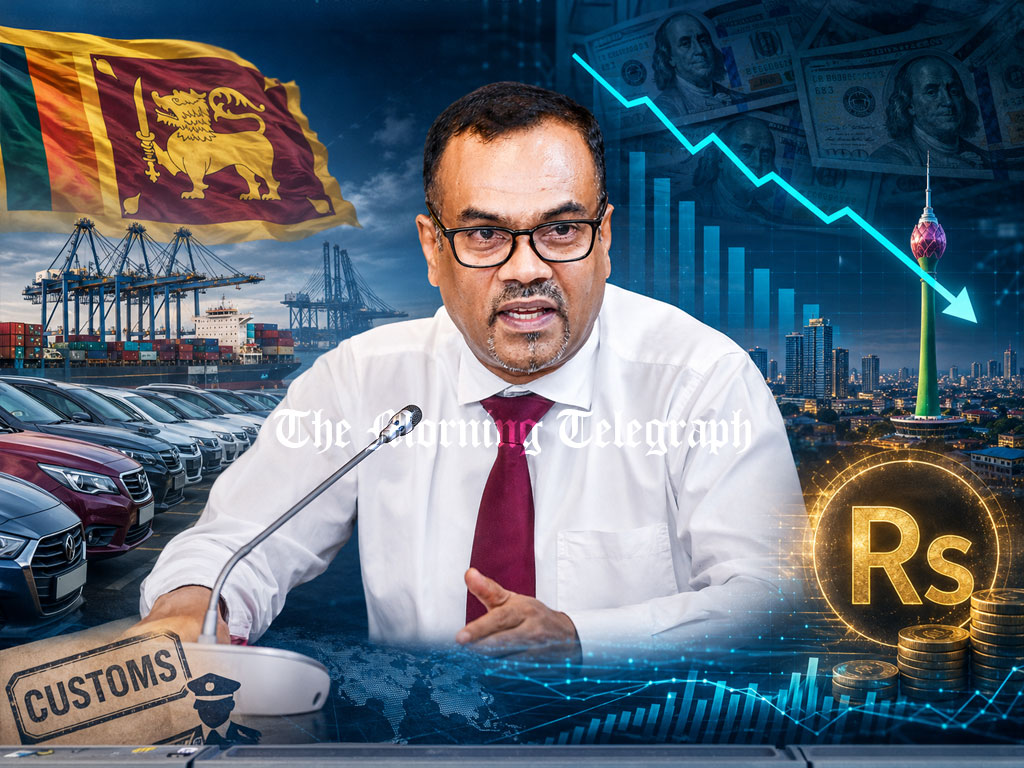
Sri Lanka vehicle import tax surcharge has reduced dollar outflows as daily vehicle import spending falls sharply, officials say.
Sri Lanka vehicle import tax measures have helped reduce foreign currency outflows and ease demand for the U.S. dollar, Deputy Finance Minister Anil Jayantha Fernando said.
The Deputy Minister said Sri Lanka’s decision to impose a 50% surcharge on customs import duty for vehicles is now showing results, after the measure was introduced to control imports and reduce pressure on the rupee.
Sri Lanka imposed the temporary 50% surcharge on Customs Import Duty for new personal vehicles for three months, effective from May 16. The move was aimed at slowing vehicle imports and limiting the depreciation of the Sri Lankan rupee.

Minister Fernando said the Government’s decision is now bearing fruit.
“Import expenditure on vehicles per day has come down to US$3.79 as of June 12,” Fernando told reporters at a press briefing on Wednesday.
He said the amount had been over US$5 million last year and over US$7 million before the Customs surcharge was imposed.
“So it has an impact. Therefore, we say that we have taken the right decision. People also have realized that we need not to be unnecessarily be panic,” he said.
Fernando said the sharp increase in demand for vehicles had been driven by speculation and fear, even after the surcharge was imposed.
He added that importers had opened letters of credit worth US$88 million in a single day following the surcharge decision, showing the scale of panic-driven demand in the market.
Sri Lanka relaxed a five-year ban on automotive imports in early 2025, releasing massive pent-up consumer demand. That demand quickly turned vehicle inflows into a serious strain on the country’s recovering balance of payments.
After restrictions were eased, a major surge in automotive orders pushed foreign exchange outflows for motor vehicles to US$613 million in the first quarter of 2026 alone.
By April, the cumulative figure had increased further to US$821 million, highlighting the speed at which vehicle imports were draining foreign currency from the economy.
This relentless dollar outflow, averaging close to US$200 million a month, directly contributed to widening the merchandise trade deficit to US$3.7 billion during the first four months of the year.
Finance Ministry officials say vehicle imports have drained US$3.3 billion since the ban was relaxed in January last year.
The concentrated demand for foreign exchange placed heavy pressure on the currency, causing the Sri Lankan rupee to depreciate by 4.5% against the U.S. dollar by mid-May 2026.
That currency weakness came before the Government imposed the surcharge on customs import duty for vehicles.
The weaker rupee triggered a wider economic chain reaction, raising the risk of imported inflation across essential goods, increasing debt-servicing pressure under Sri Lanka’s fragile IMF-backed restructuring framework, and pushing up the national import bill for refined petroleum needed to run newly imported vehicles.
To arrest the currency slide and protect external sector stability, the Government was forced to shift policy aggressively.
The Central Bank also burned through a net US$211.3 million in reserves in May to defend the currency, underscoring the pressure created by the import surge and the urgency behind the vehicle tax intervention.