By Dwayne Ferreira.
Nord Stream bombing suspect Vladimir Z. is arrested in Croatia as Germany investigates an alleged Ukrainian-linked sabotage team.
BERLIN/PULA – A Ukrainian scuba diver linked to the Nord Stream bombing has been arrested in Croatia, giving German investigators another opportunity to prosecute a suspect in one of Europe’s most politically sensitive sabotage cases.
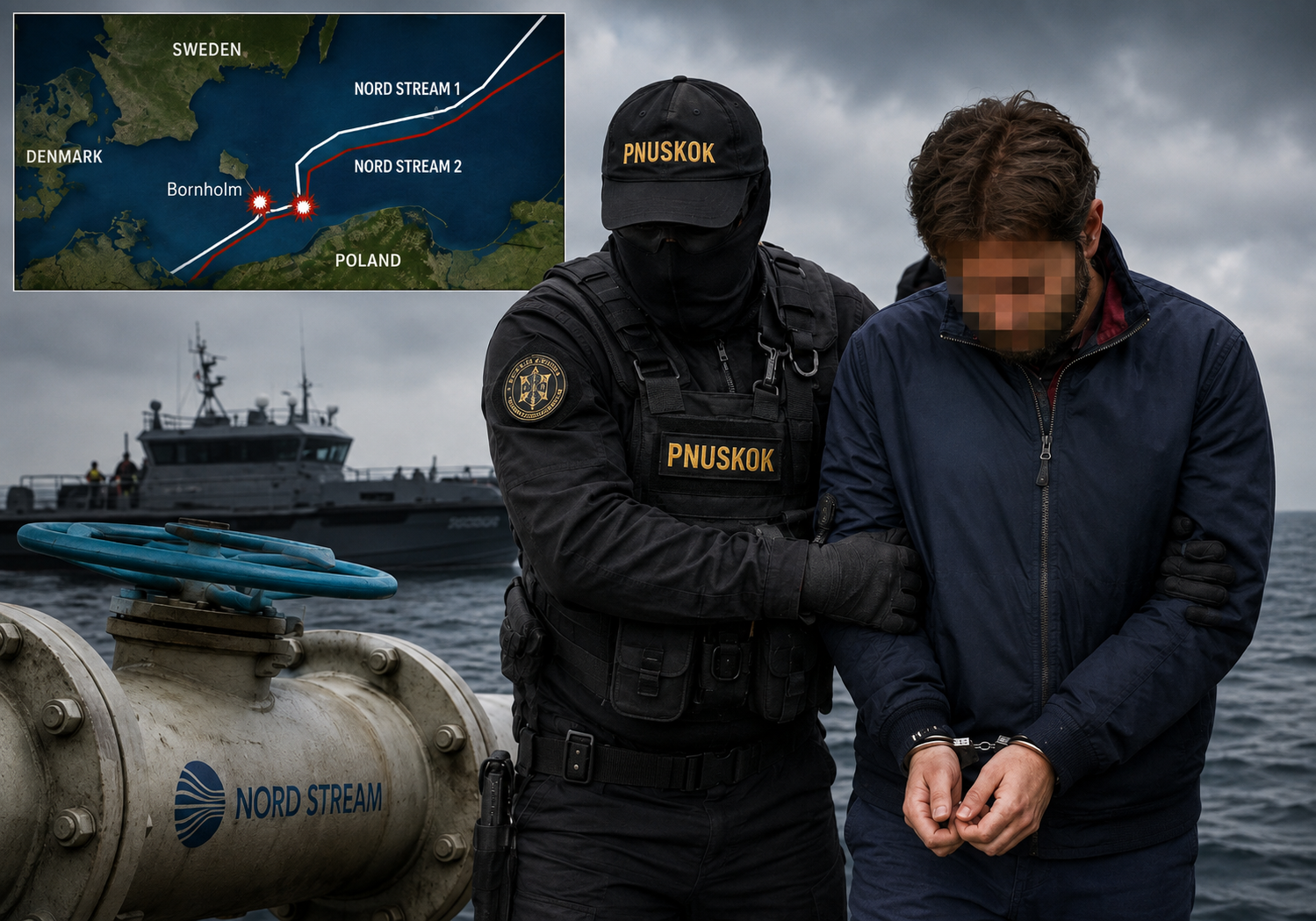
German federal prosecutors said Wednesday that the Ukrainian national, identified under German privacy rules as Vladimir Z., was detained by Croatian police in the coastal city of Pula under a European arrest warrant.
Prosecutors describe Vladimir Z. as a trained scuba diver. They allege he belonged to the group that placed explosives on the Nord Stream 1 and Nord Stream 2 pipelines near the Danish island of Bornholm. The pipelines were damaged by explosions on September 26, 2022.
However, investigators have not publicly established that Ukrainian President Volodymyr Zelenskyy or Ukraine’s senior political leadership ordered the operation.

Nord Stream Bombing Suspect Was Detained Before
Vladimir Z. was previously detained in Poland in September 2025 after Germany sought his arrest over the pipeline explosions.
German investigators alleged that the qualified diver was part of a group that rented a sailing yacht from the German Baltic port of Rostock. The group then allegedly travelled toward the waters around Bornholm and placed explosives on the pipelines.
Poland did not ultimately transfer Vladimir Z. to Germany. His latest arrest in Croatia therefore gives German authorities another chance to seek his extradition and bring the allegations before a German court.
Croatia’s Justice Ministry said the relevant judicial authorities would handle extradition proceedings under European Union procedures. A court in Pula is expected to consider the matter.
German Investigation Focuses on Ukrainian Team
The arrest also places renewed attention on Serhii K., a former Ukrainian army officer whom German prosecutors accuse of coordinating the Nord Stream operation.
Authorities arrested Serhii K. in Italy in August 2025 before transferring him to Germany in November. German prosecutors charged him in July 2026 in connection with the Nord Stream bombing. He denies involvement.
Most significantly, prosecutors allege that Serhii K. acted on behalf of unspecified Ukrainian state entities.
German authorities also allege that Serhii K., who was an active Ukrainian military officer in 2022, worked with other military personnel to plan and carry out the attack.
According to the German prosecution theory, the operation sought to permanently stop Russian gas deliveries through the pipelines. Investigators say this would reduce Moscow’s ability to earn energy revenue that could help finance its war against Ukraine.
Ukraine Rejects Claims of State Involvement
Ukraine has rejected suggestions that its government was responsible for the explosions.
Ukraine’s Prosecutor General said in July that its investigation had found no evidence so far that Ukraine, Ukrainian state bodies or government officials participated in the explosions or issued orders for the attack.
Kyiv has also proposed creating a joint investigation team with Germany to exchange information about the Nord Stream case.
The distinction remains crucial.
German authorities allege that Ukrainian individuals participated in the sabotage. Prosecutors have also alleged that Serhii K. acted on behalf of Ukrainian state entities.
However, those allegations do not establish that Zelenskyy, his government or Ukraine’s senior political leadership ordered the destruction of the pipelines.
Nord Stream Attack Remains Politically Explosive
The September 26, 2022 explosions tore through the Nord Stream pipeline system beneath the Baltic Sea, seven months after Russia launched its full-scale invasion of Ukraine.
Nord Stream 1 had been one of Russia’s most important routes for transporting natural gas to Europe through Germany. Nord Stream 2 had been completed but never entered commercial operation.
Russia had already stopped deliveries through Nord Stream 1 shortly before the explosions. Moscow cited technical problems and Western sanctions, while European governments accused Russia of using energy supplies as a geopolitical weapon.
Russia and Western governments both described the pipeline explosions as sabotage. However, responsibility quickly became the subject of competing accusations and speculation involving Russia, Ukraine and Western governments.
Germany’s investigation is now presenting one of the clearest official theories of how the sabotage may have been carried out.
Prosecutors allege that a Ukrainian-linked team travelled into the Baltic Sea and used divers to attach explosives to the pipelines near Bornholm.
If Croatia extradites Vladimir Z. to Germany, investigators could move closer to testing that account through the German courts.
For now, the case remains built around allegations that prosecutors must prove through the judicial process. The latest arrest could nevertheless become a significant step in determining who carried out the Nord Stream bombing and whether the operation had links to Ukrainian state structures.