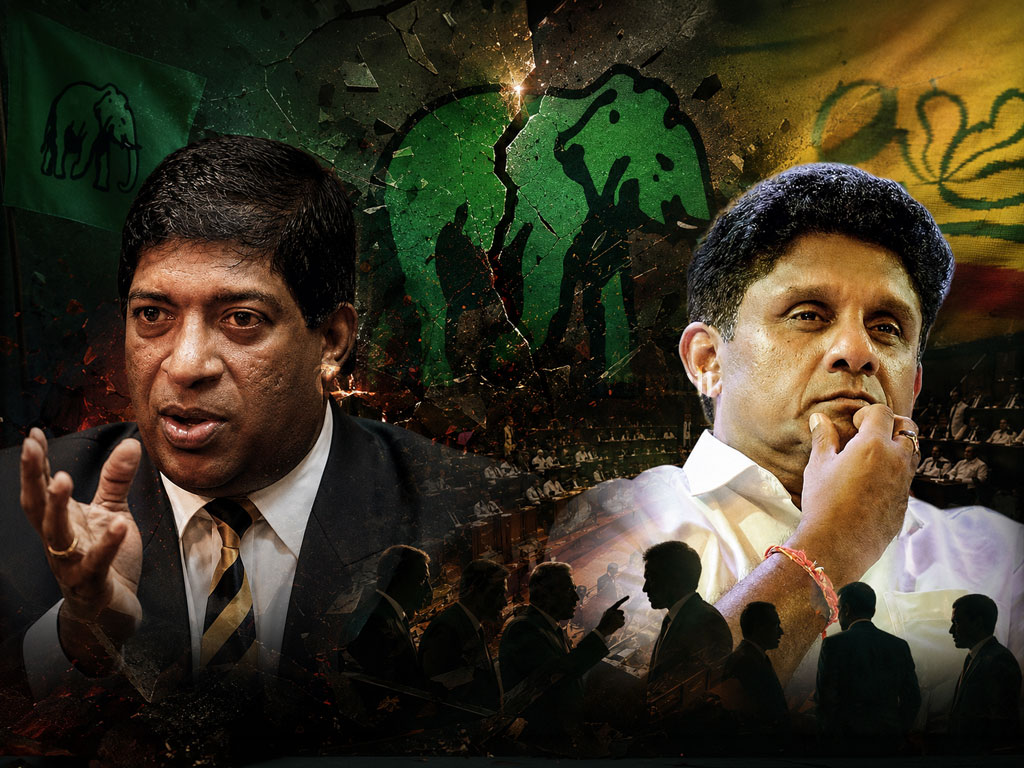
UNP crisis grows after Ravi Karunanayake warns that seniors were removed from the party Working Committee as SJB unity calls rise.
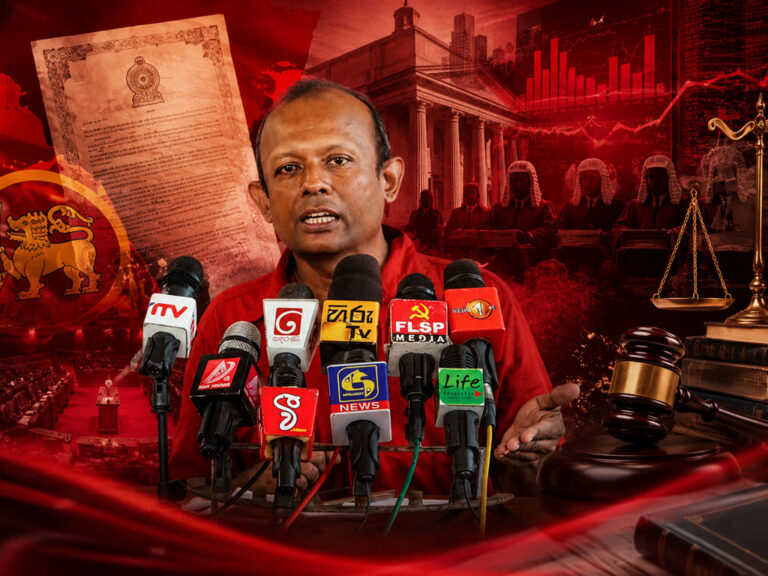
UNP crisis concerns have intensified after MP Ravi Karunanayake claimed that “the devil’s children” had infiltrated the United National Party Working Committee.
Speaking at a media briefing today (18), Karunanayake said the party’s true seniors had been removed from the Working Committee. His remarks have now triggered a fresh political debate over the future of one of Sri Lanka’s oldest political parties.
Karunanayake also stressed that the UNP and the Samagi Jana Balavegaya must unite if both sides are to ensure political survival.

However, the political reality behind his statement appears far more bitter. Critics argue that the United National Party has now fallen into an abyss from which it may never recover.
They say the main reason for this collapse is the party’s rigid leadership and the influence of a small group of so-called “compensation claimants” gathered around it. According to these critics, the group has no real popular base and no meaningful ability to rebuild the party at grassroots level.
Instead, their only political agenda, critics allege, is not to strengthen the UNP but to continuously provoke the leadership and keep the party trapped in “anti-Sajith” politics.
This environment, they say, has replaced political vision with personal hatred. It is also viewed as one of the reasons why even senior figures such as Ravi Karunanayake became disillusioned within the party and eventually moved away from the party machinery.
The UNP was once the most powerful force in Sri Lankan politics. Today, however, critics claim it has become a puppet of this small compensation claimant clique.
Even ordinary party members now appear to understand that a party leadership dependent on narrow advice from such groups has little future.
At the same time, observers say another reality becomes clear when examining the political moves that took place behind the scenes during the last presidential election.
They argue that it was Ranil Wickremesinghe who ultimately helped create the political conditions that secured the victory of the current President.
What was once dismissed as rumour now appears, according to critics, to have been either openly or silently accepted by many within the UNP and other opposition parties as a bitter political truth.
By dividing the Opposition and steering events in a direction favourable to the current President, they argue, the UNP has now destroyed itself.
Against this backdrop, and with Ravi Karunanayake’s reference to “the devil’s children” now being linked to those described as “compensation claimants,” critics say the United National Party has been reduced to little more than a political nameplate.
For them, the party that once shaped Sri Lankan politics no longer shows any credible sign of revival.