By Roy Denish
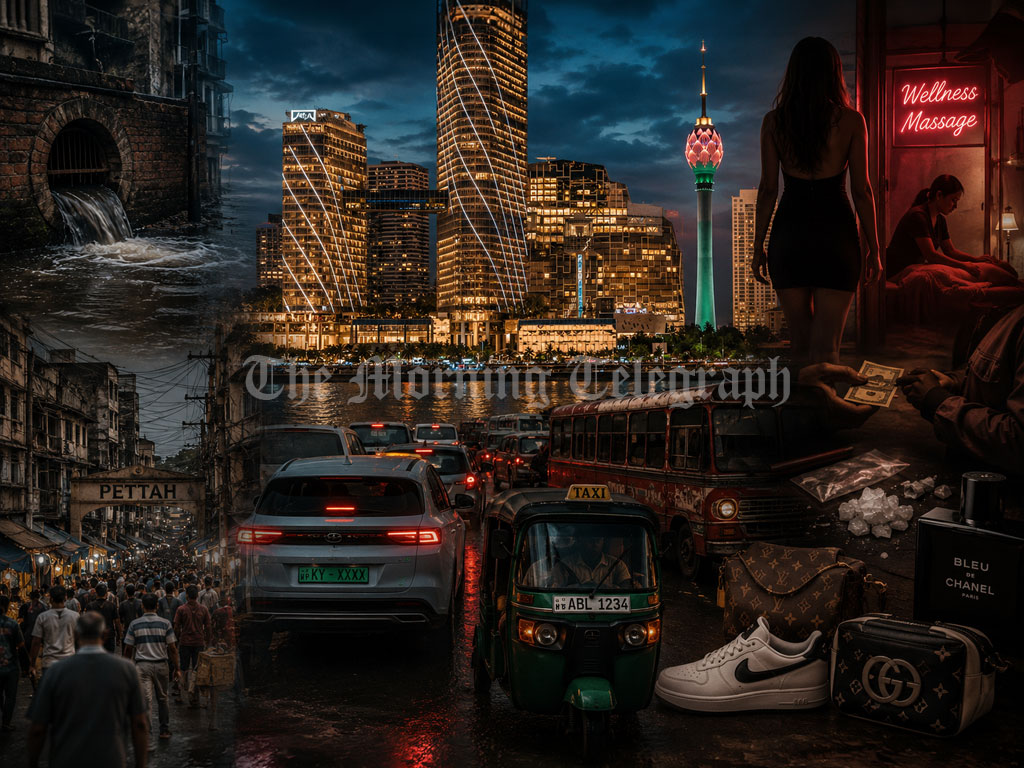
Behind Colombo’s glittering skyline lies a city of stark contrasts, where luxury towers, hidden economies, aging infrastructure, and relentless survival collide in a complex portrait of ambition, inequality, and urban reality.
The Colombo paradox stretches out into a sprawling, multi-layered tapestry of survival, geopolitics, and pretension, a hyper-accelerated South Asian illusion where the vertical reach of glass skyscrapers casts literal and metaphorical shadows over a crumbling, century-old foundation.
The entire commercial hub operates with one foot planted firmly in a futuristic, ultra-luxury metropolis of artificial islands and high-rise integrated resorts, while the other foot is hopelessly wedged into a chaotic, potholed gridlock that paralyzes the city at the slightest hint of rain.
This architectural vanity project becomes terrifyingly apparent when the monsoons hit, because the hidden underground nervous system of the city, a brick-lined Victorian sewage network snaking beneath the asphalt, is over one hundred and thirty years old, built during the British occupation and left to choke on the collective waste of a modern population boom, forcing the unfiltered reality of Colombo right back up onto the flooded pavements of Colpetty and Bambalapitiya.

Yet, the performance art of daily life continues along these cracked streets with a sarcastic but rhythmic resilience, best observed in the frantic morning rush hour where the Colombo elite tightly grip the steering wheels of their unregistered, heavily taxed Chinese electric SUVs and Japanese hybrid hatchbacks.
These vehicles are financed through crippling bank loans just to project an image of unshakeable prosperity, and inside the sealed cabins, drivers sit stewing in the heat, wearing cheap, knock-off designer colognes haggled for on the sun-baked, chaotic pavements of Pettah.
They are trapped in an exhausting social hustle to look rich in a country that is economically bleeding, sitting bumper-to-bumper with unroadworthy private buses, dented, smoke-belching metal monsters that race each other recklessly across three lanes of traffic to scoop up passengers, blasting high-pitched musical horns while operating like independent, lawless kingdoms.
Nestled into the dark alleys off these main thoroughfares is a thriving, gray-market adult economy that serves as Colombo’s open secret, operating precisely because the city is completely missing an officially designated, regulated red light district. Instead, the sex trade is decentralized, masquerading behind the hundreds of “wellness centers” and specialized massage parlours that have mushroomed across the suburbs, offering everything from Thai reflexology and Chinese deep-tissue to Swedish, Ayurvedic, and Vietnamese treatments.
Inside these dimly lit sanctuaries, the economic desperation of the country is laid bare; they are staffed by young village damsels who have migrated from the impoverished agrarian heartlands of Monaragala or Anuradhapura, working to keep their home fires burning and send money back to aging parents, quietly providing extra services to the very same Colombo elites who roll up in those bank-loaned cars.
The culinary landscape of the city mirrors this extreme polarization, presenting a bizarre gastronomic theater where sleek, dimly lit dining rooms serve deconstructed sushi, imported Italian truffles, and pricey French pastries to a corporate crowd discussing crypto and real estate.
Meanwhile, the streets are being overrun by a massive wave of Indian-inspired eateries, flashing blinding LED signs and churning out greasy biryanis, heavily spiced kottu, and North Indian gravies adapted to the local palate to feed a middle class that is working multiple jobs just to stay afloat. Moving between these eateries and glass-fronted cafes are the lifestyle influencers, armed with the latest iPhones bought on monthly installment plans, staging elaborate photoshoots with food they barely eat to sell a fantasy of effortless luxury to thousands of scrolling followers. These digital elites pose on Instagram wearing the exact same fake luxury merchandise, Gucci, Louis Vuitton, and Nike logos printed on cheap fabric, that is smuggled through East Asian ports and sold out of cardboard boxes on Front Street and Duplication Road.
Adding a distinct geopolitical weight to this transformation is the massive influx of Chinese nationals, brought in by mega-projects like the Port City. This has created self-contained expatriate hubs, characterized by authentic, neon-lit Chinese restaurants where the front doors open into a different world; these eateries are managed, cooked in, and employed exclusively by Chinese staff, serving their own community with an insulated efficiency that completely bypasses local labor. Just outside these exclusive culinary enclaves, the atmosphere shifts drastically toward the dark, humid edge of the Indian Ocean, where Colombo’s polluted beaches become a theater for a grittier kind of transaction.
As night falls, the dimly lit street lights along the coast—flickering, rusted yellow bulbs struggling against the salty breeze, cast long shadows over plastic-strewn sand. Moving through this murky twilight are the “Johnnys,” local and foreign prowlers roaming the shoreline explicitly looking for a quick, transactional “workout” with underground sex workers operating in the shadows of Marine Drive.
Weaving through this entire matrix, connecting the high rents, the ice methamphetamine epidemic, the fake perfume, the exclusive Chinese staff, and the coastal prowlers, are the true kings of Colombo’s underground economy: the tuk-tuk drivers. No longer just simple transporters, these three-wheeled philosophers have rebranded themselves as unofficial tourist guides, working with a level of charisma and street-smart manipulation that could rival global corporate executives. They spot a foreigner or an unsuspecting out-of-towner from a mile away, instantly launching into a rehearsed pitch about secret gemstone markets, exclusive elephant orphanages, or highly recommended spice gardens that happen to pay them a hefty thirty percent commission under the table. They know every shortcut through the gridlock, every corrupt traffic cop, every hidden massage parlour, and exactly which nightclub is popping on a Tuesday night, operating as the frantic, motorized nervous system of a city that refuses to look at its own reflection because it is too busy staring at the neon lights of a future it hasn’t quite earned yet.