By Roy Denish
The arrest of a former Justice Minister’s son has ignited fresh political controversy, reviving questions over alleged underworld links and the unresolved fallout from Sri Lanka’s worst environmental disaster.
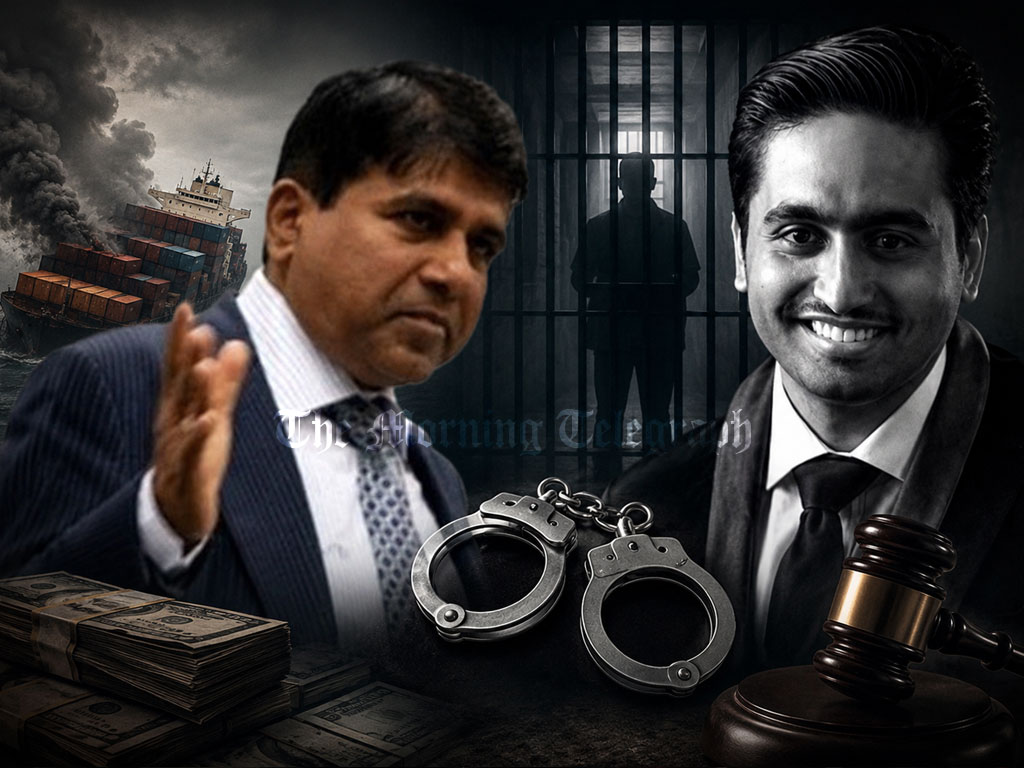
The son of former Sri Lankan Justice Minister Wijeyadasa Rajapakshe was arrested Thursday on charges linking him to underworld criminal networks, officials said.
Rakitha Rajapakshe, an attorney-at-law, was taken into custody by detectives from the Commission to Investigate Allegations of Bribery or Corruption. Authorities confirmed the arrest followed an investigation into illicit financial transactions and alleged ties to prominent organized crime figures.

The suspect is expected to be produced before a magistrate court Friday, where prosecutors plan to request an extension of his detention for further interrogation. Legal representatives for the younger Rajapakshe stated they are preparing to challenge the grounds of the detention, maintaining his innocence.
The arrest draws intense scrutiny to the family of the elder Rajapakshe, whose political legacy has faced ongoing criticism regarding his handling of the country’s worst maritime environmental disaster.
During his tenure as Minister of Justice, Rajapakshe oversaw the government legal strategy following the May 2021 MV X-Press Pearl catastrophe, when a Singapore-flagged container ship caught fire and sank off the Colombo coast. The incident released billions of toxic plastic pellets and chemicals, decimating the local marine ecosystem and destroying the livelihoods of thousands of fishing families.
Rajapakshe faced severe public backlash for his decision to file the state primary lawsuit for environmental damages before the International Commercial Courts of Singapore. Local environmentalists and legal experts argued that pursuing the case in the vessel home flag state exposed Sri Lanka to strict maritime liability limits, whereas filing in domestic courts would have provided a stronger legal foundation to claim full damages.
While Sri Lanka Supreme Court later issued a landmark domestic ruling ordering the Singaporean shipowners to pay one billion dollars in compensation to the state treasury under absolute corporate liability, the funds remain largely unpaid. The Singapore owners and insurers have successfully exploited corporate dissolution loopholes and international liability caps to avoid the payout, leaving the multi-billion dollar ecological restoration largely unfunded.