
By Roy Denish.
Sri Lanka’s sports corruption crisis raises fresh questions over media silence, rugby governance failures, visa fraud claims and Olympic risks.
Sri Lanka sports corruption is again under scrutiny as mainstream media repeats the government’s anti-corruption message while ignoring a deeper crisis inside national sports administration.
Media outlets often follow political narratives when attacking opposition figures. Yet they remain largely silent on failures inside sports governance. Those failures continue to damage national athletes and place Sri Lanka’s international sporting reputation at risk.
At the centre of this blind spot is Sports Minister Sunil Kumara Gamage. He continues to protect controversial figures in the sports system. Critics say his approach allows conduct that weakens the integrity of Sri Lankan sport.

Media Silence Over Sports Corruption
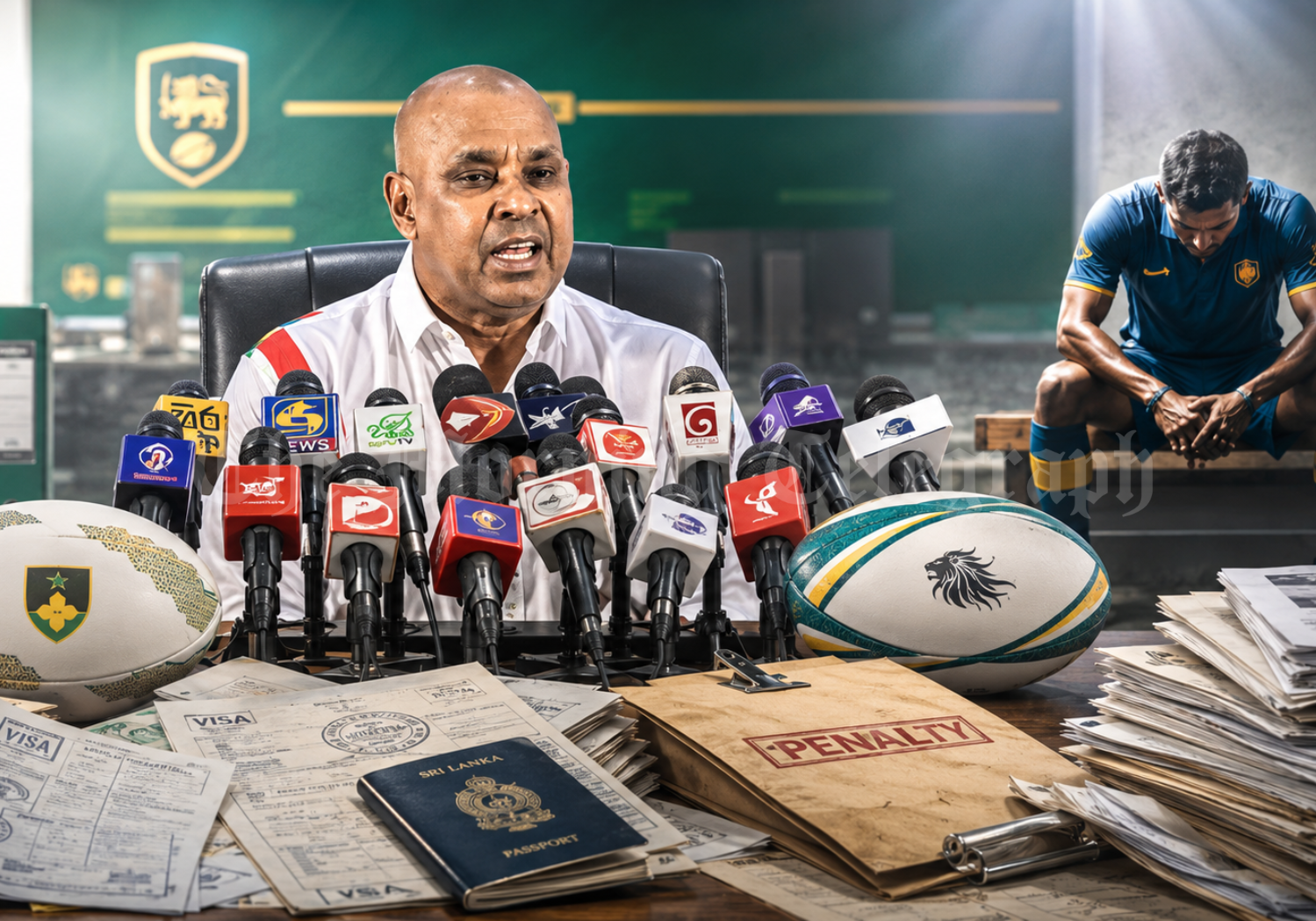
A recent media briefing highlighted the Ministry of Sports’ full sponsorship of the Northampton Saints and Asia Pacific Lions tour to Sri Lanka. The event presented a polished public image. But behind that public relations display sits a confused and contradictory administrative reality.
A video of the related press briefing can be viewed here: Watch the YouTube video
The Minister claims credit for rugby development. He also orders disciplinary inquiries into the rugby administration over failures such as the Korean tour. At the same time, he depends on the Ministry of Foreign Affairs to rescue the rugby administration during international fixtures.
This mixed approach has created confusion. People accused of incompetence and mismanagement still receive public praise. That leaves Sri Lankan rugby trapped between official ignorance and institutional failure.
Rugby Penalty Raises Serious Questions
One major example involves the £50,000 penalty imposed on Sri Lanka Rugby. The fine came after cabinet and immigration documents were allegedly manipulated. Officials reportedly used those documents to present foreign Fijian players as local citizens in order to obtain visas.
That act misled state authorities. It also brought embarrassment to the country.
Instead of holding the rugby administration accountable, internal leaks point to a different plan. They claim officials tried to use international funds meant for Sri Lankan rugby development to settle the penalty.
An email dated June 19, 2017, involved senior officials Rohan Gunaratne, Asanga Seneviratne and Priyantha Ekanayake. Ekanayake now heads the Minister’s Sports Advisory Council. The email allegedly shows that key administrators knew about the plan and helped use incoming funds to clear the fine.
That decision protected favoured officials. It also diverted money away from rugby development.
Olympic Ethics Storm Deepens
The allegations around Asanga Seneviratne go beyond rugby. They raise major questions about sports governance and public credibility.
One serious allegation dates back to his time as Vice President of the National Olympic Committee in 2021. It involves an unreported sum of £2,800. Critics describe it as an illicit payment or financial favour.
If the administration failed to investigate or report the matter, Sri Lanka could face a direct breach of the International Olympic Committee Code of Ethics. IOC Rule 2 and Rule 27 require National Olympic Committees to act immediately against bribery and corruption.
They must also report such conduct to international bodies. Failure to do so can expose a national committee to suspension.
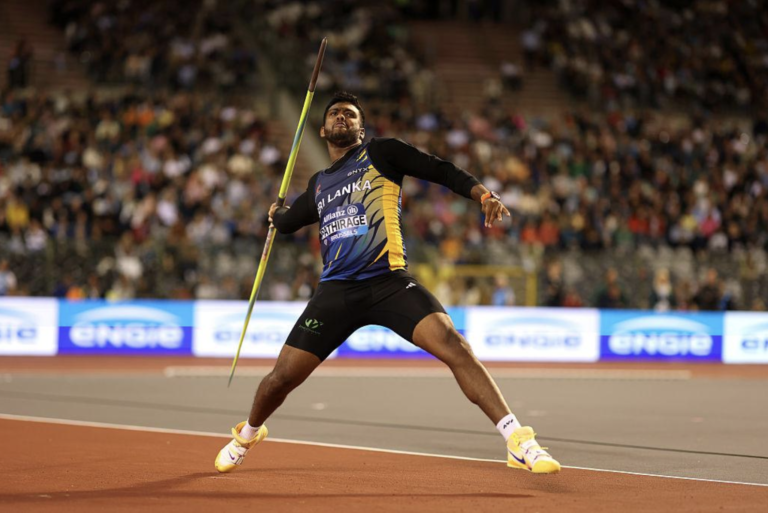
The IOC Code of Ethics treats the concealment of bribery as a serious offence. If these hidden infractions reach the international body, Sri Lanka could face damaging sports sanctions. Future athletes, including standard-bearers such as Rumesh Tharanga, could even lose the right to compete under the Sri Lankan flag at the 2028 Olympic Games.
Rule of Law Fades in Sports Politics
The government speaks loudly about the rule of law. But that message fades when sports politics enters the picture.
Figures such as Priyantha Ekanayake continue to play central roles. They help restore controversial administrators while the Minister avoids responsibility.
The earlier advisory support system has also collapsed. That structure once used figures such as Aravinda de Silva to clean up institutional problems. Without it, the Ministry now looks exposed.
Existing sports laws also restrict people with conflicting business links from holding key administrative positions. Figures such as Rohan Abeykoon fall into this debate. Yet the Ministry continues to ignore these legal boundaries.
Elite Control Blocks Rural Talent
There is deep irony in the current political moment. Sri Lanka has a President from a rural farming background in Thambuthegama. He should understand the struggles of ordinary citizens.
Yet under this government, sports administration remains heavily elitist.
In rugby, power stays concentrated among seven elite Colombo clubs and one Kandy club. This structure weakens provincial voices. It also limits the rise of rural talent.
In cricket, proposed changes by interim committees raise similar concerns. Instead of decentralising power, these reforms could place more control in the hands of a small elite group. That would narrow the path for future working-class athletes.
The Sports Minister’s excuses over visa fraud, financial mismanagement and systemic corruption show a troubling mindset. The state appears to treat sport as a political game, not a national responsibility.
Radical political movements and mainstream media remain silent. They fail to understand the depth of this sports corruption crisis. By treating serious administrative misconduct as minor sports gossip, they allow compromised officials to feed on the future of Sri Lankan sport.
#SriLanka #SportsCorruption #SriLankaSports #SportsGovernance #SriLankaRugby #RugbyCorruption #SportsMinistry #SunilKumaraGamage #IOC #Olympics #NationalOlympicCommittee #NorthamptonSaints #AsiaPacificLions #SportsNews #Corruption #TheMorningTelegraph



The bandwagon is finally starting to move. With laws on criminal financial fraud becoming stricter, there can no longer be room for those who exploit the system.
It is deeply concerning when individuals continue to politicize governance, mislead the public, misuse public funds, and seek protection under political umbrellas instead of being held accountable.
Those found responsible should face due process, be investigated thoroughly, and, if proven guilty, be punished according to the law. Corruption and financial fraud are a serious menace to society, undermining public trust and depriving ordinary people of the future they deserve.
Accountability must prevail over politics.