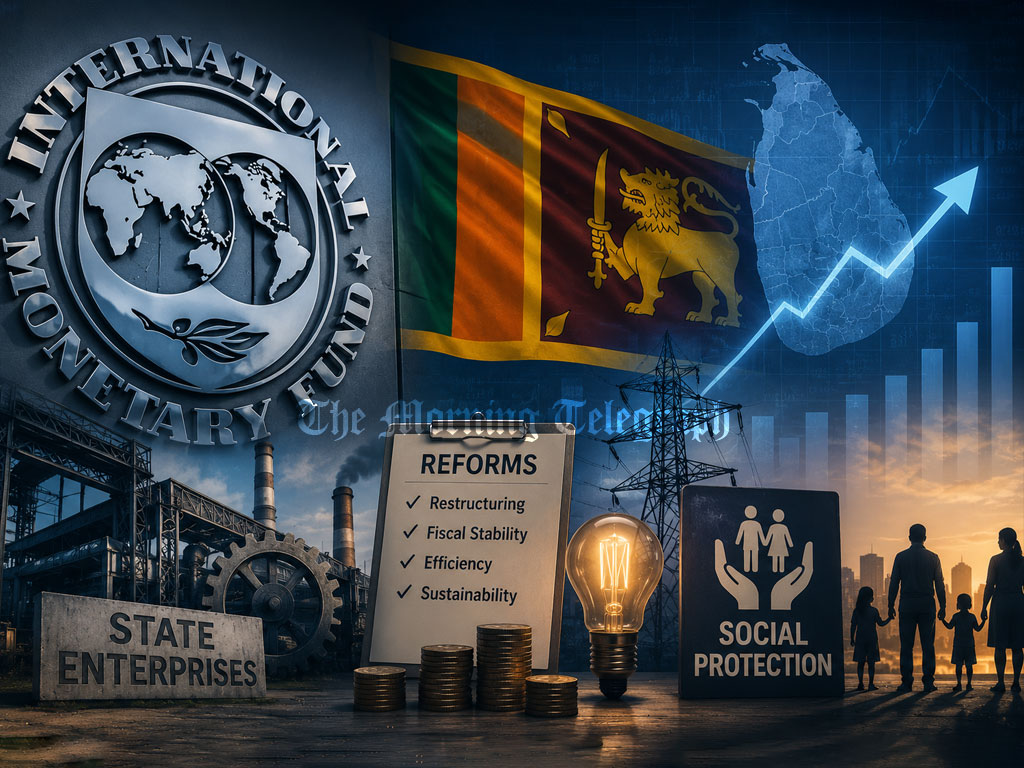
The IMF says state enterprise reforms must accelerate in Sri Lanka to reduce fiscal risks while protecting vulnerable families and maintaining energy pricing.
The state enterprise reforms agenda must move forward more quickly, the International Monetary Fund (IMF) has said, stressing that accelerating changes to state-owned enterprises is essential to reduce fiscal risks and strengthen Sri Lanka’s economic recovery.
The IMF also emphasized that maintaining cost-recovery pricing in the energy sector is a key requirement for achieving this objective and preserving fiscal stability.

In addition, the Fund said the authorities should prioritize properly targeted social safety net programmes while ensuring adequate coverage to protect vulnerable families from economic hardship.
An International Monetary Fund delegation, led by Mr. Ewan Papageorgiou, visited Sri Lanka from June 24 to June 30. At the conclusion of the mission, Mr. Papageorgiou issued a statement outlining the delegation’s assessment and recommendations.
The delegation visited the country to review recent macroeconomic developments and evaluate the progress made by the authorities under the economic reform programme supported through the IMF’s Extended Fund Facility (EFF).
The statement also highlighted the importance of maintaining exchange rate flexibility. It added that intervention in the foreign exchange market should remain limited to smoothing excessive volatility rather than influencing broader market movements.
State Enterprise Reforms Remain a Key IMF Priority
According to the IMF, accelerating reforms of state-owned enterprises remains critical to limiting fiscal risks and supporting the country’s long-term financial sustainability.
The Fund also reiterated that maintaining cost-recovery energy pricing is an important element of Sri Lanka’s ongoing reform agenda.
Furthermore, it stressed that social protection measures should remain well targeted to ensure vulnerable groups continue receiving adequate support while broader economic reforms progress.
The IMF delegation’s visit formed part of its ongoing engagement with Sri Lanka under the Extended Fund Facility programme, which continues to monitor economic developments and reform implementation.
The statement concluded by emphasizing that exchange rate flexibility remains an important policy tool and that authorities should intervene in foreign exchange markets only to reduce excessive volatility.