By Roy Denish.
Rice leasing scheme satirically exposes how Sri Lanka’s public servants face food costs, austerity and wages under economic reform.
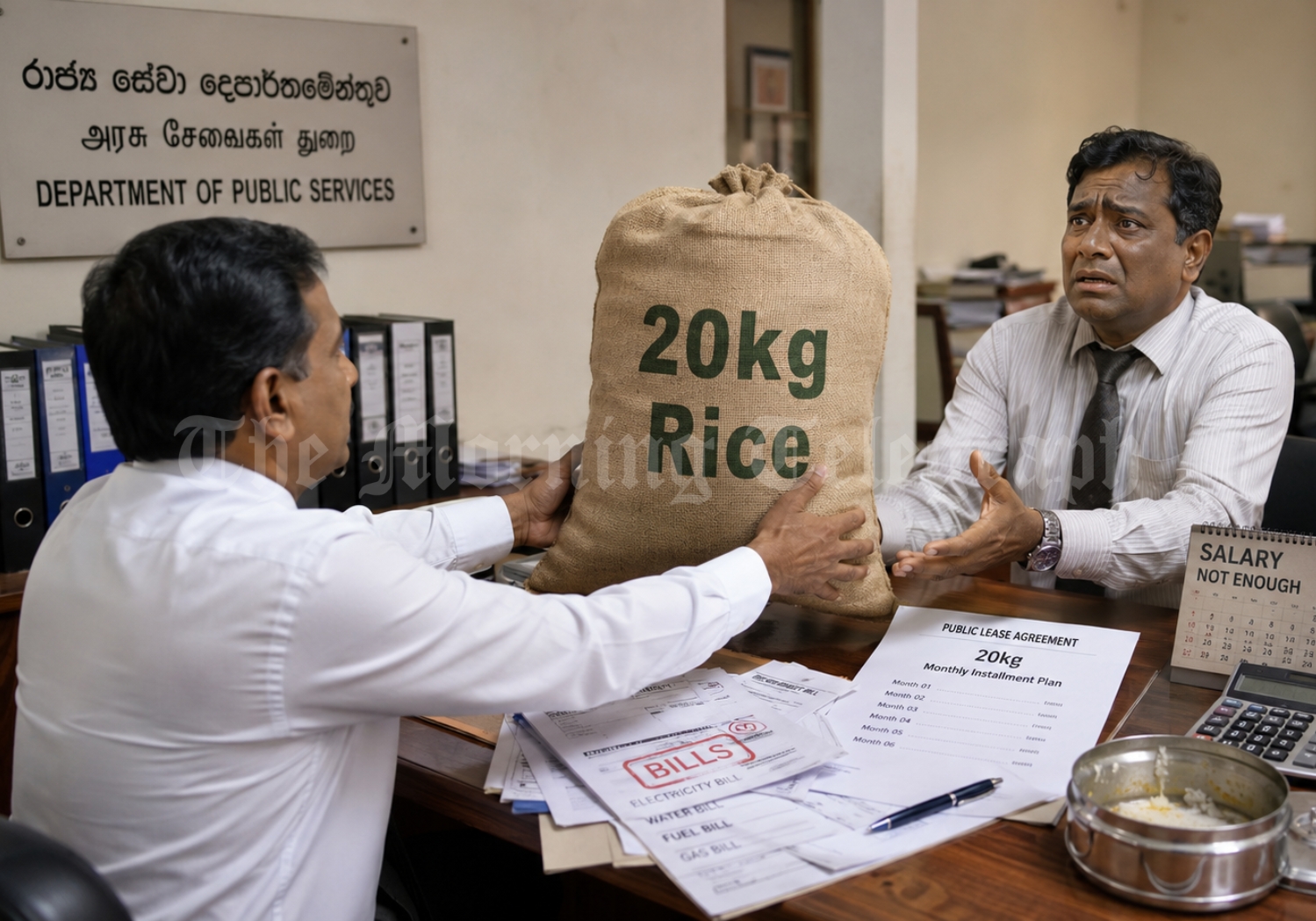
The rice leasing scheme to give public servants 20kg of rice is being sold as relief, but it reads like a masterclass in modern administration. Why raise living wages when the state can offer a carbohydrate-backed subscription model instead? This is not policy innovation. It is a structural promotion for hardship, as the macroeconomic burden moves neatly from the central bank to the nation’s dinner tables.

Rice leasing scheme exposes the real bill
For months, Sri Lankans were told IMF-backed reforms were essential “national adjustments” to restore fiscal discipline. Now, it seems “discipline” looks like financing a bowl of rice on an installment plan. Rice, the proud staple of Sri Lankan life, has moved from ordinary crop to refined financial derivative. Buy now and pray later for a basic meal is a brutal admission. While the economy may be “stabilizing,” the average citizen’s stomach appears to be facing a technical default.
When the rice leasing scheme starts leasing lunch, the state no longer only governs. It runs a pantry with a collection agency. Instead of fixing small matters such as stagnant wages, weak production, or crushing tax burdens, the administration has bravely chosen to treat the symptom. If years of austerity and tax hikes have produced a deferred-payment carbohydrate scheme, the country must admire the sheer economic genius of the roadmap.
True governance, after all, does not depend on whether citizens live with dignity or feed their families without state financing. It depends on the beauty of balance sheets and the obedience of debt targets. If a nation must finance its staple food like a mid-range smartphone, the economic model clearly needs no reconsideration. It only needs a better marketing campaign.