By Roy Denish.
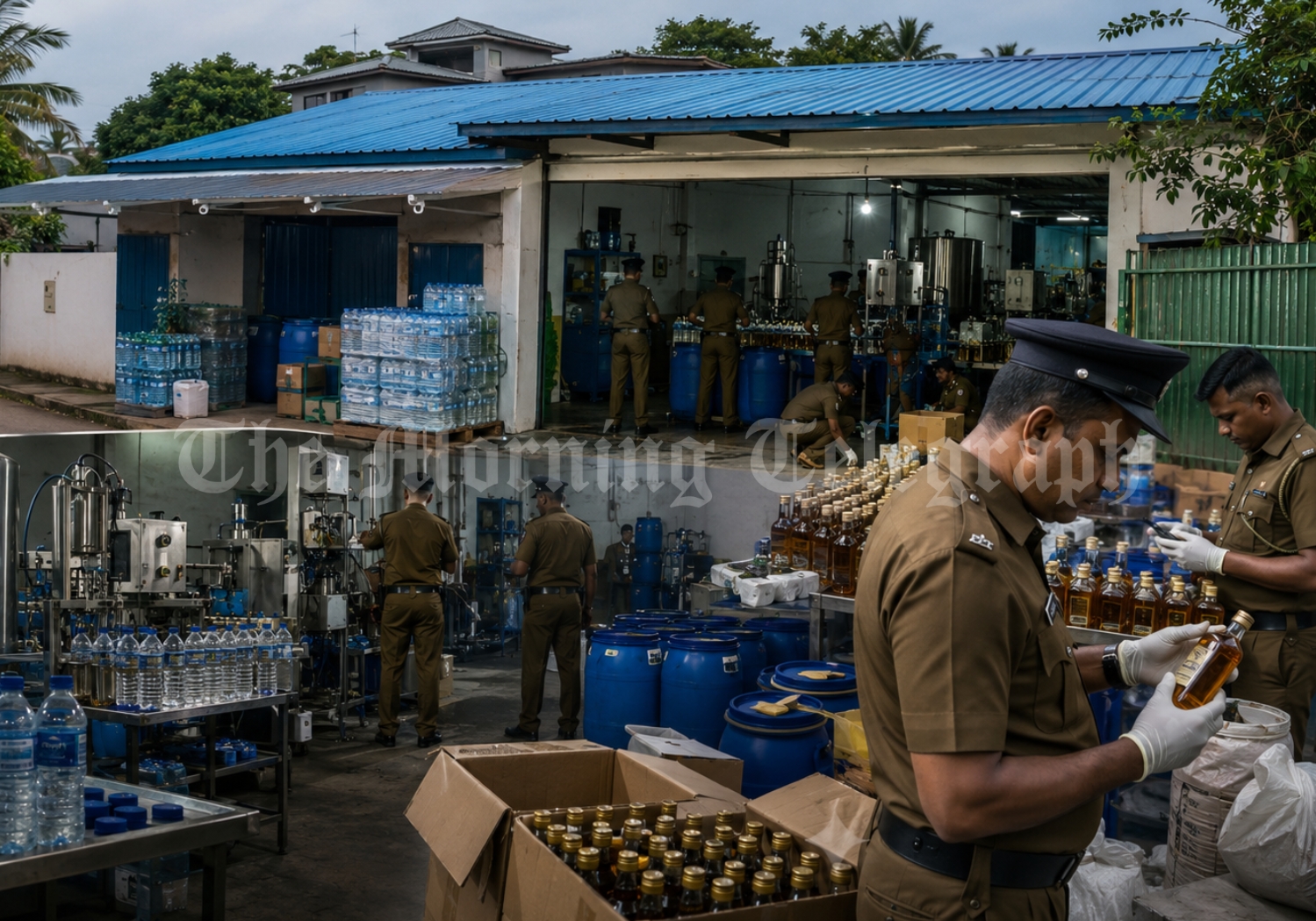
An illegal liquor factory in Malabe used a licensed water bottling plant as cover before police seized thousands of counterfeit bottles.
An illegal liquor factory hidden inside a licensed water bottling plant has been uncovered in Malabe, exposing a large-scale operation built to avoid suspicion.
The Western Province North Crime Division dismantled the commercial-scale facility in a suburban residential area along Sudarshana Road. Police found that the operation used the structure, equipment, and appearance of a legitimate business to conceal illicit production.
Illegal Liquor Factory Hidden Behind Water Plant
The premises blended into the neighborhood as a routine commercial operation. From the outside, it operated as a registered bottled drinking water manufacturing and distribution business. That cover gave the operators a shield against local suspicion.
Regular deliveries of plastic bottles, caps, sealing equipment, and large bulk containers appeared normal for a water plant. Likewise, heavy processing machinery and transport vehicles did not alarm residents. The daily movement around the premises matched what neighbors expected from a water purification and bottling facility.

Inside, investigators discovered a far more advanced setup. Officers found an operation designed for mass production and quick distribution, not a small bootlegging unit. The raid revealed a facility geared to produce large volumes of spirits for the market.
Police seized 18,575 retail-ready bottles of locally manufactured liquor. The bottles contained more than 3,345 liters of illicit spirits, packed and ready for transport. Each bottle had a capacity of 180 milliliters.
Alongside the commercial blending and bottle-sealing equipment, officers also recovered raw bulk ethanol. Investigators identified the ethanol as the base used to mix the counterfeit spirits.
Counterfeit Spirits And Cannabis Recovered
The site also supported more than local spirits production. Police recovered larger glass bottles, including 750-milliliter and 1-liter sizes, labeled as foreign liquor. The property also served as a base for a wider illegal trade, as officers found 50 grams of Kerala cannabis at the location.
Police and local press reports have not publicly released the specific registered trading name of the front business used by the syndicate. However, investigative reports from the Western Province North Crime Division state that the property had been structurally set up as a registered bottled drinking water manufacturing and distribution facility.
By using the generic logistical identity of a water bottling plant, the operators brought in massive shipments of clear plastic bottles, sealing machinery, and industrial vehicles without attracting attention from neighbors or local municipal inspectors.