By Dwayne Ferreira.
Netanyahu sea navigation remarks signal Israel’s push to protect maritime trade as tanker attacks raise fears near Hormuz.
Israeli Prime Minister Benjamin Netanyahu’s sea navigation remarks have placed maritime security at the centre of rising Middle East tensions, as tanker attacks near the Strait of Hormuz alarm global shipping markets.
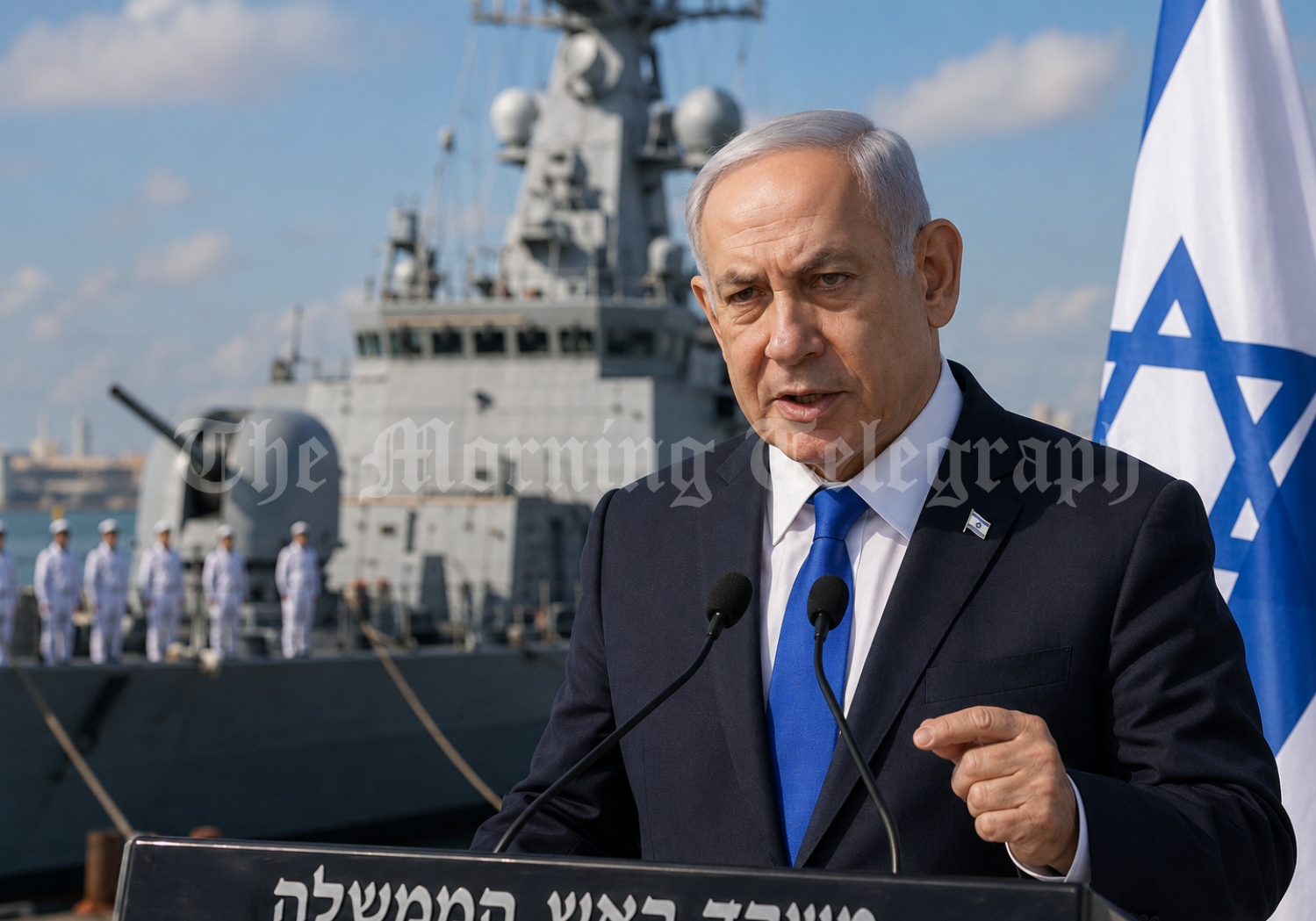
Speaking during a visit to a naval base in Haifa, Netanyahu said Israel would act to protect shipping routes and maritime trade. He described sea access as essential to Israel’s security, economy and wider national interests.
“I set a simple objective,” Netanyahu said. “The objective of the Navy, and of Israel, is to ensure shipping routes and freedom of maritime trade, which are so important to the State of Israel.”
His comments came as regional maritime security returned to the spotlight after several commercial tankers were struck near the Strait of Hormuz. The incidents have increased fears that the confrontation involving Iran, Israel and the United States could threaten global shipping and energy supplies.

Netanyahu Sea Navigation Message Targets Maritime Threats
According to international reports, a Qatari LNG tanker was among the vessels hit. Qatar blamed Iran and called the attack a violation of international law. Other vessels also reportedly sustained damage, while maritime authorities said crews were safe in at least some cases.
The Strait of Hormuz remains one of the world’s most sensitive energy corridors. A large share of global oil and liquefied natural gas shipments passes through the narrow waterway between Iran and Oman.
Any disruption there can quickly affect fuel prices, insurance costs, shipping schedules and wider global trade. Therefore, Netanyahu’s comments carried a message beyond Israel’s borders.
His statement suggests that Israel now views maritime security as a core military priority. Israel has already faced threats from Iran-backed groups across several fronts, including Hezbollah in Lebanon and Houthi forces in Yemen.
Both groups have threatened or targeted shipping linked to Israel and its allies in the past. As a result, Israel’s navy now plays a growing role in the country’s wider regional defence posture.
Israel Frames Sea Routes As A National Security Issue
For Israel, sea routes are not only commercial lifelines. They also support imports, exports, energy supplies and military logistics.
Netanyahu’s message from Haifa therefore appeared directed at both domestic security officials and hostile regional actors. He signalled that Israel would not allow rivals to threaten its access to international waters.
The comments also came as Western and Gulf governments face pressure to respond more firmly to attacks on commercial shipping. The United States and European allies have already deployed naval missions to protect shipping in the Red Sea and nearby waters after repeated attacks by Iran-aligned Houthi forces.
However, the latest tanker incidents near Hormuz raise the stakes further. Unlike the Red Sea, the Strait of Hormuz sits directly beside Iran and remains central to Gulf energy exports, Asian markets, Europe and the wider global economy.
The growing crisis has already prompted international concern. The International Maritime Organization has repeatedly stressed the importance of maritime security and safe international shipping.
Netanyahu did not announce a new Israeli naval operation. However, his remarks suggest Israel may increase naval readiness and deepen coordination with allies if attacks on shipping continue.
His language also fits Israel’s broader argument that Iran and its regional partners threaten not only Israel, but also international trade.
The statement will likely gain support from Israeli security officials who have long warned that maritime threats could become a major front in the regional conflict.
At the same time, critics may argue that stronger Israeli military positioning could escalate tensions in an already volatile region.
For now, Netanyahu frames the issue as a matter of international security and free movement at sea. By linking Israel’s naval mission to maritime trade, he has placed Israel’s security concerns inside a wider global debate over who protects the region’s most important sea lanes.
As attacks near Hormuz continue to worry governments and shipping companies, Israel’s navy is now being presented as a central part of the country’s response. Netanyahu’s warning was clear: Israel intends to protect its access to the sea and the trade routes that keep its economy moving.