By Roy Denish.
Sri Lanka fishing vessels will face tighter security scrutiny as the government moves to close a maritime blind spot exploited by smugglers in the Indian Ocean.
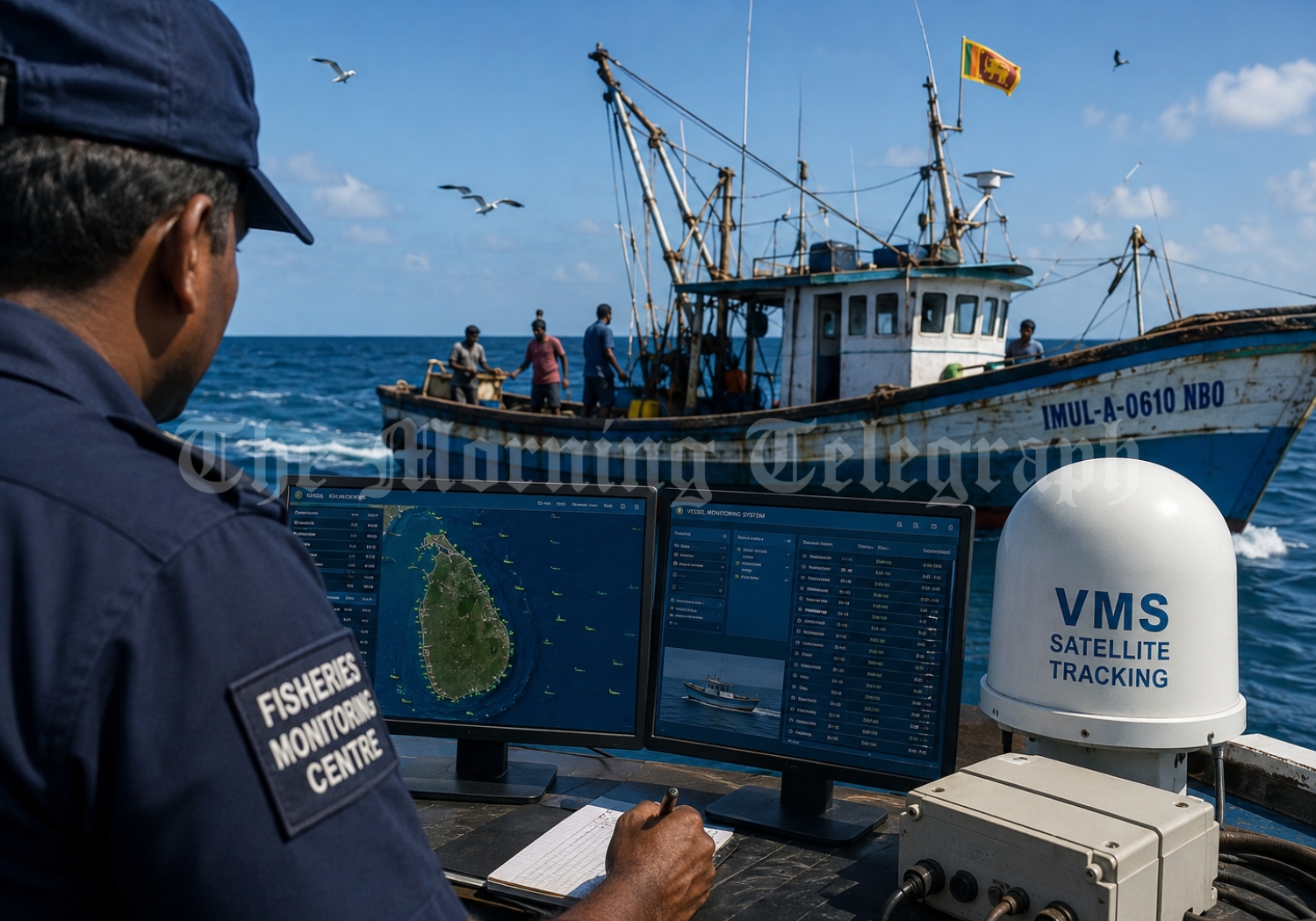
The Sri Lankan government has approved an emergency plan to install satellite-based tracking systems on about 1,500 fishing vessels that operate without electronic monitoring. Officials aim to stop transnational human trafficking and narcotics smuggling syndicates from using untracked local craft.
The Cabinet of Ministers cleared the proposal for multi-day and one-day fishing vessels registered before Jan. 1, 2021. These boats lack electronic surveillance capacity. Under the directive, the government will pay the full cost of purchasing and installing Vessel Monitoring Systems, known as VMS, on the remaining vessels.
Fishing Vessels Face Tracking Rules
Authorities have not revealed the exact cost. However, marine VMS transponders usually cost between $1,000 and $3,000, depending on satellite data configurations. That places the state-backed program in the range of several million dollars.
For vessels registered after the January 2021 cut-off, current rules require boat owners to pay for the tracking equipment and satellite transmission fees themselves.
The expansion will bring the country’s entire high-seas fleet under official surveillance. At present, 4,200 of Sri Lanka’s 5,200 registered multi-day vessels already carry VMS tracking hardware. Australia funded those first devices through a maritime security grant, reflecting its direct interest in curbing irregular migration and smuggling networks across the Indian Ocean.
The Department of Fisheries and Aquatic Resources will manage round-the-clock monitoring through its specialized Fisheries Monitoring Centre. Staff at the centre track fleet movements in real time. They also receive automated location and speed alerts every four hours through global positioning networks.

While the system helps Sri Lanka meet international regulatory standards for commercial fishing, officials see a more urgent domestic security threat. In recent months, defense authorities have warned that regional syndicates systematically co-opt unmonitored local trawlers for illegal operations.
Deep-sea vessels can remain offshore for weeks. Smuggling groups use them to meet unflagged foreign dhows in international waters. These networks move hundreds of kilograms of crystal methamphetamine and heroin, along with automatic weaponry.
The same illicit maritime routes support human smuggling. Syndicates use unmonitored fishing craft to move irregular migrants out of local waters toward foreign destinations dangerously.
For wider maritime regulation and safety standards, the International Maritime Organization remains the key United Nations agency responsible for shipping safety, security and marine pollution prevention.