Ranil London trip case takes a new turn as lawyers raise questions over vehicle expenses and possible High Commission responsibility.
The Ranil London trip case has reached a critical stage after lawyers raised new questions over vehicle expenses linked to the alleged misuse of state funds.
The case involves former President Ranil Wickremesinghe and former Presidential Secretary Saman Ekanayake. It concerns the alleged misuse of more than Rs. 1.5 crore, or Rs. 16.6 million, in state funds.
The Criminal Investigation Department has now concluded its investigations and sent the files to the Attorney General. However, a revelation made before the Colombo Magistrate’s Court on July 8 may change the direction of the case.
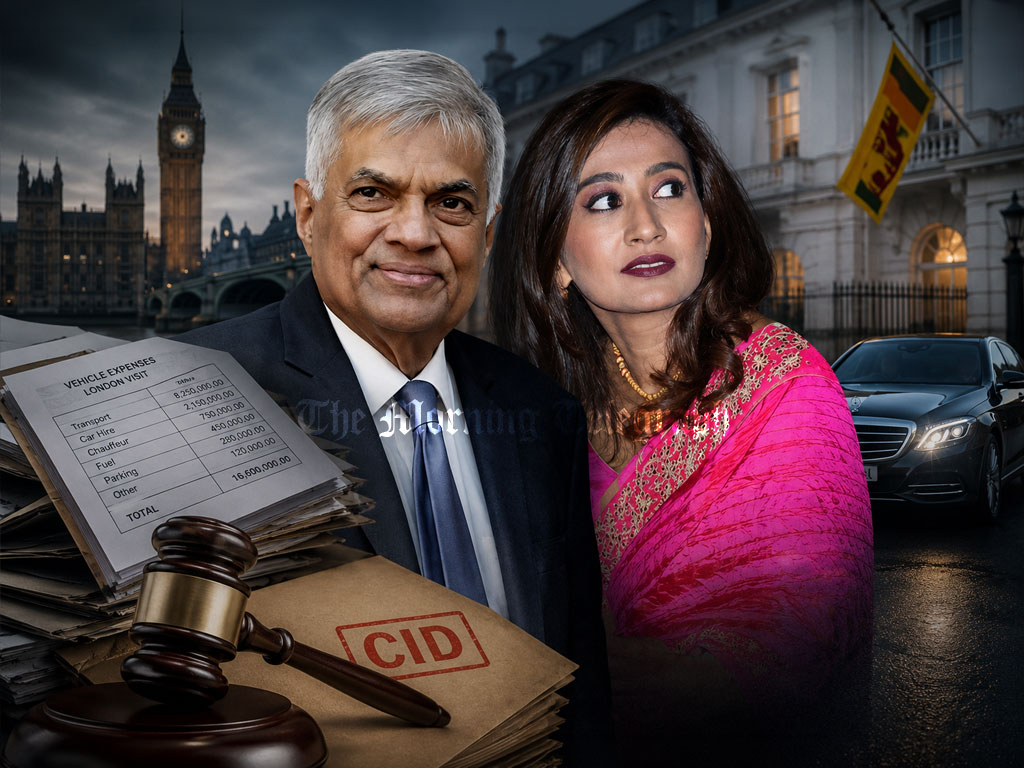
President’s Counsel Anuja Premaratne, appearing for Wickremesinghe, told court that more than half of the questioned expenditure related to vehicle expenses.

Ranil London Trip Vehicle Expense Question
When the state counsel informed court that the CID had completed its investigations and sent the file to the Attorney General for advice, the first suspect’s counsel raised the vehicle issue.
“My client has been provided with vehicles by the British Government for the travel expenses, and I am submitting a document to the complainant party regarding this matter,” he said.
This claim has opened a serious financial and legal question.
Under Government Financial Regulations and the Establishment Code, the Chief Accounting Officer or authorized officer for financial transactions at a Sri Lankan embassy or high commission overseas is the relevant Ambassador or High Commissioner.
Therefore, if the British Government provided vehicles free of charge for the visit, questions now arise over how more than Rs. 8 million was allocated as “vehicle expenses” from Sri Lankan state funds.
The key questions are who authorized the payment, to which account the money was credited, and why such an expense existed.
If false bills or documents were prepared for services received free of charge, the issue may go beyond administrative failure. It could amount to fraudulent misappropriation and criminal breach of trust under the Penal Code of Sri Lanka and the Public Property Act.
Legal Risk for Saroja Sirisena
The next major challenge for the CID is to trace the chain of payments.
If the Wickremesinghe camp proves through official British Government documents that no state funds were paid for vehicles, investigators may have to identify who approved the release of those funds.
If the payments were made through the London High Commission, responsibility for approving related vouchers may fall on then High Commissioner Saroja Sirisena and her financial officers.
Even during a Presidential visit, the Head of Mission carries responsibility for verifying overseas payments.
Therefore, if records show payments for vehicles that were allegedly provided free of charge, the CID may have to examine whether financial fraud charges should be filed against Sirisena and senior officers.
Could Ranil Avoid Direct Charges?
The Ranil London trip case may now shift because of this legal strategy.
By arguing that Wickremesinghe did not personally receive state funds, and that the expenses were handled through diplomatic channels, the defense appears to be shifting responsibility toward officials.
This could shield the former President, to some extent, from direct financial misappropriation allegations.
However, the issue may not end there.
Constitutionally, the President remains the head of the state mechanism. Therefore, the question of command responsibility still remains.
Investigators may still have to ask who gave the original instructions to use state funds for what has been described as a private visit.
That question may prevent the former President and former Presidential Secretary from being fully removed from the legal debate.
What Happens Next?
The future of the case will depend on the Attorney General’s advice, which is expected on September 30.
If the Attorney General accepts the document about British Government support submitted by Wickremesinghe’s lawyers, the CID may have to redirect the investigation.
That would likely mean examining the then authorities at the London High Commission, including Saroja Sirisena, to determine what happened to the funds.
The Ranil London trip case could therefore become one of the most serious legal tests involving financial control at a Sri Lankan foreign mission.
It may also decide whether the alleged misuse of funds remains centered on the former President and his Secretary, or whether the investigation moves toward officials who handled payments overseas.