By Dwayne Ferreira.
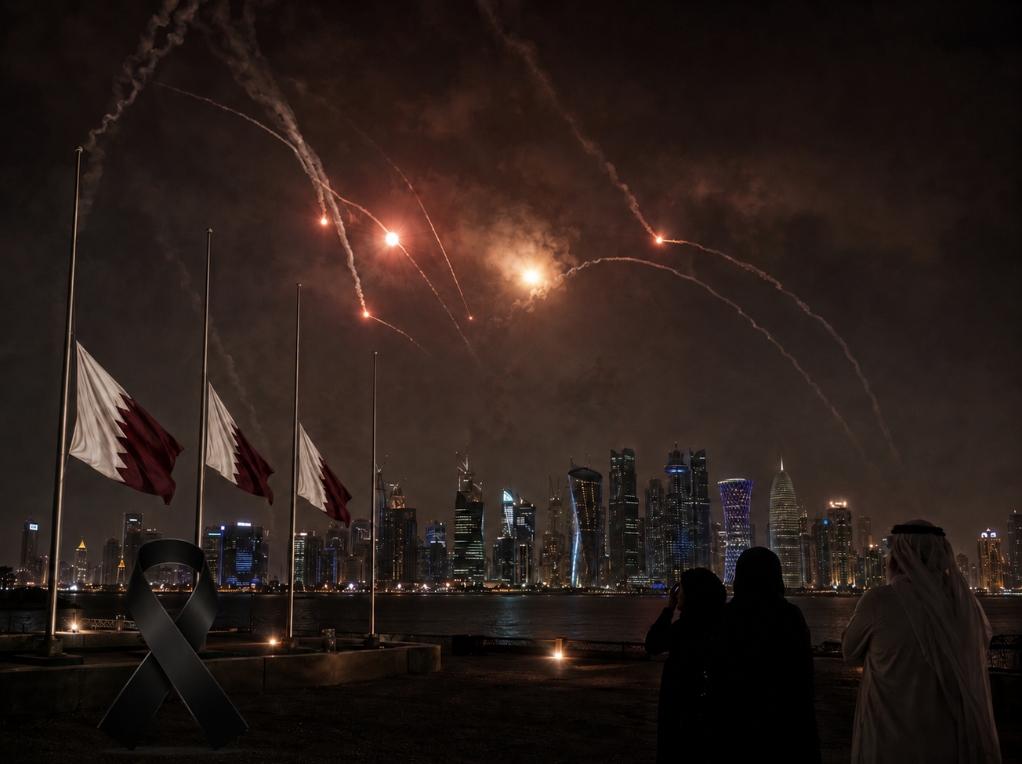
Iran launched a missile attack against Qatar as the Gulf nation mourned the death of former Emir Sheikh Hamad bin Khalifa Al Thani, creating a disturbing contrast between national grief and the terrifying sound of air-defence interceptions over the country.
Qataris were already confronting the loss of one of the most important figures in their country’s modern history when missiles were fired towards their territory on Sunday, July 12, 2026.
The Amiri Diwan announced on Sunday morning that Sheikh Hamad bin Khalifa Al Thani, widely known as the Father Amir, had died at the age of 74.
However, as Qatar entered a period of mourning, the country’s armed forces were also forced to respond to an Iranian missile attack.
Qatar’s Ministry of Defence announced that the Qatari Armed Forces had intercepted missiles targeting the state. The Ministry of Interior later said three people, including a child, had been injured by falling debris generated during the interception operations.
Grief Interrupted by Missiles
The timing could hardly have been more painful for Qatar.
Instead of being allowed to mourn Sheikh Hamad in peace, Qatari families were confronted with emergency warnings, interception explosions and fears that debris or missiles could fall on populated areas.
Iranian forces have portrayed their operations across the Gulf as attacks against American military interests and facilities located in countries allied with Washington. Qatar hosts Al Udeid Air Base, one of the most important US military installations in the Middle East.
Yet that explanation does not erase the consequences for Qatar.
Whatever Tehran’s intended target, missiles were fired towards the territory of a sovereign Arab state while its people were mourning a former ruler. Qatar’s air defences had to respond, civilians were placed in danger and at least three people were reportedly injured by falling debris.
Iran Shows No Pause for Qatar’s Mourning
International diplomacy normally recognises periods of national mourning as moments requiring restraint and respect. Iran’s decision to continue firing missiles towards Qatar demonstrated that its confrontation with the United States had taken priority over the grief of the Qatari population.
There is currently no evidence that Tehran deliberately scheduled the attack to coincide with Sheikh Hamad’s death. Nevertheless, Iran apparently made no visible effort to delay or suspend its operation after Qatar announced the death of its former emir.
A Cruel Day in Qatar’s History
July 12, 2026, will be remembered in Qatar for two profoundly different reasons.
It was the day the country lost Sheikh Hamad bin Khalifa Al Thani, the ruler who helped create modern Qatar. It was also the day Qatar’s armed forces were required to defend the nation against an Iranian missile attack.
There is no confirmed evidence that Iran intended to insult Sheikh Hamad’s memory or deliberately target grieving Qataris.
However, Tehran’s willingness to fire missiles towards Qatar during such a sensitive moment will inevitably be viewed by many as a striking absence of consideration for the country’s mourning population.
While world leaders and foreign governments offered condolences, Iran offered no pause in its military campaign.
Qatar was attempting to bury the father of its modern transformation. Instead, its people were forced to watch missiles intercepted above the grieving nation.