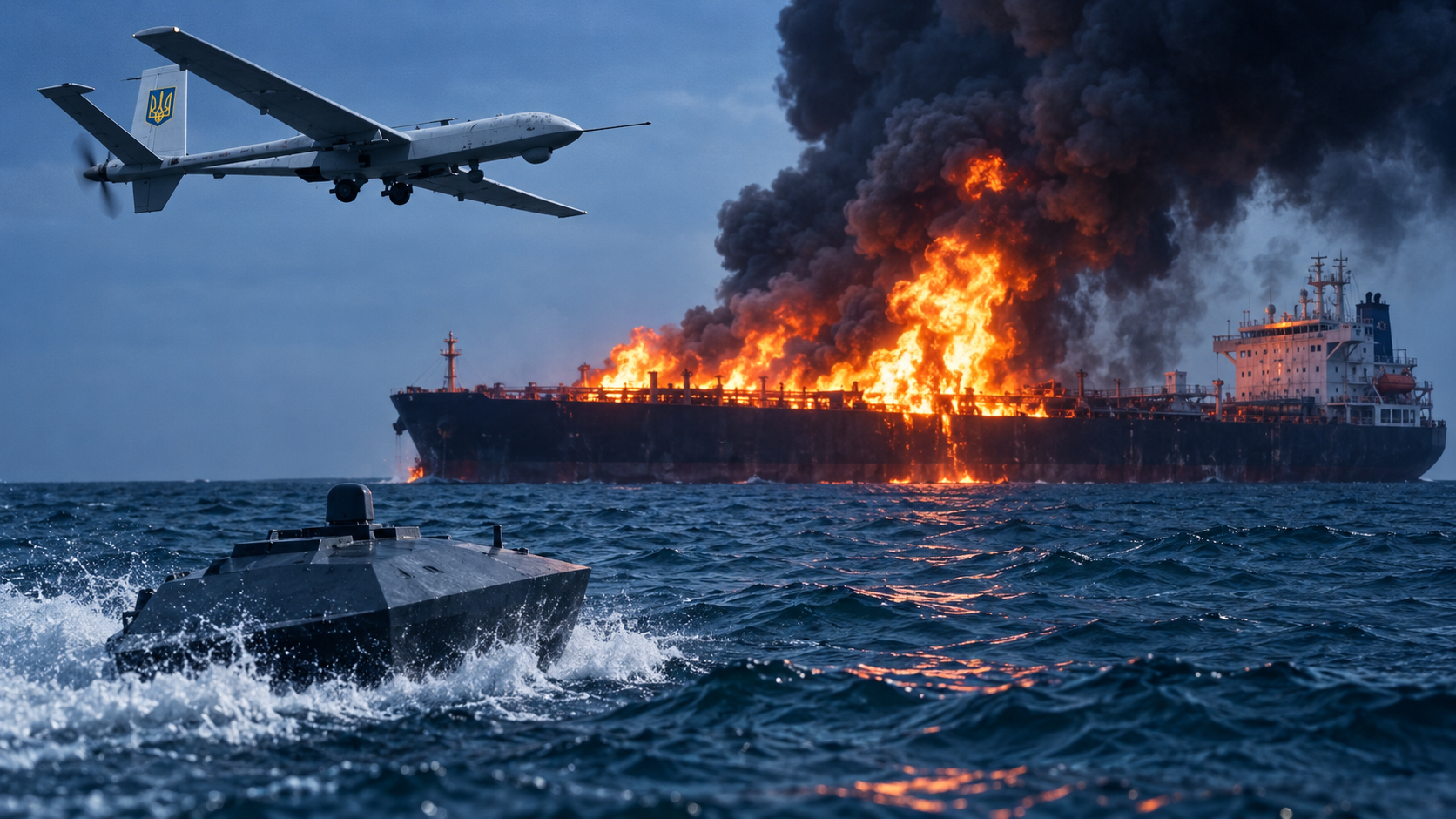
Ukraine Black Sea strikes targeted 20 Russian-linked vessels as Kyiv and Moscow intensified attacks on shipping, ports and supply routes.
The Ukraine Black Sea strikes targeted 20 Russian-linked vessels overnight, widening Kyiv’s campaign against Moscow’s maritime trade and military logistics network.
Robert “Madyar” Brovdi, commander of Ukraine’s Unmanned Systems Forces, announced the operation. He said the targets included 17 oil tankers, two gas carriers and one tugboat.

Therefore, the vessels were not 20 Russian naval warships, despite claims circulating on social media. Instead, Ukraine described them mainly as commercial ships connected to Russian energy exports and logistics supporting the war.
Reuters reported Ukraine’s account but could not independently verify the condition of every vessel. Kyiv has not released a complete list of the ships, their locations or the damage sustained.
The term “struck” can cover a wide range of outcomes. A vessel may have suffered minor damage, a fire, flooding or a hit serious enough to remove it from service.
Ukraine Black Sea Strikes Expand Maritime Campaign
The operation marks the latest stage of a broader Ukrainian drone campaign that began in the neighbouring Sea of Azov.
Brovdi said Ukrainian forces had struck 116 vessels in that area during July. He claimed the attacks forced Russia to restrict shipping through waters vital to grain exports, fuel transportation and supplies moving towards Russian-occupied Crimea.
Russian authorities have acknowledged several individual attacks and shipping disruption. However, Moscow has not confirmed Ukraine’s overall figures.
Previous strikes reportedly targeted tankers, cargo ships, ferries and tugboats near Russian-controlled ports and the approaches to the Kerch Strait.
Ukraine appears to be trying to raise the economic and military cost of Russia’s occupation. Oil and gas tankers help generate export income for Moscow. Meanwhile, commercial vessels can move fuel, equipment and other supplies between Russian ports and Crimea.
Kyiv has repeatedly targeted the Kerch Bridge, ferries, landing ships, oil terminals and railway infrastructure connecting Russia with the occupied peninsula.
By attacking vessels and ports, Ukraine is attempting to make maritime transport more dangerous and expensive. The campaign could also increase insurance costs and complicate Russia’s efforts to keep supply routes operating.
The attacks may place further pressure on Russia’s grain trade. The Sea of Azov gives ships access to major ports that handle agricultural exports.
Continued drone operations could force vessels to wait, change routes or transfer cargo through other ports. As a result, shipping delays and transportation expenses could rise. Russia has already considered rerouting some exports following the Ukrainian attacks.
However, the campaign also creates risks for civilian shipping. Commercial ships often carry multinational crews. Damage to oil or gas tankers could cause fires, casualties and environmental pollution.
Russia has described Ukraine’s maritime operations as terrorism. Kyiv argues that the vessels form part of the commercial and logistical system supporting Russia’s invasion.
Russia Intensifies Attacks on Ukrainian Ports
The maritime escalation unfolded as Russia continued striking Ukrainian cities and Black Sea ports.
On July 15, a Russian missile hit a seven-storey residential building in Odesa. The attack killed three people and injured at least three others.
Ukrainian officials said the Odesa region had faced five consecutive days of attacks on civilian, industrial and port infrastructure.
Russia says it targets Ukrainian military logistics and ports used to receive or transport weapons. Ukraine says Russian attacks have repeatedly damaged homes, businesses, grain facilities and other civilian sites.
A Russian attack on a Togolese-flagged merchant vessel on July 13 also killed three crew members and injured five others, according to Ukrainian officials.
That incident highlighted the growing danger facing commercial vessels near Ukrainian ports. It also showed how the maritime conflict increasingly affects ships that sail under foreign flags.
Eight Killed in Separate Russian Assault
The previously reported figure of eight deaths relates to a separate Russian assault on July 11, rather than the July 15 strike on Odesa.
Russia launched missiles, drones and glide bombs against several Ukrainian regions. The attacks affected Sumy, Odesa, Kyiv, Kharkiv and Zaporizhzhia.
Five people died when glide bombs struck a busy area in Sumy. Two others were killed in Odesa. Another person died after stepping on an explosive device near the Sumy border. Dozens more suffered injuries.
Ukraine said its air defences destroyed 111 of the 121 Russian drones launched during the assault. However, Ukrainian forces were unable to intercept the ballistic missiles.
President Volodymyr Zelenskiy again appealed for faster deliveries of air-defence systems and Patriot interceptor missiles.
The latest developments show that the battle for the Black Sea now extends far beyond naval warships. Tankers, cargo vessels, ports, export terminals and supply routes have all become part of the conflict.
For Ukraine, the attacks aim to weaken Russian finances and logistics without matching Moscow’s navy ship for ship.
For Russia, continued strikes on Odesa and other Ukrainian ports seek to restrict Kyiv’s trade and military access to the sea.
As both sides expand their operations, the Black Sea is becoming one of the war’s most economically important and dangerous fronts.