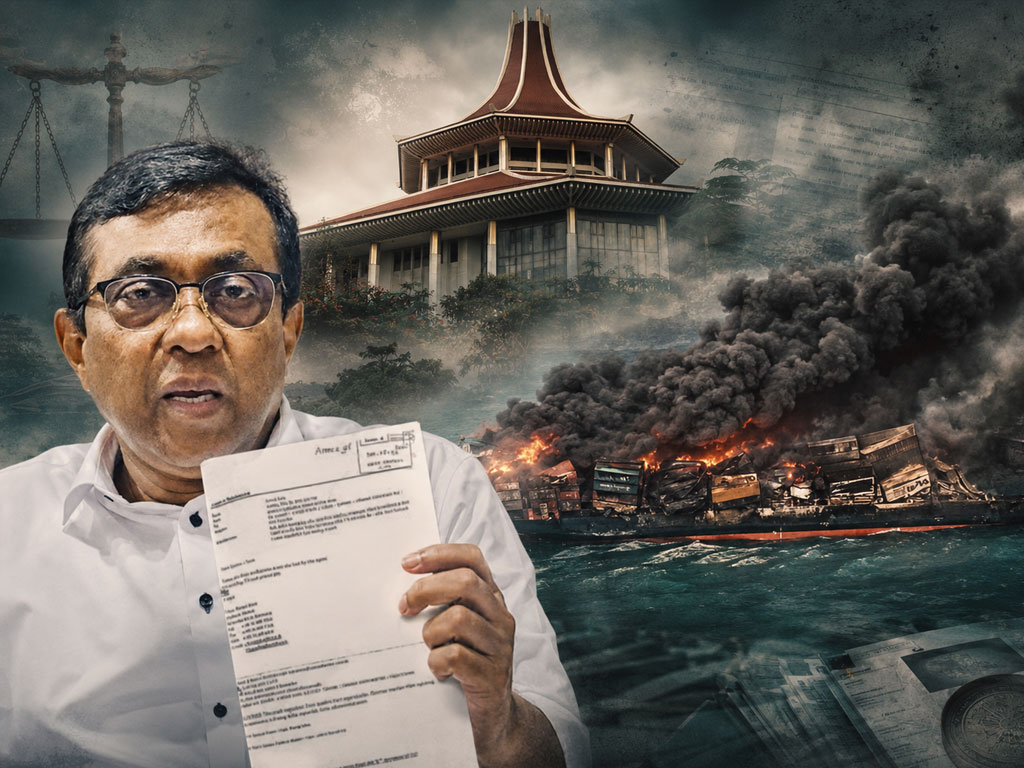
The X-Press Pearl court order change amounts to contempt, Dr. Ravindranath Dabare claims, as questions remain over the altered bench ruling.
The X-Press Pearl court order was unlawfully altered by a smaller bench, according to environmental lawyer and campaigner Dr. Ravindranath Dabare.
Dr. Dabare claimed that state officials who acted to prevent the implementation of the original five-judge bench decision had committed contempt of court.
He is a co-founder of the Centre for Environmental Justice and was the first petitioner to approach the court over the X-Press Pearl maritime disaster.
During the proceedings, Dr. Dabare also examined the expert committee report commissioned by the Marine Environment Protection Authority.
Get
Breaking News
First
on WhatsApp
Follow The Morning Telegraph for instant alerts, top stories and exclusive updates delivered straight to your phone.

The report contains more than 6,000 pages. He subsequently presented extensive explanations based on its findings before the court.
Dr. Dabare said the disputed development followed the retirement of former Chief Justice Murdu Fernando.
A three-judge bench then altered the decision previously made by a five-judge bench, he claimed.
According to the article, legal experts described the development as unprecedented in more than 200 years of Sri Lanka’s judicial history.
They also argued that changing the five-judge decision could amount to contempt of court.
The experts further claimed that the three-judge bench’s January 26 ruling, which altered the original order, lacked legal validity.
The Supreme Court had reportedly issued a clear direction that a five-judge bench should continue hearing the case.
However, questions remain over who authorised the later change in the composition of the bench.
An information request under the Right to Information Act was sent to the Supreme Court Registrar on June 15.
The request sought details about the person or authority responsible for ordering the change.
More than a month later, no response had been received, according to the article.
The unanswered request has added to concerns surrounding the X-Press Pearl court order and the implementation of the original five-judge bench decision.