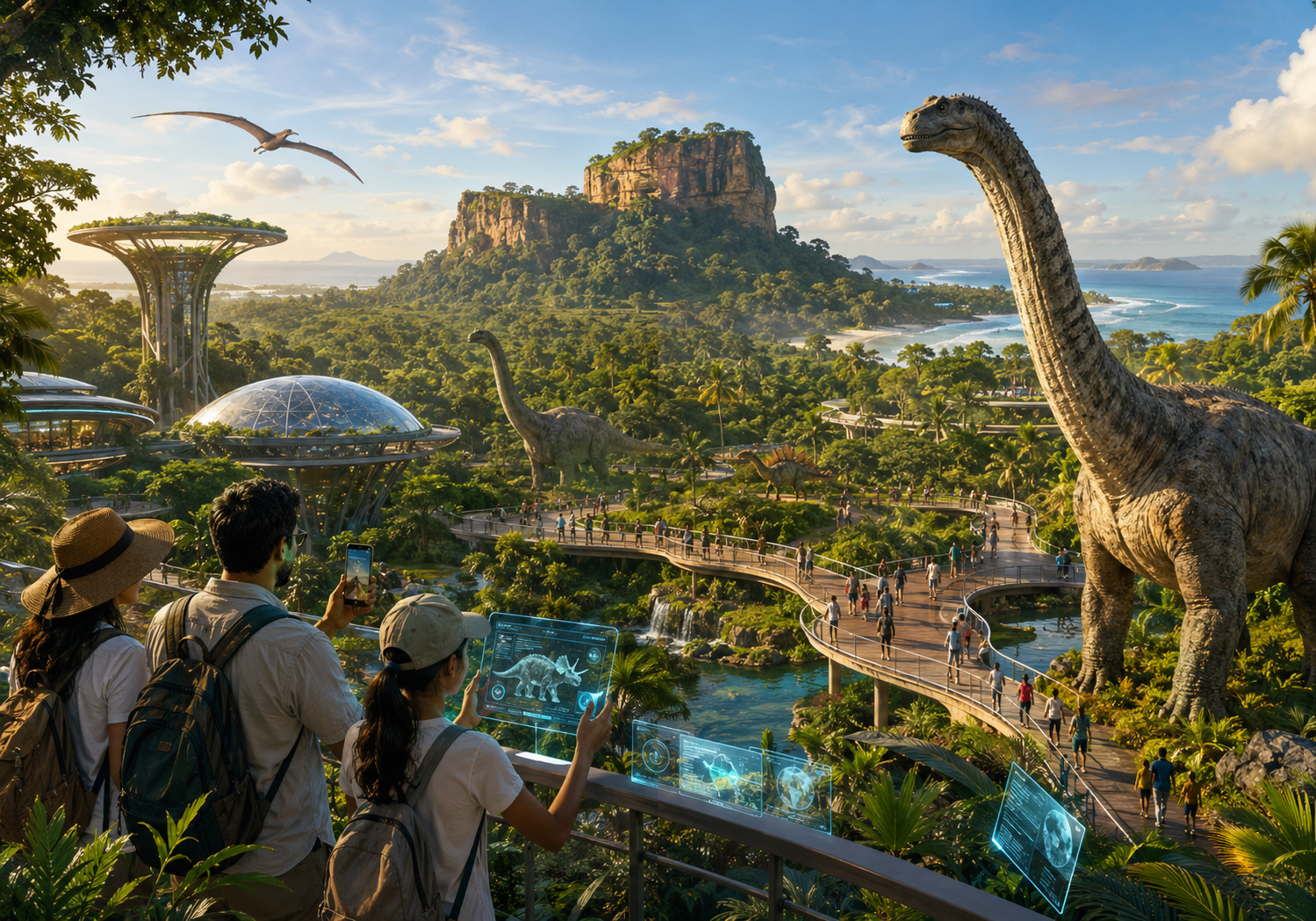
A Sri Lanka Jurassic Park could create an immersive tourism landmark, attract families, extend visitor stays and generate specialised jobs.
Sri Lanka’s next defining tourism attraction could be a Sri Lanka Jurassic Park, rather than another beach resort, luxury hotel, or conventional heritage development.
Such a project would represent something far more ambitious: a world-class prehistoric adventure destination capable of transforming how international travellers view the island.
Get
Breaking News
First
on WhatsApp
Follow The Morning Telegraph for instant alerts, top stories and exclusive updates delivered straight to your phone.

Sri Lanka has long attracted visitors through its extraordinary natural beauty, cultural heritage, wildlife, and renowned hospitality. However, the global tourism industry continues to evolve. Destinations now compete not only through scenery and accommodation, but also through experiences that visitors cannot find elsewhere.
This shift gives Sri Lanka an opportunity to think beyond conventional tourism development. By embracing ambitious and innovative concepts, the country could strengthen its global identity and create attractions that inspire travellers for generations.
At first, the idea of building a Jurassic Park-style attraction in Sri Lanka may sound like science fiction. Yet the concept is not about recreating prehistoric life. Instead, it highlights the power of imagination, storytelling, and technology to establish an entirely new tourism experience.
Why Sri Lanka Needs a Landmark Attraction
The world’s most successful tourism destinations rarely depend on natural attractions alone. They combine their existing strengths with carefully designed experiences that encourage visitors to stay longer, spend more, and return.
Modern travellers increasingly cross continents for immersive attractions. They seek storytelling, adventure, education, technology, and entertainment within a single destination.
Sri Lanka already has the foundations needed to develop an attraction of this scale. The country offers dramatic landscapes, exceptional biodiversity, deep historical roots, and a hospitality culture recognised around the world.
A Sri Lanka Jurassic Park could bring these strengths together through advanced animatronics, augmented reality, immersive spatial design, interactive exhibitions, and educational storytelling.
Rather than operating as a traditional amusement park, it could become a prehistoric adventure destination combining entertainment with science, conservation, and environmental awareness.
Families, schools, international tourists, corporate groups, and adventure seekers could all gain something valuable from such a development. It could also give visitors a compelling reason to extend their stays and return as new attractions and experiences emerge.
A Sri Lanka Jurassic Park Could Drive Growth
A project of this scale would offer much more than a single tourist attraction. It could create an interconnected economic ecosystem involving hospitality, transportation, retail, food, entertainment, education, and technology.
Hotels could develop Jurassic-themed accommodation, family packages, and curated visitor experiences. Restaurants could introduce interactive dining concepts. Meanwhile, retailers could offer locally produced merchandise, while transport operators could establish dedicated travel services.
Event organisers, educators, digital companies, engineers, and conservation specialists could also become part of the project.
In addition, the attraction could generate specialised employment across engineering, animation, digital technology, environmental conservation, education, entertainment, and hospitality management.
The wider value would come from creating new industries around the central attraction, rather than depending only on admission revenue.
Such a development could also encourage regional investment if established outside Sri Lanka’s traditional tourism centres. Infrastructure, accommodation, and supporting businesses could grow around the park. As a result, the project could spread economic benefits beyond one attraction or location.
Redefining Sri Lanka’s Tourism Future
Recent tourism efforts have understandably focused on recovering visitor numbers and restoring industry confidence. However, Sri Lanka must eventually move beyond recovery and decide what kind of destination it wants to become.
The next generation of travellers expects more than beautiful scenery. Visitors increasingly seek destinations that surprise, educate, entertain, and inspire. They also value experiences that combine technology with nature and entertainment with sustainability.
A Sri Lanka Jurassic Park could meet those expectations while creating a distinctive tourism identity.
This vision is not simply about constructing a theme park. It is about demonstrating that Sri Lanka can conceptualise, finance, develop, and operate a world-class tourism venture.
Across the world, landmark attractions have transformed the public identities of major destinations. Disneyland reshaped California’s tourism appeal. Universal Studios strengthened Orlando’s position as a global family destination. Gardens by the Bay became an international symbol of Singapore’s creativity and progress.
Sri Lanka has the same potential to create its own landmark attraction.
The tourism and hospitality industries have always advanced because visionaries saw possibilities where others saw obstacles. Tomorrow’s most important investments will not begin by asking whether Sri Lanka can afford to think big. Instead, they will ask whether the country can afford not to.
The future belongs to destinations that dare to create original and unforgettable experiences. Sri Lanka’s next great tourism icon may therefore be its own Jurassic Park, waiting to move from imagination into reality.
Written by Suresh Abbas
Hospitality and Corporate Leader