LPL betting sponsorship faces scrutiny after Sri Lanka blocked unlicensed gambling websites under its new regulatory framework.
Sri Lanka’s LPL betting sponsorship controversy has intensified after regulators moved to block 24 gambling and betting websites allegedly operating without valid local licences.
The Telecommunications Regulatory Commission of Sri Lanka has taken steps to restrict access to the websites under the country’s new gambling regulatory framework.
The action follows the introduction of the Gambling Regulatory Authority Act No. 17 of 2025. President Anura Kumara Dissanayake brought the legislation into operation as part of efforts to regulate gambling activities.
The move represents a significant development in Sri Lanka’s e-commerce and regulatory history. It also strikes at a digital shadow economy that critics say has transferred large amounts of money overseas through longstanding legal gaps.
However, the enforcement action has exposed an apparent contradiction involving the Lanka Premier League cricket tournament.
Get Breaking News First
on WhatsApp

LPL Betting Sponsorship Faces a Fundamental Question
The central question is clear. How can brands linked to international betting operations appear as leading partners of the LPL when authorities are restricting access to unlicensed betting websites?
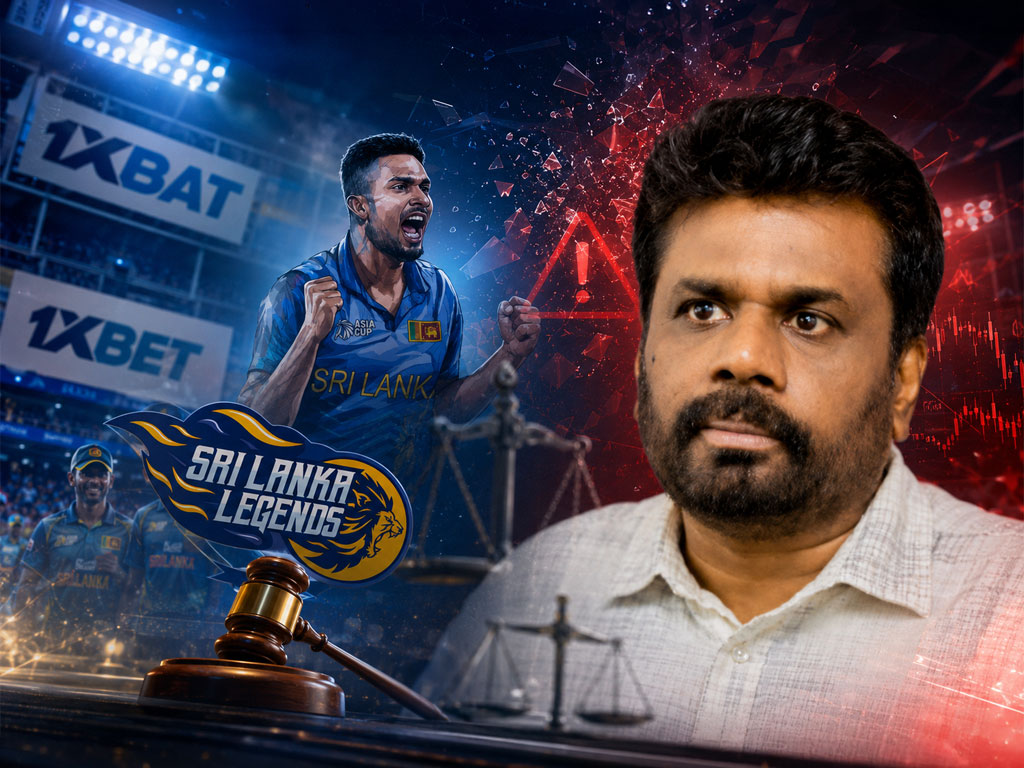
Official LPL promotional material has identified 1XBAT as an official partner of the 2026 tournament. Critics have raised questions about the brand’s reported connection with international betting operator 1xBet.
Similar surrogate-branding arrangements have previously caused controversy in international cricket. Therefore, Sri Lankan authorities must clarify whether the tournament partner operates independently or promotes a restricted gambling platform.
For years, online betting businesses exploited gaps in Sri Lanka’s older regulatory system. These included limitations within the Betting on Horse-Racing Ordinance and the Casino Business Regulation Act of 2010.
Meanwhile, critics say young people and even schoolchildren gained easy access to digital gambling platforms without adequate safeguards.
Concerns also grew over gambling addiction among adults, including members of law enforcement agencies. In addition, users reportedly transferred foreign currency to online casinos through Tether, known as USDT, and Binance peer-to-peer transactions.
Such transactions created questions about compliance with Central Bank regulations and the effect of gambling-related outflows on the national economy.
The Gambling Regulatory Authority Act now provides wider powers to regulate and suppress illegal gambling. Operating a gambling business without a licence may lead to a fine of up to Rs. 10 million and imprisonment for up to two years.
The reported blocking of websites associated with names such as 1xBet, Betway and Melbet is therefore an important enforcement measure.
However, the public deserves to know whether the same standards apply to commercial arrangements inside major sporting tournaments.
Financial Questions Surround the Lanka Premier League
Critics have increasingly described the tournament as the “Lanka Betting League” instead of the Lanka Premier League.
That description reflects growing unease over betting-related branding across the competition. It also raises questions about whether restrictions placed on online platforms extend to their advertising, affiliates or surrogate brands.
Some players have covered betting-related logos on their jerseys with tape or plasters. They reportedly took this step because of national regulations, personal beliefs or religious considerations.
The sight of players covering sponsor logos has created further embarrassment for Sri Lankan cricket. It suggests that tournament organisers may not have fully considered the legal and ethical implications of their commercial agreements.
Financial transparency represents another serious concern.
Purchasing and maintaining an LPL franchise reportedly costs approximately Rs. 40 to 50 crore. However, several matches have attracted limited crowds, leaving stadiums with large numbers of empty seats.
Ticket revenue alone would appear insufficient to recover investments of that scale. As a result, critics have questioned how franchise owners expect to generate sustainable returns.
They have also called for investigations into whether investments involve undisclosed financial arrangements, money laundering or potential match-fixing risks. These remain allegations and require evidence from competent authorities.
Administrative disputes have further damaged public confidence.
Questions have surrounded the management and ownership of teams such as the Dambulla Sixers. Legal problems involving former Jaffna Kings ownership interests have also attracted attention.
Meanwhile, critics continue to question the relationships maintained between cricket administrators and tournament-linked figures, including Anil Mohan.
Authorities Must Explain the Sponsorship Arrangements
Allowing a brand allegedly connected to a blocked betting platform to appear as a key tournament partner risks undermining the country’s laws.
Authorities must therefore explain the legal basis used to approve the LPL betting sponsorship arrangements.
They must also clarify whether organisers conducted proper background checks before accepting the sponsors. Silence will only strengthen public suspicion.
The controversy also comes as Sri Lanka faces international scrutiny of its anti-money laundering and counter-terrorist financing framework through the Asia/Pacific Group on Money Laundering.
In that context, inconsistent enforcement could send damaging signals about the credibility of the country’s financial controls.
The committees appointed to reform cricket and the Ministry of Sports have so far failed to provide a convincing public explanation. Their silence has placed responsibility for resolving the dispute at the highest levels of government.
The public now awaits President Dissanayake’s position on whether brands linked to restricted gambling companies can continue operating inside the LPL.
Sri Lanka’s new gambling laws cannot protect national wealth and sporting integrity unless officials apply them consistently.
A law enforced against ordinary internet users must also apply to powerful businesses, tournament organisers and cricket administrators.
It must apply equally on the highway, across the internet and in the middle of the cricket field.