Anti-Corruption Act amendments face civil society scrutiny as ministers brief Cardinal Malcolm Ranjith on judicial and prison reforms.
Sri Lanka’s proposed Anti-Corruption Act amendments have triggered fresh debate after two Cabinet ministers met Cardinal Malcolm Ranjith to discuss legal and judicial reforms.
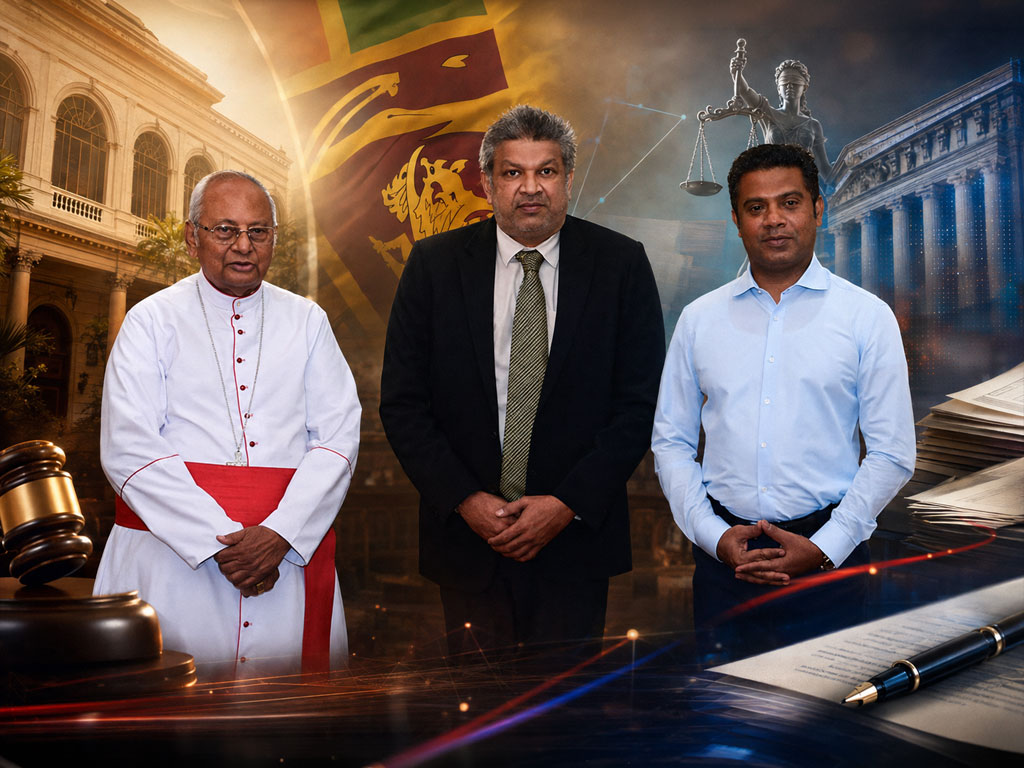
Health and Mass Media Minister Dr. Nalinda Jayatissa and Justice and National Integration Minister Harshana Nanayakkara attended the meeting at the Archbishop’s House in Colombo.
They briefed the Archbishop of Colombo on developments in the judicial and prison sectors. The discussion also covered planned reforms and proposed changes to the Anti-Corruption Act No. 9 of 2023.
Civil society groups have meanwhile urged the government to preserve the original law’s purpose. They also want the administration to reconsider its plan to extend the retirement age of senior judges.
Get Breaking News First
on WhatsApp

Ministers Brief Cardinal on Judicial Reforms
During the meeting, the ministers explained the government’s efforts to strengthen public confidence in the judiciary.
They also outlined measures intended to deliver justice without unnecessary delays. In addition, they addressed claims and information circulating about the justice and prison sectors.
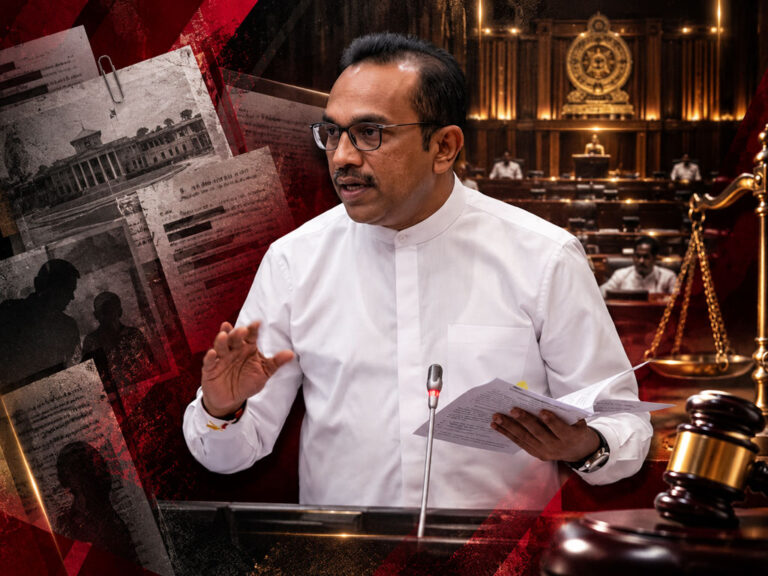
Speaking to the media afterwards, Dr. Jayatissa said the government would not restrict the public’s right to examine the assets and liabilities of elected representatives.
He said the proposed changes relating to officials from government and constitutional institutions aimed only to protect legitimate privacy concerns.
The minister insisted that the government did not intend to obstruct public access to asset declarations.
Sri Lanka enacted the Anti-Corruption Act No. 9 of 2023 to strengthen corruption investigations, accountability and asset-declaration requirements. The government has since introduced an amendment Bill containing proposed revisions to the law.
Civil Society Questions Anti-Corruption Act Amendments
The National Movement for a Just Society warned that the proposed Anti-Corruption Act amendments must not weaken the existing legal framework.
Its Secretary, Sunil Jayasekara, said the government planned to amend 18 provisions. Some changes reportedly seek to correct language or drafting errors.
However, the movement identified three issues that require serious attention.
The first involved a proposal to make media publication of asset and liability declarations available through the Commission’s website an offence.
The second concerned the removal of information relating to cohabitants from declarations.
The third proposed raising the government shareholding threshold from 25% to 50%. This would affect which officials of partly state-owned private companies must submit asset declarations.
However, the movement welcomed the government’s decision to revise the provision that could have criminalised media disclosure of asset declarations.
It described that reversal as a positive step towards protecting transparency and the public’s right to information.
The Commission to Investigate Allegations of Bribery or Corruption already operates an online system that publishes redacted declarations under the 2023 Act.
Judges’ Retirement Age Draws Fresh Objections
The Dinana Dakuna collective described the government’s reversal on public access to asset declarations as a victory for democratic forces.
However, it urged the administration to apply the same approach to the proposed extension of judges’ retirement ages.
The collective called on the government to consider objections raised by lawyers, civil society organisations and other groups.
The proposal reportedly seeks to increase the retirement age of Supreme Court judges from 65 to 67. It would also raise the Court of Appeal retirement age from 63 to 65.
The plan has generated debate about judicial independence, institutional continuity and the timing of constitutional changes.
Dr. Jayatissa has said the government believes no referendum is required to implement the proposed extension. However, he also indicated that the matter remained under consideration.
Government Sets Out Wider Policy Priorities
Commenting on broader constitutional reforms, Dr. Jayatissa said the government’s immediate priorities were strengthening the economy and establishing the rule of law.
He said the administration also intended to conduct all elections within the scheduled timeframe, including the long-delayed Provincial Council elections.
The debate now goes beyond technical amendments to one law. It concerns public access to information, privacy protections, judicial independence and confidence in state institutions.
Civil society groups have acknowledged the government’s willingness to reverse one disputed proposal. However, they want the same openness applied to the judges’ retirement-age plan.
The government must therefore ensure that any Anti-Corruption Act amendments strengthen accountability rather than dilute it.
Meaningful consultation with religious leaders, legal professionals and civil society can support reform. However, public confidence will ultimately depend on whether the final laws protect transparency, judicial independence and equal accountability.