SriLankan Airlines leadership crisis deepens as ministers clash over an interim CEO while governance concerns delay a permanent appointment.
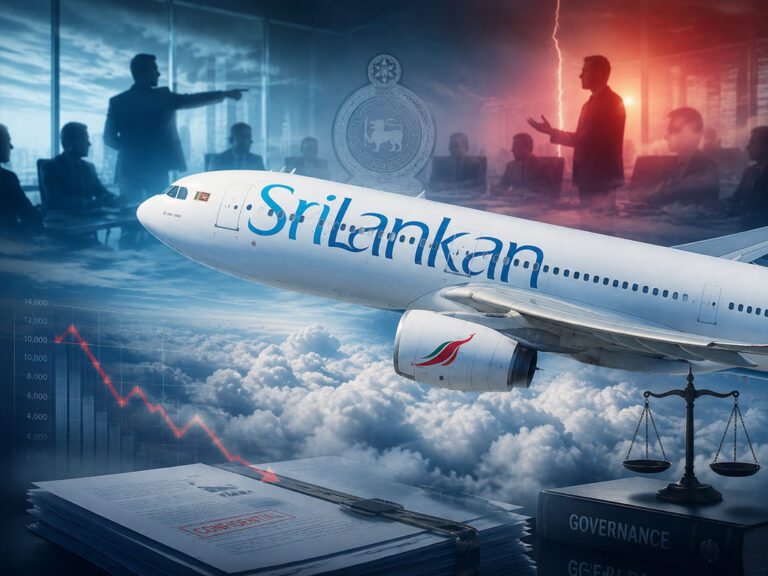
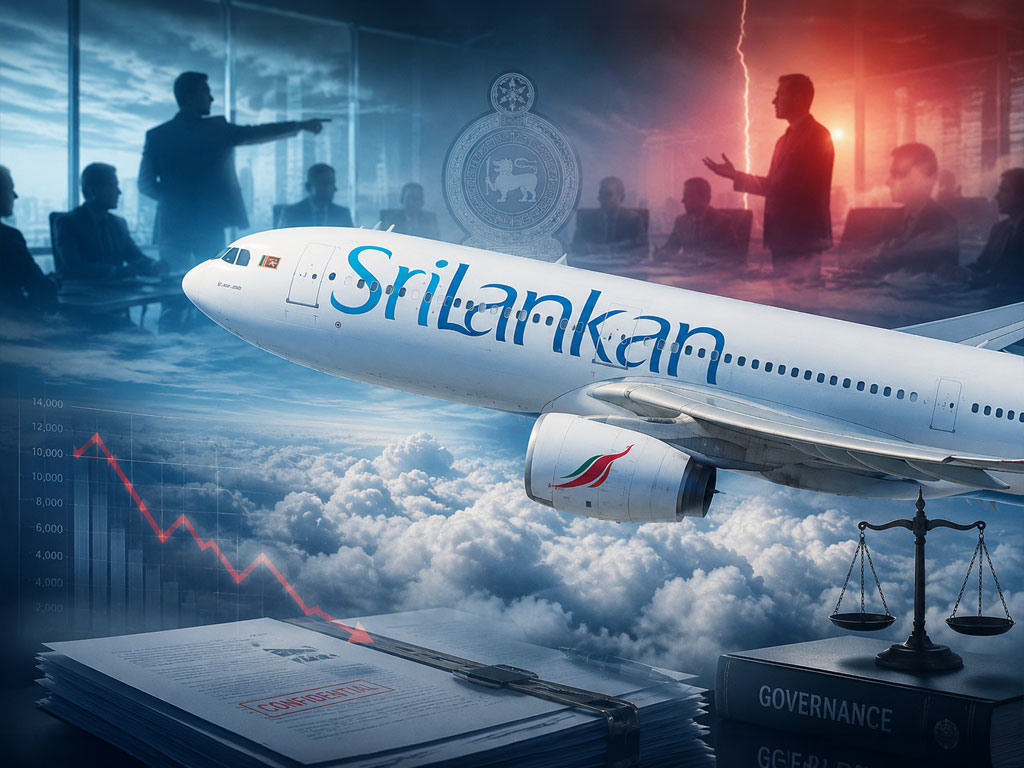
The SriLankan Airlines leadership crisis has deepened as a ministerial dispute delays an interim chief executive appointment and raises fresh governance concerns.
Sources familiar with the process said a policy disagreement between Ports and Civil Aviation Minister Anura Karunathilake and Deputy Minister Janitha Kodithuwakku has stalled the appointment.
The carrier has operated without a permanent CEO for almost a year following Richard Nuttall’s departure. SriLankan Airlines currently identifies Group Chief Financial Officer Yasantha Dissanayake as its acting CEO.
Get Breaking News First
on WhatsApp

Interim CEO Selection Sparks Ministerial Rift
The airline’s board reportedly attempted to close the leadership gap by choosing an interim CEO from within the organisation.
Sources said the final consideration involved senior internal officials from the commercial and information technology divisions. They included Group Head of Information Technology Chamara Perera.
However, Minister Karunathilake reportedly moved to support Perera without first securing the deputy minister’s agreement.
Kodithuwakku has since declined to endorse the proposed appointment, according to sources. He reportedly wants concerns involving transparency and accountability addressed before any decision.
The disagreement has intensified the SriLankan Airlines leadership crisis and exposed divisions within the ministry responsible for the national carrier.
Whistleblower complaints involving the airline’s IT division have added to the controversy.
A formal complaint submitted to state authorities reportedly alleges management failures involving procurement, operational vulnerabilities and the division’s professional culture.
These remain allegations, and the article has not established that authorities or a court have made findings against Perera.
Nevertheless, critics have called for an independent investigation before officials approve any appointment involving a person named in unresolved complaints.
They argue that promoting an official before completing that process could create further governance risks for the state-owned airline.
Unions Raise Concerns Over Appointment Process
Minister Karunathilake has stressed the need for quick internal decisions because of the carrier’s financial difficulties and accumulated losses.
He has previously highlighted costs linked to unsuccessful negotiations and contract cancellations, including substantial dollar-denominated penalties.
Meanwhile, trade unions associated with the National People’s Power have objected to the appointment process. Union representatives claim decision-makers excluded them from discussions.
They have also warned of possible industrial action if political pressure replaces transparent procedures.
The government must also complete the international search for a permanent CEO.
Officials said the recruitment process attracted about 210 applications. Earlier, Deputy Minister Kodithuwakku told Parliament that approximately 200 people had applied, with 75 initially shortlisted.
Reported candidates include Acting CEO Yasantha Dissanayake, Captains Navin De Silva, Anupama Pathirana and Themiya Abeywickrama, and former Air Niugini CEO Wasantha Kumarasiri.
The reported list also includes Sanjana Fernando, Paul Carroll and Captain George Kamal.
Former Emirates-era SriLankan Airlines CEO Peter Hill was reportedly approached but declined because of other regional airline commitments. Hill previously led the carrier during the Emirates management period.
Governance Test for the National Carrier
SriLankan Airlines recorded a Rs. 7.6 billion net loss for 2024/25 after unscheduled engine repair expenses and net finance charges. Reports have also placed its accumulated losses at approximately Rs. 596 billion.
The government has since completed the restructuring of the airline’s defaulted US$175 million international bond, with participation exceeding 99%.
However, debt restructuring alone cannot resolve the SriLankan Airlines leadership crisis.
The dispute now tests whether the government can separate political influence from corporate decision-making while protecting accountability and operational stability.
A transparent interim appointment and a timely permanent selection remain essential to restoring confidence in Sri Lanka’s national carrier.