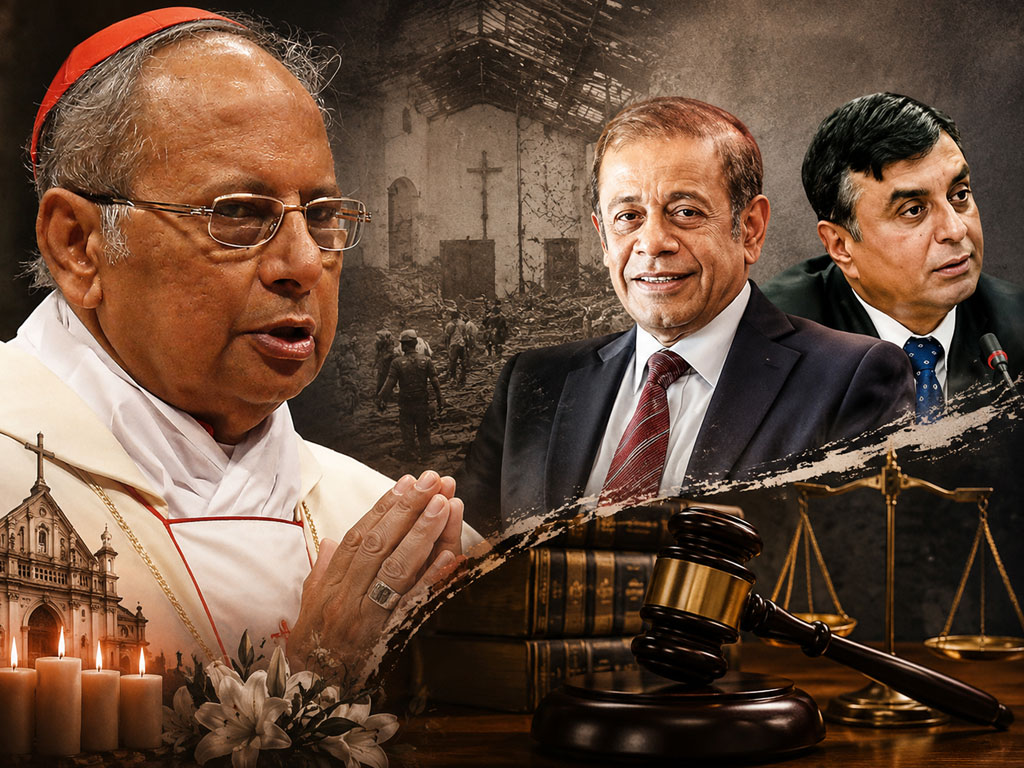
Easter Sunday verdict draws a response from Cardinal Malcolm Ranjith, with the Catholic Church rejecting the death penalty while respecting courts.
The Easter Sunday verdict sentencing former Police Chief Pujith Jayasundara and former Defence Secretary Hemasiri Fernando to death has prompted an official response from the Catholic Church.
The Archdiocese of Colombo has reiterated that Catholic teaching does not accept the death penalty. However, it also stressed its respect for the independence of Sri Lanka’s judiciary and the country’s legal process.
Cardinal Malcolm Ranjith outlined the position in a statement issued on August 10 following the verdict against the two former senior officials.
The court convicted Jayasundara and Fernando over their failure to prevent the 2019 Easter Sunday terrorist attacks, dereliction of duty and abetting manslaughter.
Get
Breaking News
First
on WhatsApp
Follow The Morning Telegraph for instant alerts, top stories and exclusive updates delivered straight to your phone.

Catholic Church Responds to Easter Sunday Verdict
Cardinal Ranjith said Catholic doctrine does not accept capital punishment because it violates human dignity.
The statement referred specifically to paragraph 2267 of the Catechism of the Catholic Church, which sets out the Church’s position against the death penalty.
At the same time, the Cardinal stressed his full confidence in the independence of Sri Lanka’s judicial system and respect for its decisions.
The Church’s position therefore separates its religious opposition to capital punishment from its recognition of the judiciary’s authority under Sri Lankan law.
The Archdiocese has also made clear that its pursuit of justice over the Easter Sunday attacks is not driven by revenge.
Instead, its central demand remains identifying the mastermind or masterminds behind the bombings and ensuring justice for the victims under the country’s laws.
The worldwide Catholic Church, under the ideological leadership of Pope Francis, has also opposed the death penalty. The position emphasizes the protection of human dignity and the right to life.
Church Says Justice Must Not Become Revenge
The Archdiocese of Colombo continues to stand in solidarity with victims of the Easter Sunday attacks and their families.
However, Cardinal Ranjith emphasized that the Church does not seek vengeance against those held responsible.
Its primary expectation is for authorities to uncover the truth behind the attacks, identify those who masterminded them and ensure accountability through a transparent legal process.
That position remains central to the Church’s response following the Easter Sunday verdict against Jayasundara and Fernando.
Director of Communications of the Archdiocese of Colombo Father Cyril Gamini also addressed the issue. He said the Church would not interfere with the independence or decisions of the judiciary.
He noted that Sri Lankan courts operate within the country’s existing legal framework. Therefore, the Church respects the legal process even while maintaining its doctrinal opposition to capital punishment.
Judicial Independence and the Search for the Truth
Father Cyril Gamini further stressed that the Catholic Church’s primary concern remains uncovering the full truth surrounding the 2019 attacks.
The Church continues to call for an independent and transparent investigation capable of establishing who was ultimately responsible for the tragedy.
From a religious perspective, the Church stands on the principle of forgiveness while remaining alongside those who suffered as victims.
At the same time, Father Cyril Gamini said protecting the rule of law remains the responsibility of the judiciary.
For that reason, the Church maintains that the judicial process deserves full respect.
The Archdiocese’s position following the Easter Sunday verdict therefore draws a clear distinction. It rejects the death penalty as a matter of Catholic teaching while respecting judicial independence and continuing its demand for the truth behind the Easter Sunday attacks.
Its central expectation remains unchanged: uncover the mastermind or masterminds behind the attack through an independent and transparent investigation and deliver justice to the victims according to law.