Sri Lanka inflation outlook remains sensitive to global oil prices, with the Central Bank assuming crude stays near $80 a barrel into next year.
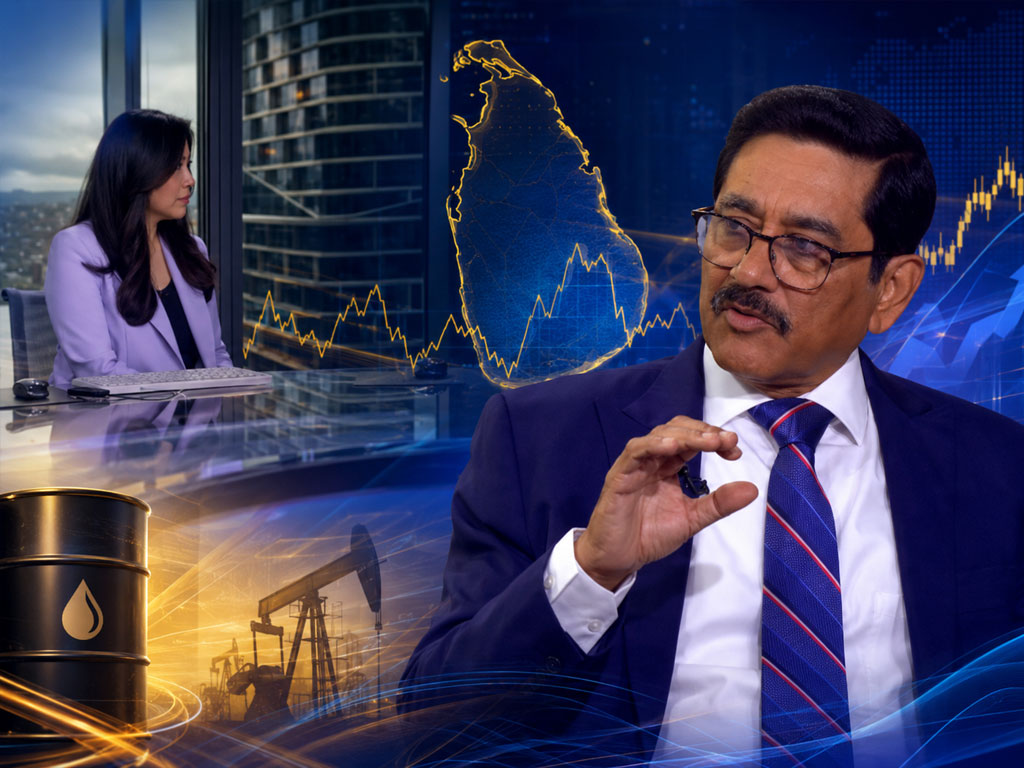
The Sri Lanka inflation outlook remains highly sensitive to global crude oil prices, Central Bank Governor Dr. Nandalal Weerasinghe has warned, as the economy confronts another external energy shock.
Speaking in a Bloomberg interview in Sydney, Weerasinghe said Sri Lanka should be able to manage inflationary pressures if oil remains around US$80 a barrel through the end of 2026 and into next year.
Sri Lanka is particularly exposed because it remains a net energy importer. Higher international oil prices increase the country’s import bill and feed into domestic fuel, transport and broader consumer costs. The IMF has also warned that higher oil prices would push inflation higher and weaken Sri Lanka’s current account.

Oil Prices Shape Sri Lanka Inflation Outlook
Colombo headline inflation accelerated to 7.3% in July 2026, according to the Central Bank, moving above its medium-term 5% target.
Weerasinghe said the Central Bank’s baseline assumes global oil prices remain around US$80 per barrel for the remainder of this year and into 2027. Under that scenario, policymakers expect inflation to gradually move back towards the 5% target.
However, he cautioned that another unexpected surge in energy prices would create a fresh challenge.
That risk has already shaped monetary policy.
In May, the Central Bank raised its Overnight Policy Rate by 100 basis points to 8.75%. The Bank said the move reflected rising commodity and energy prices, geopolitical tensions and strengthening domestic demand.
Weerasinghe has described the increase as a proactive step intended to prevent inflation expectations from becoming entrenched. Reuters reported that the Central Bank currently sees no immediate need for another rate increase, although it remains prepared to respond if inflation deviates from its projected path.
Governor Tells Investors Sri Lanka Has Stabilised
The Governor also used the Bloomberg interview to encourage international investors to reassess Sri Lanka after the economic collapse of 2022.
He argued that the country has moved beyond its crisis-era instability and now offers a more disciplined macroeconomic environment, a more stable currency and improving growth prospects.
Sri Lanka’s economy grew by 5% in 2025, according to the IMF, although external energy shocks have since increased risks to the 2026 outlook.
The message to investors was therefore one of cautious confidence.
Sri Lanka has rebuilt important elements of macroeconomic stability, but its recovery remains exposed to forces it cannot control.
Among those risks, oil remains one of the most important.
Any major disruption to global energy supply, including renewed instability affecting Middle Eastern shipping routes, could raise import costs, pressure the rupee and complicate the Central Bank’s efforts to return inflation sustainably towards 5%.
For Sri Lanka, the path back to stable inflation will therefore depend not only on domestic monetary discipline, but also on what happens in global energy markets.