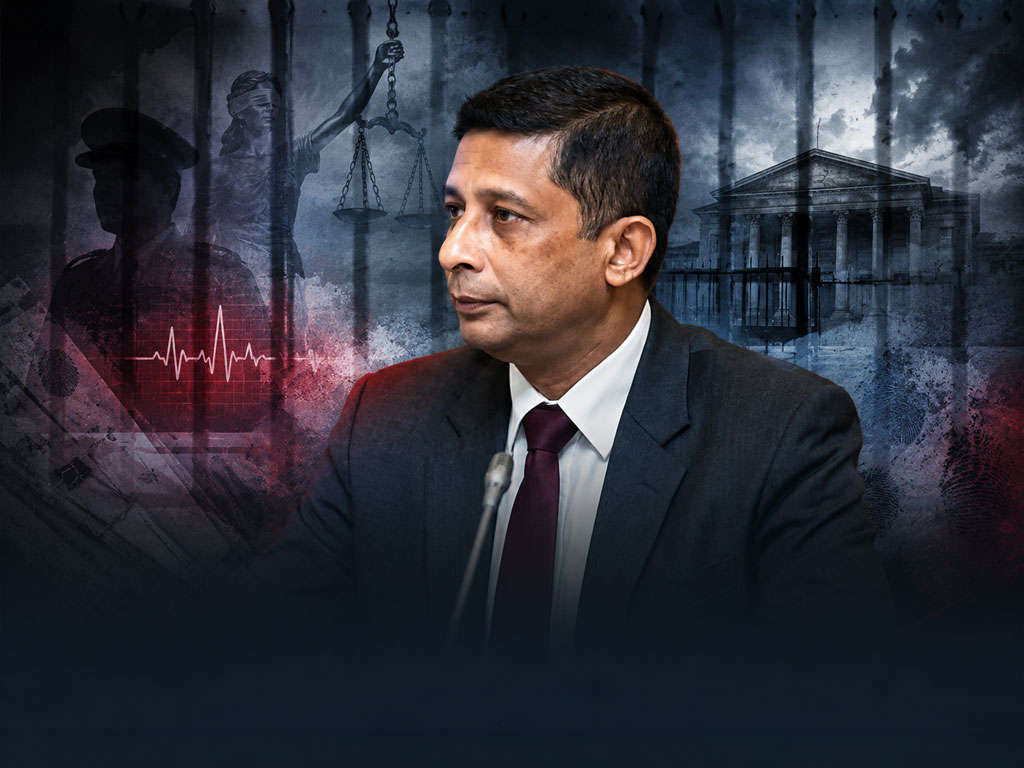
Suresh Sallay detention faces scrutiny as his wife appeals to President Anura Kumara Dissanayake while investigators have yet to charge him.
The Suresh Sallay detention has reached a point where the Government must answer a simple question: if it has a criminal case, why has it still not charged him?
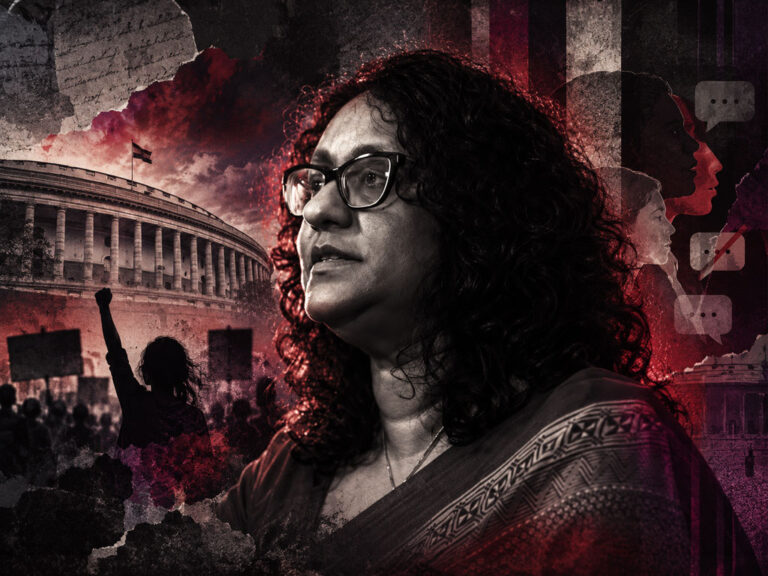
On August 20, Manori Sallay wrote to President Anura Kumara Dissanayake for the second time. Her request was stark. She asked the President not to allow her husband, Major General (Retd.) Suresh Sallay, to die while in state custody.
Between her first letter in May and the latest appeal, Sallay had gone on a hunger strike over detention conditions. His wife says meals were served to him on newspaper placed on the floor of his cell.
His condition later deteriorated. He was admitted to the cardiology unit of the National Hospital and underwent surgery to implant an Implantable Cardioverter-Defibrillator.

Yet he has not been charged in relation to the allegations now being investigated against him.
The allegations themselves reach back years. That makes the central issue even harder to avoid. The state continues to hold Sallay under administrative detention while a criminal charge, capable of being tested before a court, has yet to emerge.
This is therefore not an argument that Sallay is innocent. A court must decide guilt or innocence if prosecutors file a case.
It is an argument about due process.
If the Government believes it possesses evidence against him, it should present that evidence through the ordinary machinery of justice. Continued detention cannot become a substitute for proving an allegation.
The Man Behind the Suresh Sallay Detention
Before examining those allegations, it is worth considering the career of the man now in custody.
Suresh Sallay joined the Sri Lanka Army in the 1980s. He later became a senior intelligence officer and eventually headed both the Directorate of Military Intelligence and the State Intelligence Service.
During the final years of Sri Lanka’s war with the Liberation Tigers of Tamil Eelam, intelligence operations involving agencies with which Sallay was associated played a role in pursuing senior LTTE figures.
S.P. Thamilselvan, the head of the LTTE’s political wing, was killed in an airstrike in 2007.
Sallay has also been associated with the intelligence operation surrounding Selvarasa Pathmanathan, known as KP, who became a senior LTTE figure after the death of Velupillai Prabhakaran and was subsequently brought to Sri Lanka.
In 2019, Sallay became the first military officer appointed to head the State Intelligence Service.
His record has not escaped criticism.
An anonymous intelligence veteran quoted by Lanka e-News has portrayed Sallay primarily as a desk officer whose career advancement depended more on institutional connections than operational brilliance.
That assessment can be debated.
What cannot be disputed is that Sallay spent decades inside Sri Lanka’s military and intelligence establishment during one of the country’s most violent periods.
The same state that relied on officers such as Sallay during the war must now ensure that the protections of law apply when one of them becomes a suspect.
His service record cannot grant immunity.
But neither should accusations erase his right to be charged, brought before the courts and permitted to contest the evidence against him.
His wife is now asking the Government for precisely that distinction.
The Allegation and the Missing Charge Sheet
The allegations surrounding Sallay became internationally prominent following a 2023 documentary broadcast by a London-based television channel.
Azad Maulana, a former aide to Sivanesathurai Chandrakanthan, widely known as Pillayan, alleged that Sallay had met Zahran Hashim before the Easter Sunday attacks.
Maulana further alleged that the attacks were allowed to proceed as part of an effort connected to influencing a presidential election.
Sallay denies those allegations.
The crucial question is what independent evidence investigators possess to corroborate Maulana’s account.
The article’s position is that no documentary corroboration establishing the allegation has yet been publicly produced.
That distinction matters enormously.
A television allegation can justify investigation. It cannot, by itself, replace evidence tested in court.
Meanwhile, an Additional Solicitor General representing the Attorney General has described Sallay in court as a principal operational force behind the Easter Sunday attacks.
That is an extraordinarily serious allegation.
Yet Sallay is not currently standing trial alongside the group of suspects already facing extensive charges over the attacks.
If prosecutors believe he played such a central operational role, the public is entitled to ask why the accusation has still not become an indictment.
This is where the Suresh Sallay detention becomes a constitutional and legal issue rather than simply an investigative one.
What specific criminal act do investigators allege he committed?
What evidence has emerged beyond the previous Presidential Commission, parliamentary inquiries and earlier criminal investigations?
Why is the Prevention of Terrorism Act being used when the Government itself has pledged to replace or repeal that controversial legislation?
A charge sheet can be challenged.
Witnesses can be examined.
Documents can be tested.
A detention order operates differently. It allows the executive to continue custody without first proving the case in open court.
That is precisely why prolonged reliance on it requires scrutiny.
Cardinal Ranjith and the Limits of Moral Authority
Cardinal Malcolm Ranjith has been one of the most prominent voices demanding accountability for the Easter Sunday attacks.
That role is understandable.
As Archbishop of Colombo, he has represented a Catholic community devastated by attacks that killed worshippers and shattered families.
The Cardinal has welcomed developments in the investigation involving Sallay. Lawyers representing the victims have also participated in the proceedings.
His moral authority on behalf of grieving families is considerable.
But moral authority and legal proof are not the same thing.
The Cardinal’s conviction about who bears responsibility cannot itself establish guilt. That can only happen through evidence, prosecution and judicial determination.
The Easter Sunday families deserve more than symbolic arrests or politically satisfying suspects.
They deserve to know who planned the attacks, who facilitated them, who failed to stop them and whether any wider conspiracy existed.
If Sallay is responsible, the state must prove it.
If he is not, holding him indefinitely will not bring the families closer to the truth.
The justice system cannot outsource evidentiary questions to religious leaders, political leaders, television documentaries or public anger.
That principle protects everyone, including the victims.
A Political Problem for President Dissanayake
President Anura Kumara Dissanayake entered office carrying major expectations surrounding the Easter Sunday investigations.
His administration promised renewed action and accountability.
The detention of Sallay therefore became politically significant because it demonstrated that the Government was prepared to pursue a former senior intelligence chief.
But that also creates a danger.
Once an administration publicly associates its credibility with an arrest, releasing the suspect without charges can look like a political defeat.
That possibility must never influence a detention decision.
The Government’s obligation is not to prove that its political promises were correct. Its obligation is to determine whether admissible evidence supports prosecution.
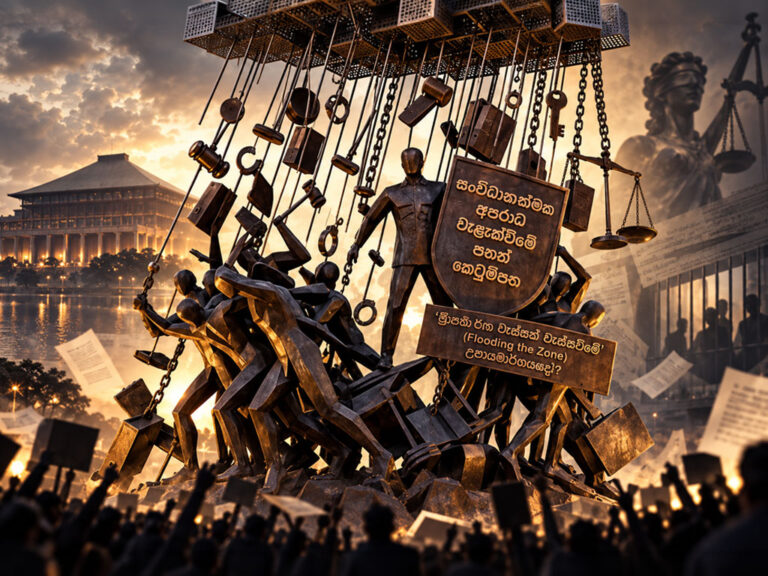
The same broader concern appears in current arguments over constitutional reform and the judiciary.
The Government’s proposed 22nd Amendment, including changes affecting the retirement age of judges, has faced opposition from sections of the legal and religious establishment.
The Bar Association of Sri Lanka has opposed the proposals. The Judicial Service Association has also expressed objections, while senior Buddhist prelates have raised concerns.
Debate has additionally focused on the constitutional requirements surrounding changes that could affect judicial independence and the tenure of judges.
These controversies are not identical to Sallay’s case.
However, they raise a common institutional question.
How much power should any Government exercise without submitting its decisions to an independent check?
In criminal justice, that check is the court.
In constitutional government, it may be Parliament, the judiciary or, where constitutionally required, the people through a referendum.
The danger begins when executive certainty becomes a substitute for those safeguards.
No President should regard confidence in his own position as equivalent to legal proof.
The JVP’s Own History Makes the PTA Question Harder
There is another political irony surrounding the case.
The Government now deciding whether Sallay remains detained is led by the National People’s Power, whose central political force is the Janatha Vimukthi Peramuna.
The JVP itself has a violent history.
It launched an armed insurrection in 1971 and became involved in another violent uprising during the late 1980s.
The Deshapremi Janatha Viyaparaya operated during that second period and was associated with assassinations, intimidation and armed violence.
The modern JVP has since entered democratic politics, and its leadership has acknowledged and apologised for aspects of that past.
President Dissanayake himself entered JVP politics during his youth amid that turbulent era.
Various historical accounts have described his underground political name as “Aravinda” during the period.
However, claims about specific violent acts committed personally by Dissanayake require evidence and should not be inferred simply from political membership or an alias.
That distinction is important because it illustrates the very principle at stake in Sallay’s case.
Association is not guilt.
Suspicion is not conviction.
Political history is not a charge sheet.
Yet the political symbolism remains striking.
A Government led by a movement whose members once experienced extraordinary state security powers now has responsibility for deciding how those same powers are used against others.
The Prevention of Terrorism Act has long attracted criticism precisely because it gives the state exceptional authority over detention.
A party that once lived under the shadow of state repression should understand better than most why those powers demand restraint.
That makes the Government’s treatment of Sallay not merely a question about one former intelligence chief.
It is a test of whether political movements behave differently once they inherit the institutions they once condemned.
Health, Custody and the Limits of State Power
None of these arguments require anyone to admire Suresh Sallay.
They require only an acceptance that state power must operate within limits.
His serious health condition makes those limits more urgent.
According to his family’s account, Sallay’s condition deteriorated during detention. He was hospitalised and eventually underwent a procedure to implant an ICD because of the risks associated with his heart condition.
His wife has asked that authorities place him in remand custody under judicial supervision rather than extend administrative detention.
She has also stated that the family will cooperate fully with any lawful investigation.
That request does not demand that the investigation stop.
It does not ask the President to declare Sallay innocent.
It asks that his continued custody move under direct judicial control.
If investigators fear evidence tampering, intimidation, flight or interference with witnesses, they can place those arguments before a court.
If they possess evidence capable of supporting criminal charges, they should file them.
If they need further investigative time, they should explain why judicial supervision cannot accommodate it.
The burden should be on the state to justify continued deprivation of liberty.
It should not be on an uncharged man to prove why he deserves access to the ordinary justice system.
August 27 and the Signature That Matters
The second 90-day detention period is due to end on August 27.
The decision over whether another period follows will therefore carry significance far beyond one individual.
President Dissanayake is not being asked to exonerate Sallay.
He is being asked whether executive detention should continue when the state has another option: bring the suspect before the normal judicial process.
A magistrate can supervise custody.
Prosecutors can present allegations.
Defence lawyers can challenge them.
A court can determine what restrictions are necessary.
That is how justice acquires legitimacy.
If the Government has a case, it should charge Suresh Sallay and let the evidence face scrutiny in open court.
If it cannot yet do so, another detention order will deepen the question already hanging over the investigation.
How long can the state hold a seriously ill man while asking the public to trust a case it has still not formally brought?
Manori Sallay has written twice to the President.
Her husband remains in state custody.
His medical condition has deteriorated.
The Easter Sunday families still await complete answers.
And Sri Lanka now faces a choice that is larger than Sallay himself.
A government can fight terrorism while remaining bound by law.
It can pursue accountability without abandoning due process.
Or it can allow exceptional powers to become easier than evidence, and signatures easier than trials.
The difference between those paths is the difference between justice and executive convenience.
On August 27, someone may put a signature on another detention order.
What matters is whether the Government can finally put evidence behind it.