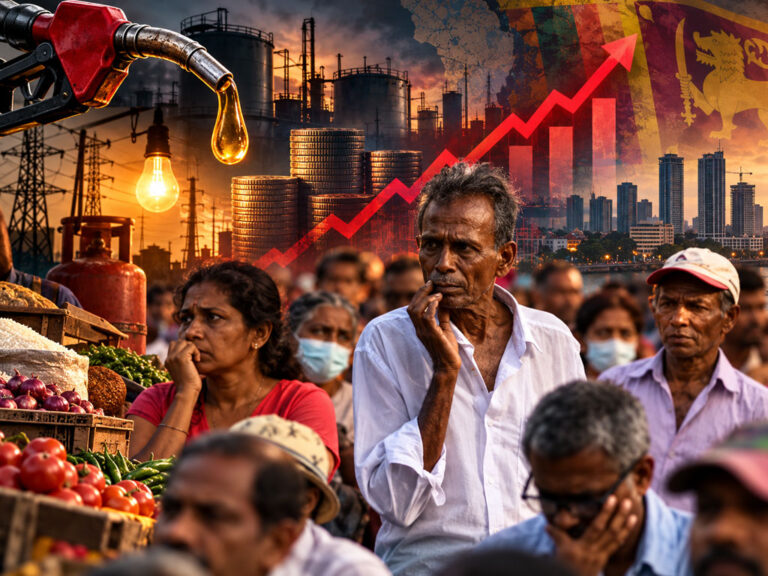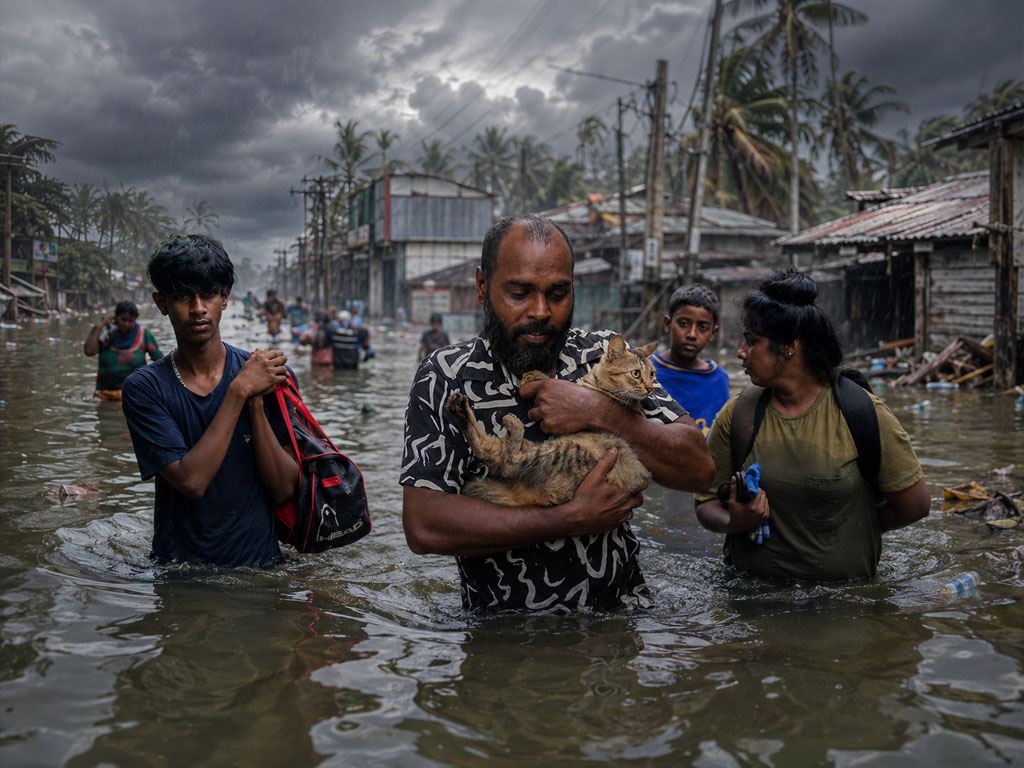
Cyclone Ditwah relief remains slow, with over Rs. 60 billion still unspent as thousands of affected families wait for housing and compensation.
Cyclone Ditwah relief remains under scrutiny after more than Rs. 60 billion allocated for rehabilitation, reconstruction and disaster compensation remained unspent by the end of July.
Treasury figures show that Rs. 86.7 billion was released between January and July through the National Disaster Relief Services Centre.
The money was intended for compensation and infrastructure development in areas devastated by floods and landslides.
However, only Rs. 26.4 billion, roughly 30 percent, had been utilised. Nearly 70 percent therefore remained unused.
The figures raise a fundamental question. How effective is disaster relief when billions released for victims remain within the administrative system while families struggle to rebuild?

Cyclone Ditwah Relief Funds Face Slow Distribution
The Government has acknowledged the problem.
The Ministry of Defence has instructed District Secretaries to accelerate the release of remaining funds to beneficiaries.
However, progress on resettlement remains particularly slow.
Only Rs. 190 million of the Rs. 1.05 billion allocated to relocate affected families had been spent by July 31.
Officials say the low expenditure does not necessarily mean authorities are deliberately withholding relief.
Senior Assistant Secretary of the Disaster Relief Services Centre Prageeth Danansooriya has cited several practical and administrative obstacles.
These include land ownership disputes, finding suitable locations for rebuilding and completing the documentation required before reconstruction can begin.
The Centre says the Government allocated Rs. 100.475 billion this year for emergency assistance and compensation for completely destroyed houses.
Of that amount, Rs. 12.5 billion was initially provided for emergency relief.
A further Rs. 87.975 billion was allocated for fully damaged houses.
By July, authorities had spent only Rs. 6.439 billion on emergency disaster assistance and Rs. 26.404 billion on compensation for damaged houses.
Thousands of Families Still Await Housing Support
The housing figures reveal the scale of the challenge.
Authorities identified approximately 29,000 completely destroyed houses.
Yet only 429 had been fully repaired and reoccupied by July.
Another 4,166 families received the first Rs. 2 million instalment, while 4,918 completely damaged houses received some form of assistance.
Progress is further advanced among partially damaged homes.
Of approximately 87,000 affected houses, 50,554 households received support, including phased payments.
However, major gaps remain.
There is also evidence that some beneficiaries have not claimed subsequent instalments, particularly under the Rs. 500,000 assistance programme for partially damaged homes.
The Government’s explanation that land ownership and documentation are slowing payments is credible.
However, it also exposes a deeper weakness in the response.
Disaster relief planning appears to have underestimated the administrative complexity involved in rebuilding entire communities.
Government Faces Pressure for Greater Accountability
Administrative obstacles alone cannot end the discussion over Cyclone Ditwah relief.
When billions remain unspent months after a disaster, the Government must clearly explain where the money remains, why it has not reached beneficiaries and when families can realistically expect payment.
Transparency is particularly important because the funds have already been allocated.
The issue is therefore no longer simply whether money is available.
It is whether institutions can move those funds efficiently from Treasury allocations to the families and communities they were intended to help.
For cyclone victims, delayed relief is more than an accounting problem.
Each month of delay can mean another month without a secure home, a restored livelihood or a return to normal life.